No doubt the brute force of number may be too potent even then (as so often it is afterwards): civilisation may be thrown back by the conquest of many very rude men over a few less rude men.
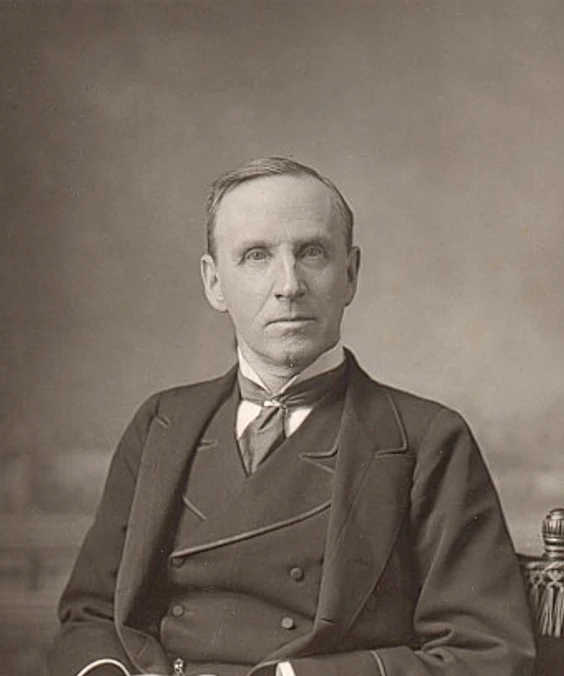
Walter Bagehot
The Public Record
Walter Bagehot was an English journalist, businessman, and essayist, who wrote extensively about government, economics, literature and race. He is known for co-founding the National Review in 1855, and for his works The English Constitution and Lombard Street: A Description of the Money Market (1873).
gutenberg.org
But the first elements of civilisation are great military advantages, and, roughly, it is a rule of the first times that you can infer merit from conquest, and that progress is promoted by the competitive examination of constant war.
And it explains why Western Europe was early in advance of other countries, because there the contest of races was exceedingly severe.
Unlike most regions, it was a tempting part of the world, and yet not a corrupting part; those who did not possess it wanted it, and those who had it, not being enervated, could struggle hard to keep it.
The conflict of nations is at first a main force in the improvement of nations.
What breaks the human race up into fragments so unlike one another, and yet each in its interior so monotonous?
Perhaps these same considerations throw some light, too, on the further and still more interesting question why some few nations progress, and why the greater part do not.
You cannot (consistently with plain facts) imagine enough original races to make it tenable.
You may argue, rightly or wrongly, that all Aryan nations are of a single or peculiar origin, just as it was long believed that all Greek-speaking nations were of one such stock.
But you will not be listened to if you say that there were one Adam and Eve for Sparta, and another Adam and Eve for Athens.
The treaty has been made, and though it may be censured, and the party which made it ousted, yet the difficulty it was meant to cure is cured, and the opposing party, if it takes office, will not have that difficulty to deal with.
All Greeks are evidently of one origin, but within the limits of the Greek family, as of all other families, there is some contrast-making force which causes city to be unlike city, and tribe unlike tribe.
Certainly, too, nations did not originate by simple natural selection, as wild varieties of animals (I do not speak now of species) no doubt arise in nature.
But you could not show that the natural obstacles opposing human life much differed between Sparta and Athens, or indeed between Rome and Athens; and yet Spartans, Athenians, and Romans differ essentially.
The English immigrant lives in the same climate as the Australian or Tasmanian, but he has not become like those races; nor will a thousand years, in most respects, make him like them.
Nowhere does the ancient doctrine--that differences or similarities in the various forms of life that inhabit different countries are due to corresponding physical differences or similarities in the countries themselves--meet with so…
Climate is clearly not THE force which makes nations, for it does not always make them, and they are often made without it.
The strongest light on the great causes which have formed and are forming nations is thrown by the smaller causes which are altering nations.
Or let anyone think how little is the external change in England between the age of Elizabeth and the age of Anne compared with the national change.
How few were the alterations in physical condition, how few (if any) the scientific inventions affecting human life which the later period possessed, but the earlier did not!
In passing from Bacon to Addison, from Shakespeare to Pope, we seem to pass into a new world.
But when the style of a periodical is once formed, the continuance of it is preserved by a much more despotic impulse than the tendency to imitation,--by the self-interest of the editor, who acts as trustee, if I may say so, for the…
The regular buyers of a periodical want to read what they have been used to read--the same sort of thought, the same sort of words.
What the editor does in the case of a periodical, the readers do in the case of literature in general.
But just as in the case of dress we know that now-a-days the determining cause is very much of an accident, so in the case of literary fashion, the origin is a good deal of an accident.
Politicians like Walter Bagehot