Thus Epicureanism never prospered at Rome, but Stoicism did; the stiff, serious character of the great prevailing nation was attracted by what seemed a confirming creed, and deterred by what looked like a relaxing creed.
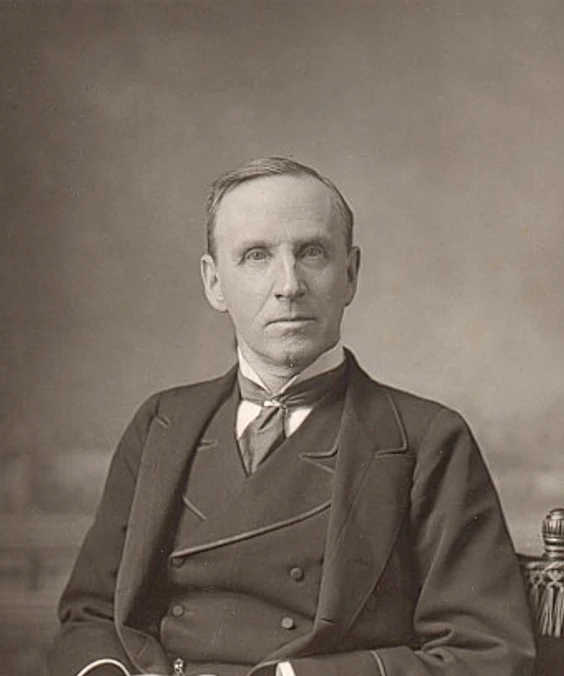
Walter Bagehot
The Public Record
Walter Bagehot was an English journalist, businessman, and essayist, who wrote extensively about government, economics, literature and race. He is known for co-founding the National Review in 1855, and for his works The English Constitution and Lombard Street: A Description of the Money Market (1873).
gutenberg.org
Strong beliefs win strong men, and then make them stronger.
Such is no doubt one cause why Monotheism tends to prevail over Polytheism; it produces a higher, steadier character, calmed and concentrated by a great single object; it is not confused by competing rites, or distracted by miscellaneous…
We are dealing with early ages; nation-MAKING is the occupation of man in these ages, and it is war that makes nations.
Nation-CHANGING comes afterwards, and is mostly effected by peaceful revolution, though even then war, too, plays its part.
The idea of an indestructible nation is a modern idea; in early ages all nations were destructible, and the further we go back, the more incessant was the work of destruction.
It belongs to the idea of progress that beginnings can never seem attractive to those who live far on; the price of improvement is, that the unimproved will always look degraded.
But how far are the strongest nations really the best nations? how far is excellence in war a criterion of other excellence?
War, as I have said, nourishes the 'preliminary' virtues, and this is almost as much as to say that there are virtues which it does not nourish.
All which may be called 'grace' as well as virtue it does not nourish; humanity, charity, a nice sense of the rights of others, it certainly does not foster.
The insensibility to human suffering, which is so striking a fact in the world as it stood when history first reveals it, is doubtless due to the warlike origin of the old civilisation.
Bred in war, and nursed in war, it could not revolt from the things of war, and one of the principal of these is human pain.
The non-combatant population is sure to fare ill during the ages of combat.
But these defects, too, are cured or lessened; women have now marvellous means of winning their way in the world; and mind without muscle has far greater force than muscle without mind.
But it is very dubious whether the spirit of war does not still colour our morality far too much.
Metaphors from law and metaphors from war make most of our current moral phrases, and a nice examination would easily explain that both rather vitiate what both often illustrate.
The military habit makes man think far too much of definite action, and far too little of brooding meditation.
Life is not a set campaign, but an irregular work, and the main forces in it are not overt resolutions, but latent and half-involuntary promptings.
The mistake of military ethics is to exaggerate the conception of discipline, and so to present the moral force of the will in a barer form than it ever ought to take.
Military morals can direct the axe to cut down the tree, but it knows nothing of the quiet force by which the forest grows.
So long as there was continual fighting there was a likelihood of improvement in martial virtues, and in early times many virtues are really 'martial'--that is, tend to success in war--which in later times we do not think of so calling…
The love of law, for example, is a virtue which no one now would call martial, yet in early times it disciplined nations, and the disciplined nations won.
The gift of 'conservative innovation'--the gift of MATCHING new institutions to old--is not nowadays a warlike virtue, yet the Romans owed much of their success to it.
Alone among ancient nations they had the deference to usage which, combines nations, and the partial permission of selected change which improves nations; and therefore they succeeded.
Just so in most cases, all through the earliest times, martial merit is a token of real merit: the nation that wins is the nation that ought to win.
Politicians like Walter Bagehot