The structure of these communities is indeed based on the principle of equality, and it is impossible that ANY such community can wholly satisfy the severe requirements of a political theorist.
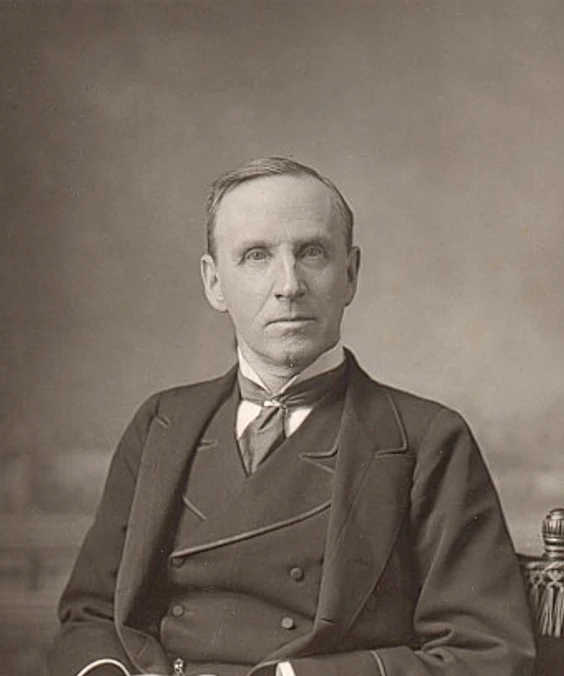
Walter Bagehot
The Public Record
Walter Bagehot was an English journalist, businessman, and essayist, who wrote extensively about government, economics, literature and race. He is known for co-founding the National Review in 1855, and for his works The English Constitution and Lombard Street: A Description of the Money Market (1873).
gutenberg.org
By its theory all people are entitled to the same political power, and they can only be so entitled on the ground that in politics they are equally wise.
There are in such communities no large properties, no great capitals, no refined classes--every one is comfortable and homely, and no one is at all more.
In the early ages of an agricultural colony, whether you have political democracy or not, social democracy you must have, for nature makes it, and not you.
If manufactures on a considerable scale are established--and most young communities strive even by protection to establish them--the tendency to inequality is intensified.
The capitalist becomes a unit with much, and his labourers a crowd with little.
After generations of education, too, there arise varieties of culture--there will be an upper thousand, or ten thousand, of highly cultivated people in the midst of a great nation of moderately educated people.
In theory it is desirable that this highest class of wealth and leisure should have an influence far out of proportion to its mere number: a perfect constitution would find for it a delicate expedient to make its fine thought tell upon the…
Great communities have scarcely ever--never save for transient moments--been ruled by their highest thought.
And if we can get them ruled by a decent capable thought, we may be well enough contented with our work.
At any rate, an isocratic polity--a polity where every one votes, and where every one votes alike--is, in a community of sound education and diffused intelligence, a conceivable case of Cabinet government.
It satisfies the essential condition; there is a people able to elect, a Parliament able to choose.
But suppose the mass of the people are not able to elect--and this is the case with the numerical majority of all but the rarest nations--how is a Cabinet government to be then possible?
It has been thought strange, but there ARE nations in which the numerous unwiser part wishes to be ruled by the less numerous wiser part.
The numerical majority--whether by custom or by choice, is immaterial--is ready, is eager to delegate its power of choosing its ruler to a certain select minority.
It abdicates in favour of its elite, and consents to obey whoever that elite may confide in.
It acknowledges as its secondary electors--as the choosers of its government--an educated minority, at once competent and unresisted; it has a kind of loyalty to some superior persons who are fit to choose a good government, and whom no…
It has the best people to elect a legislature, and therefore it may fairly be expected to choose a good legislature--a legislature competent to select a good administration.
England is the type of deferential countries, and the manner in which it is so, and has become so, is extremely curious.
The middle classes--the ordinary majority of educated men--are in the present day the despotic power in England.
In fact, the mass of the English people yield a deference rather to something else that to their rulers.
They defer to what we may call the THEATRICAL SHOW of society.
A certain state passes before them; a certain pomp of great men; a certain spectacle of beautiful women; a wonderful scene of wealth and enjoyment is displayed, and they are coerced by it.
Their imagination is bowed down; they feel they are not equal to the life which is revealed to them.
The progress of the military art is the most conspicuous, I was about to say the most SHOWY, fact in human history.
Politicians like Walter Bagehot