The early king was indeed consecrated by a religious sanction; he was essentially a man apart, a man above others, divinely anointed or even God-begotten.
Walter Bagehot
The Public Record
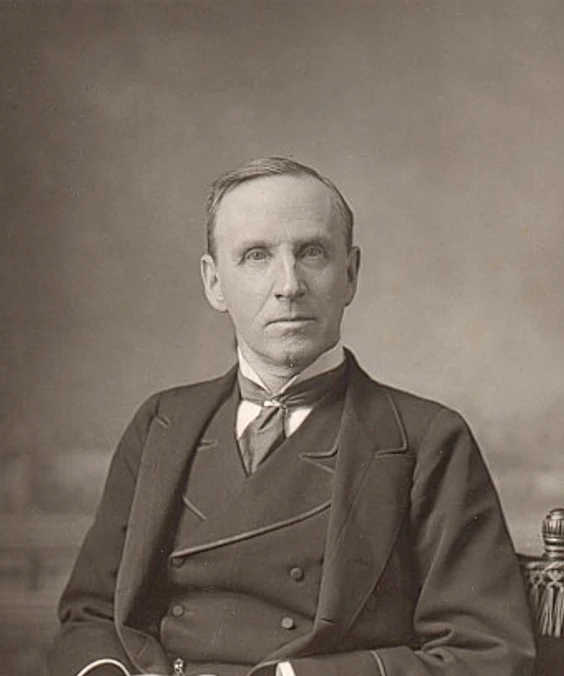
Walter Bagehot was an English journalist, businessman, and essayist, who wrote extensively about government, economics, literature and race. He is known for co-founding the National Review in 1855, and for his works The English Constitution and Lombard Street: A Description of the Money Market (1873).
gutenberg.org
The notion of law as we have it--of a rule imposed by human authority, capable of being altered by that authority, when it likes, and in fact, so altered habitually--could not be conveyed to early nations, who regarded law half as an…
A Divine limit to the Divine revealer was impossible, and there was no other source of law.
But though there was no legal limit, there was a practical limit to subjection in (what may be called) the pagan part of human nature--the inseparable obstinacy of freemen.
They NEVER would do exactly what they were told.
He was sacred, no doubt; and popular, very likely; still he was half like a popular Premier speaking to a high-spirited chamber; there were limits to his authority and power--limits which he would discover by trying whether eager cheers…
The reverential associations upon which the government is built are transmitted according to one law, and the capacity needful to work the government is transmitted according to another law.
The popular homage clings to the line of god-descended kings; it is transmitted by inheritance.
But very soon that line comes to a child or an idiot, or one by some defect or other incapable.
Then we find everywhere the truth of the old saying, that liberty thrives under weak princes; then the listening assembly begins not only to murmur, but to speak; then the grave council begins not so much to suggest as to inculcate, not so…
The political characteristic of the early Greeks, and of the early Romans, too, is that out of the tentacula of a monarchy they developed the organs of a republic.
A Greek city soon got rid of its kings, for the political sacredness of the monarch would not bear the daily inspection and constant criticism of an eager and talking multitude.
A very strong executive was needed to keep down a divided, an armed, and an impatient country; and therefore the problem of political development was delicate.
A formed free government in a homogeneous nation may have a strong executive; but during the transition state, while the republic is in course of development and the monarchy in course of decay, the executive is of necessity weak.
The development of the English Constitution was of necessity slow, because a quick one would have destroyed the executive and killed the State, and because the most numerous classes, who changed very little, were not prepared for any…
Political zeal, whether Whig or Tory, has wanted to find a model in the past; and the whole state of society being confused, the precedents altering with the caprice of men and the chance of events, ingenious advocacy has had a happy field.
The Parliament of to-day is a ruling body; the mediaeval Parliament was, if I may so say, an EXPRESSIVE body.
Its function was to tell the executive--the king--what the nation wished he should do; to some extent, to guide him by new wisdom, and, to a very great extent, to guide him by new facts.
From thence the king learned, or had the means to learn, what the nation would endure, and what it would not endure;--what he might do, and what he might not do.
But in England at that time there was a great and distinct desire to know the opinion of the nation, because there was a real and close necessity.
The nation was wanted to do something--to assist the sovereign in some war, to pay some old debt, to contribute its force and aid in the critical conjuncture of the time.
It would not have suited the ante-Tudor kings to have had a fictitious assembly; they would have lost their sole FEELER, their only instrument for discovering national opinion.
They were bona-fide counsellors, whose opinion might be wise or unwise, but was anyhow of paramount importance, because their co-operation was wanted for what was in hand.
I believe no statute at all, as far as we know, was passed in the reign of Richard I., and all the ante-Tudor acts together would look meagre enough to a modern Parliamentary agent who had to live by them.
The progress of the military art is the most conspicuous, I was about to say the most SHOWY, fact in human history.
Politicians like Walter Bagehot