Here is a definite beginning of new maxims, new thoughts, new ways: the immemorial boundary mark begins in feeling a strange world.
Walter Bagehot
The Public Record
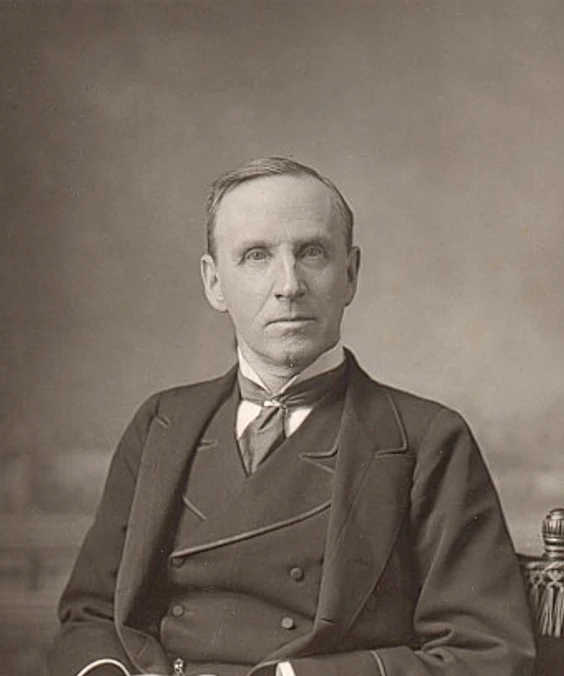
Walter Bagehot was an English journalist, businessman, and essayist, who wrote extensively about government, economics, literature and race. He is known for co-founding the National Review in 1855, and for his works The English Constitution and Lombard Street: A Description of the Money Market (1873).
gutenberg.org
The inhabitants of the north speak a dialect different from the dialect of the south: they have other laws, another aristocracy, another life.
In ages when distant territories are blanks in the mind, when neighbourhood is a sentiment, when locality is a passion, concerted co-operation between remote regions is impossible even on trivial matters.
And if such co-operation is not to be expected in trivial matters, it is not to be thought of in the most vital matter of government--the choice of the executive ruler.
To fancy that Northumberland in the thirteenth century would have consented to ally itself with Somersetshire for the choice of a chief magistrate is absurd; it would scarcely have allied itself to choose a hangman.
Happily, the process of election is so indirect and hidden, and the introduction of that process was so gradual and latent, that we scarcely perceive the immense political trust we repose in each other.
The best political credit is analogous; we trust our countrymen without remembering that we trust them.
A second and very rare condition of an elective government is a CALM national mind--a tone of mind sufficiently staple to bear the necessary excitement of conspicuous revolutions.
The incalculable advantage of august institutions in a free state is, that they prevent this collapse.
The excitement of choosing our rulers is prevented by the apparent existence of an unchosen ruler.
The poorer and more ignorant classes--those who would most feel excitement, who would most be misled by excitement--really believe that the Queen governs.
They fancy they are governed by an hereditary Queen, a Queen by the grace of God, when they are really governed by a Cabinet and a Parliament--men like themselves, chosen by themselves.
The conspicuous dignity awakens the sentiment of reverence, and men, often very undignified, seize the occasion to govern by means of it.
The third condition of all elective government is what I may call RATIONALITY, by which I mean a power involving intelligence, but yet distinct from it.
You fancy that the object of your loyalty is as much elevated above you by intrinsic nature as he is by extrinsic position; you deify him in sentiment, as once men deified him in doctrine.
It prevents, indeed, men from choosing their rulers; you cannot invest with that loyal illusion a man who was yesterday what you are, who to-morrow may be so again, whom you chose to be what he is.
But though this superstition prevents the election of rulers, it renders possible the existence of unelected rulers.
They believe that there is ONE man whom by mystic right they should obey; and therefore they do obey him.
It is only in later times, when the world is wider, its experience larger, and its thought colder, that the plain rule of a palpably chosen ruler is even possible.
ANY permanent legislature at all, any constantly acting mechanism for enacting and repealing laws, is, though it seems to us so natural, quite contrary to the inveterate conceptions of mankind.
The great majority of nations conceive of their law, either as something Divinely given, and therefore unalterable, or as a fundamental habit, inherited from the past to be transmitted to the future.
The custom of the realm--the aboriginal transmitted law--the law which was in the breast of the judges, could not be altered without the consent of Parliament, and therefore everybody felt sure it would not be altered except in grave…
The VALUED use of Parliament was not half so much to alter the law, as to prevent the laws being altered.
In early societies it matters much more that the law should be fixed than that it should be good.
The progress of the military art is the most conspicuous, I was about to say the most SHOWY, fact in human history.
Politicians like Walter Bagehot