Unquestionably his speech is a new fact of great weight.
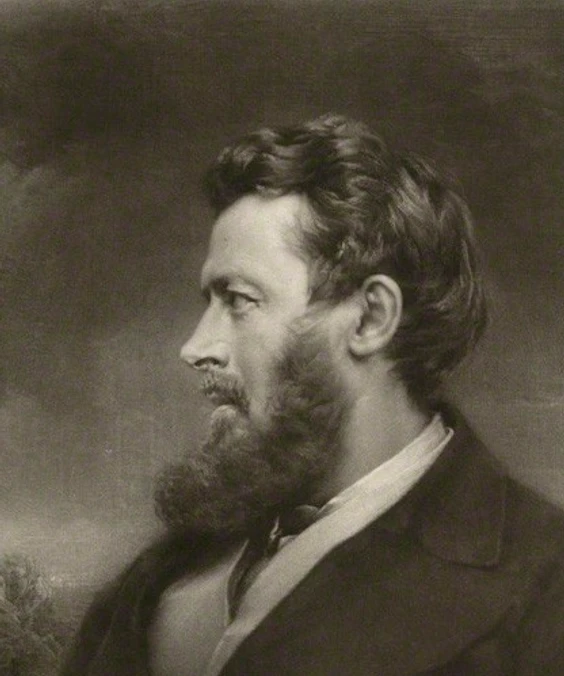
John Morley
The Public Record
John Morley, 1st Viscount Morley of Blackburn,, was a British Liberal statesman, writer and newspaper editor.
gutenberg.org
He is again a liberal, quand même, and will not on all points (as good old Joe Hume used to say) swear black is white for the sake of his views on Ireland.
We ought not to waste this new fact, but take careful account of it.
On the whole, I rejoice to think that, come what may, this affair will really effect progress in the Irish question.
We must now with reasonable cheerfulness turn our faces back towards Ireland.
For one thing he knew that disturbance would be followed by coercion, and he knew and often said that of course strong coercion must always in the long run win the day, little as the victory might be worth.
He desired definitely that the next stage of his movement should be in the largest sense political and not agrarian.
For in truth it is not in human nature, either Irish or any other, to labour the framing of a bill which has no chance of being seriously considered.
He was bent on bringing a revolutionary movement to what he confidently anticipated would be a good end; to allow a passing phase of that movement to divert him, would be to abandon his own foundations.
No reformer is fit for his task who suffers himself to be frightened off by the excesses of an extreme wing.
But all I say and do must be kept apart from the slightest countenance direct or indirect to illegality.
We too suffer under the power of the landlord, but we cannot adopt this as a method of breaking it. 4.
Yet we all know that such devices are the certain result of misgovernment.
The moral case remained, and it was through these barbarous scenes that in a rough and non-logical way the realities of the Irish land system for the first time gained access to the minds of the electors of Great Britain.
Such devices as the plan of campaign came to be regarded in England and Scotland as what they were, incidents in a great social struggle.
No agrarian movement in Ireland was ever so unstained by crime.
But the main spring was undoubtedly agrarian, and the force of the spring came from mischiefs that ministers had refused to face in time.
The pith of that report was the revision and abatement of judicial rents, and from the new bill this vital point was omitted.
Now it became visible that this was a mistake, and that in default of effective conciliation, coercion was the inevitable alternative.
He discouraged obstruction, and advised his followers to select vital points and to leave others alone.
Parliament had put the weapon into his hands, and it was for him to smite his antagonists to the ground.
He made no experiments in judicious mixture, hard blows and soft speech, but held steadily to force and fear.
Coercion had for once become a flaming party issue, and when that happens all the world awakes.
Gladstone had proclaimed that the choice lay between conciliation and coercion.
No effort was spared to bring the realities of repression vividly home to the judgment and feelings of men and women of our own island.
Politicians like John Morley