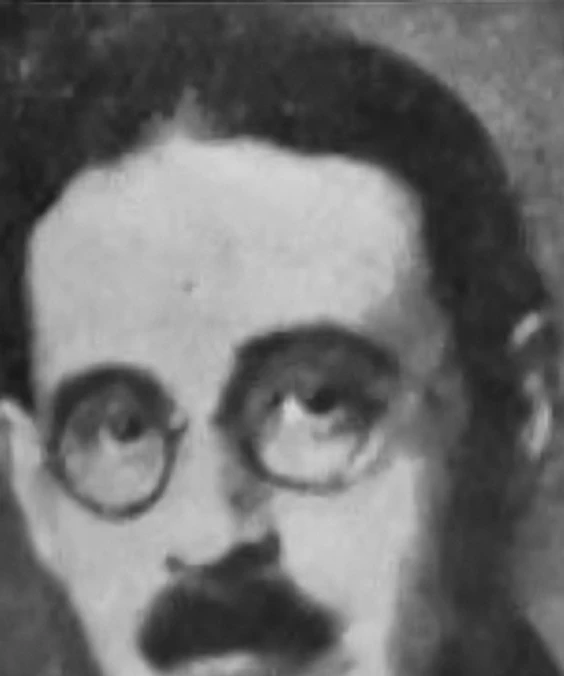
Herein we see the main cause why our majority is not more than double what it actually numbers, and the difference between these two scales of majority represents, as I apprehend, the difference between power to carry the bill as the…
John Morley
The Public Record
John Morley, 1st Viscount Morley of Blackburn,, was a British Liberal statesman, writer and newspaper editor.
gutenberg.org
Yet the instinct of a strong mind and the lifelong habit of ardent industry carried him through his Sisyphean toil.
He sought opportunities of deliberation in order to deliberate, and not under that excellent name to cultivate the art of the harangue, or to overwork secondary points, least of all to treat the many as made for one.
That is to say, he went into counsel for the sake of counsel, and not to cajole, or bully, or insist on his own way because it was his own way.
Exclusion, along with the exaction of revenue from Ireland by the parliament at Westminster, was taxation without representation.
Inclusion for limited purposes still left them invested with the power of turning out a British government by a vote against it on an imperial question.
There was a fourth paradox, namely, that whenever the British supporters of a government did not suffice to build up a decisive majority, then the Irish vote descending into one or other scale of the parliamentary balance might decide who…
This paradox—the most glaring of them all—habit and custom have made familiar, and familiarity might almost seem to have actually endeared it to us.
There was no great substance in the point, but even a small dose of humiliation will make a parliamentary dish as bitter to one side as it is savoury to the other.
To make a speech of that sort,” he said in deprecation of compliment, “a man does best to dine out; ’tis no use to lie on a sofa and think about it.
Gladstone always supposed that a great theme needs to be copiously handled, which is perhaps doubtful, and indeed is often an exact inversion of the true state of things.
Upon the whole, he argued, it was not too much to say that for practical purposes the Lords had destroyed the work of the House of Commons, unexampled as that work was in the time and pains bestowed upon it.
True he had changed from conservative to liberal in general politics, but when he was conservative, that party was the economic party, “Peel its leader being a Cobdenite.” To assent to this new outlay in time of peace was to revolutionise…
My name stands in Europe as a symbol of the policy of peace, moderation, and non-aggression.
What would be said of my active participation in a policy that will be taken as plunging England into the whirlpool of militarism?
During that time I have uniformly opposed militarism.” Thus he would put his case.
But in and during the process which led up to this transaction on Saturday, my action has been in the strictest sense sole, and it has required me in circumstances partly known to harden my heart into a flint.
If there were feelings that made the occasion sad, such feelings do not die with the occasion.
I have known and have liked and admired all the men who have served the Queen in your delicate and responsible office; and have liked most, probably because I knew him most, the last of them, that most true-hearted man, General Grey.
But forgive me for saying you are “to the manner born”; and such a combination of tact and temper with loyalty, intelligence, and truth I cannot expect to see again.
It is hardly in human nature, in spite of Charles V., Sulla, and some other historic persons, to lay down power beyond recall, without a secret pang.
Natural death is as it were a haven and a rest to us after long navigation.
And the noble Soul is like a good mariner; for he, when he draws near the port, lowers his sails and enters it softly with gentle steerage....
For my own part, suave mari magno steals upon me; or at any rate, an inexpressible sense of relief from an exhausting life of incessant contention.
I would use my best endeavours to make these States independent in matters of administration.
Politicians like John Morley