Its foundation is laid in Regicide, in Jacobinism, and in Atheism; and it has joined to those principles a body of systematic manners which secures their operation.
Edmund Burke
The Public Record
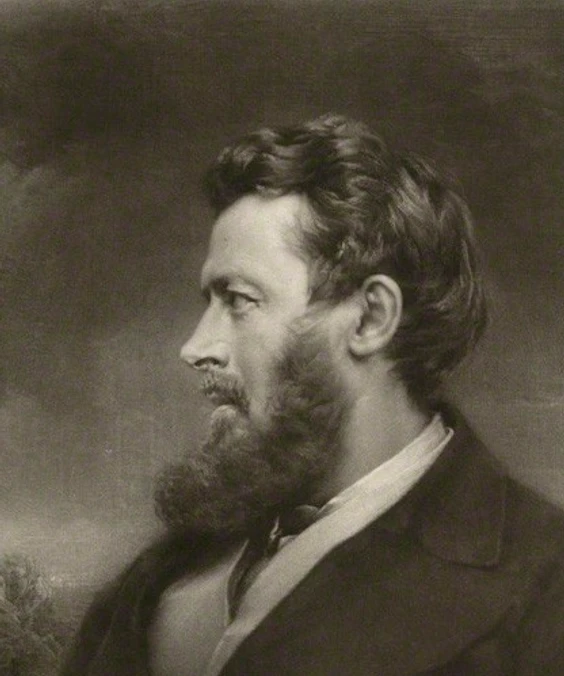
Edmund Burke was an Anglo-Irish writer, philosopher, and politician who is widely credited as the founder of the cultural and political philosophy of conservatism. Regarded as one of the most influential conservative thinkers and political writers of the 18th century, Burke spent the majority of his career in Great Britain and was elected as a member of Parliament (MP) from 1766 to 1794 in the House of Commons of Great Britain with the Whig Party. His writings played a significant role in influencing public views and opinions in both Great Britain and France following the French Revolution in 1789, and he remains a major figure in modern conservative circles.
gutenberg.org
Here I come upon the principle which I wish most strongly to mark to your Lordships: I mean collusive trials and collusive acquittals.
All the relations of life are at once dissolved.
To remove a nabob and to create a revolution is not easy: houses are strong who have sons grown up with vigor and fitness for the command of armies.
Instead of the religion and the law by which they were in a great politic communion with the Christian world, they have constructed their republic on three bases, all fundamentally opposite to those on which the communities of Europe are…
I verily believe he was a man of good intentions, and rather debauched by that amazing flood of iniquity which prevailed at that time, or hurried and carried away with it.
On this head the parent law is express and clear, and has made many wise provisions, which, without destroying, regulate and restrain the right of ownership by the right of vicinage.
He had scarcely got upon the throne, procured for him by our public spirit and his own iniquities, than he began directly and instantly to fortify himself, and to bend all his politics against those who were or could be the donors of such…
Such another example of boldness and contrivance I believe the world cannot furnish.
The servants of the Company made use of this dustuck for their own private trade, which, while it was used with moderation, the native government winked at in some degree; but when it got wholly into private hands, it was more like robbery…
So, after some time, and after one of the most rigid conquests that we read of in history, the Normans softened into the English.
It appeared more like an army going to pillage the people, under pretence of commerce, than anything else.
God forbid that prudence, the first of all the virtues, as well as the supreme director of them all, should ever be employed in the service of any of the vices!
The trade they carried on, and which more resembled robbery than commerce, anticipated the resources of the tyrant, and threatened to leave him no materials for imposition or confiscation.
He claims glory and renown from that by which every other person since the beginning of time has been dishonored and disgraced.
This Cossim Ali Khân signalized his first acts of hostility by an atrocity committed against the faith of treaties, against the rules of war, against every principle of honor.
It is putting things into the position of an ugly alternative, into which I hope in God they never will be put.
There were two hundred, or thereabouts, of the Company's servants, or their dependants, slaughtered at Patna with every circumstance of the most abominable cruelty.
The tenderness of the executive power is the natural asylum of those upon whom the laws have declared war; and to complain that men are inclined to favor the means of their own safety is so absurd, that one forgets the injustice in the…
That war sets the whole country in a blaze; and then other parties begin to appear upon the scene, whose transactions you will find yourselves deeply concerned in hereafter.
He treats the official and regular Directors with just contempt, as a parcel of mean, mechanical book-keepers.
Then, under the name of compensation for sufferings to the people concerned in the trade, and in the name of donation to an army and a navy which had little to do in this affair, they tax him--what sum do you think?
My Lords, I will venture to say, there is no man but owes something to his character.
Revolutions were no longer necessary; succession supplied their places: and well the object agreed with the policy.
A man is certainly the most perfect Protestant who protests against the whole Christian religion.
Politicians like Edmund Burke