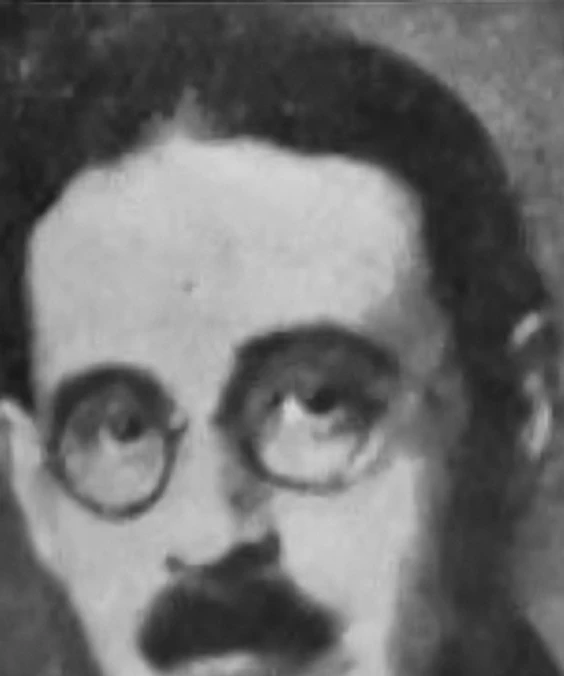
Hastings, he was bound by every feeling of humanity, every principle of regard to his own honor and his employers', to see whether it was true or false; if false, to refute it; if true, to afford redress: he has done neither.
Edmund Burke
The Public Record
Edmund Burke was an Anglo-Irish writer, philosopher, and politician who is widely credited as the founder of the cultural and political philosophy of conservatism. Regarded as one of the most influential conservative thinkers and political writers of the 18th century, Burke spent the majority of his career in Great Britain and was elected as a member of Parliament (MP) from 1766 to 1794 in the House of Commons of Great Britain with the Whig Party. His writings played a significant role in influencing public views and opinions in both Great Britain and France following the French Revolution in 1789, and he remains a major figure in modern conservative circles.
gutenberg.org
We have stated, first, the sufferings of the Begum, and, secondly, the sufferings of the two thousand women (I believe they are not fewer in number) that belong to them, and are dependent upon them, and dependent upon their well-being.
If, contrary to all expectations, under such a disgraced and impotent government, any energy should remain in that country, she will make every effort to recover her security, which will involve Europe for a century in war and blood.
This is a new source of feelings, that often make corporal distress doubly felt; and it has a whole class of distresses of its own.
This sensibility of our moral nature is far more acute in that sex which, I may say without any compliment, forms the better and more virtuous part of mankind, and which is at the same time the least protected from the insults and outrages…
We cannot, if we would, delude ourselves about the true state of this dreadful contest.
Their resources were dearly bought, but they were sure; and the general stock of the community grew by the general effort.
These form our second nature, as inhabitants of the country and members of the society in which Providence has placed us.
These, my Lords, are the state of the distresses in the year 1782, and your Lordships will see that they continued almost, with only occasional reliefs, during the period of that whole year.
They are of a tame, timid, languid, inert temper, wherever the welfare of others is concerned.
Hastings against those women as any other than as an aggravation of his offence against them.
My Lords, you see that his colleagues so understood it; you see that we so understood it; and still you have heard the prisoner, after charging us with falsehood, insultingly tell us we may go on as we please, we may go on in our own way.
But surely this is to read human nature very ill.
This bill, and those connected with it, are intended to form the Magna Charta of Hindostan.
Whenever a rebellion really and truly exists, which is as easily known in fact as it is difficult to define in words, government has not entered into such military conventions, but has ever declined all intermediate treaty which should put…
As for us, we regard it no more than we should other noise and brawlings of criminals who in irons may be led through the streets, raving at the magistrate that has committed them.
This is not an English court of justice, if such a thing is permitted.
In truth, it is not the interfering or keeping aloof, but iniquitous intermeddling, or treacherous inaction, which is praised or blamed by the decision of an equitable judge.
Major Gilpin's evidence leaves not even the shadow of a pretence for this charge.
Therefore we fix upon him fraud, deceit, and the production of false evidence, after the woman had desired to have the man who was the evidence against her examined upon the spot.
Property will be most energetically restored by the ancient proprietors of that kingdom.
We are on a conspicuous stage, and the world marks our demeanor.
We closed at that awful moment when we found the first women of Oude pillaged of all their landed and of all their moneyed property, in short, of all they possessed.
They gave way; and thus were committed acts of oppression and cruelty unknown, I will venture to say, in the history of India.
The first two are so intimately connected as not to be separated even in thought: the reëstablishment of royalty, and the reëstablishment of property.
Politicians like Edmund Burke