The man of the most declared pride scarcely dares to trust his own heart with this dreadful secret of ambition.
Edmund Burke
The Public Record
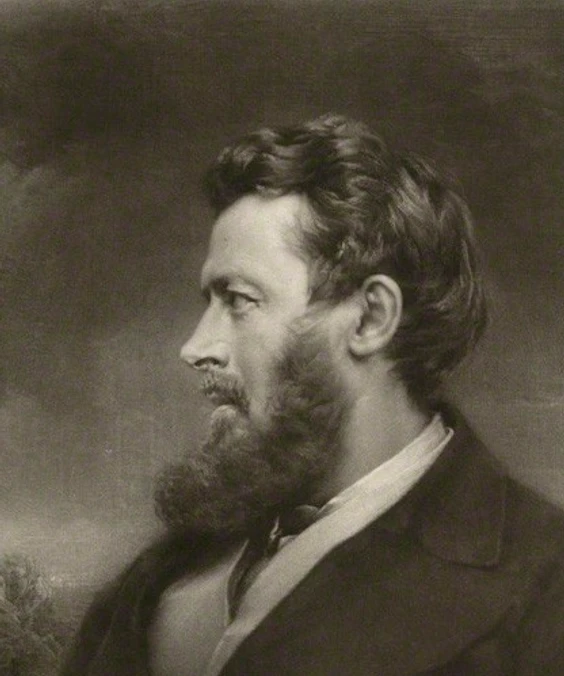
Edmund Burke was an Anglo-Irish writer, philosopher, and politician who is widely credited as the founder of the cultural and political philosophy of conservatism. Regarded as one of the most influential conservative thinkers and political writers of the 18th century, Burke spent the majority of his career in Great Britain and was elected as a member of Parliament (MP) from 1766 to 1794 in the House of Commons of Great Britain with the Whig Party. His writings played a significant role in influencing public views and opinions in both Great Britain and France following the French Revolution in 1789, and he remains a major figure in modern conservative circles.
gutenberg.org
It ought to be the happiness and glory of a representative to live in the strictest union, the closest correspondence, and the most unreserved communication with his constituents.
Whatever turns the soul inward on itself, tends to concentre its forces, and to fit it for greater and stronger flights of science.
We shall find that in all that period of twenty-four years there were hardly five that could be called a season of peace; and the interval between the two wars was in reality nothing more than a very active preparation for renovated…
What members are to the body, that citizens are to a commonwealth.
In addition to these high gifts, may be added, an ability to wield the weapons of sarcasm and irony, with a keenness of application and effect rarely equalled.
I speak it emphatically, and with a desire that it should be marked,--in a long war; because, without such a war, no experience has yet told us that a dangerous power has ever been reduced to measure or to reason.
He will remember that obloquy is a necessary ingredient in the composition of all true glory: he will remember that it was not only in the Roman customs, but it is in the nature and constitution of things, that calumny and abuse are…
Magnificence, a source of the sublime, i. 154.
Magnanimity, in politics, often the truest wisdom, ii. 181.
Even the fundamental sacred rights of man they have not scrupled to profane.
Independence of mind, always more or less influenced by independence of fortune, vii. 78.
Clamor, justifiable when it is caused by abuse, vii. 121.
If the vilest of mankind are resolved to be the most wicked, they lose all the baseness of their origin, and take their place above kings.
That influence this bill cuts up by the roots.
The very names of affection and kindred, which were the bond of charity whilst we agreed, become new incentives to hatred and rage when the communion of our country is dissolved.
The means of recovering our affairs are not obvious.
Civil wars corrupt the morals of the people, ii. 203.
Be yourself the judge, and say whether such a conduct would become a prince or not.
It shows that there are limits to his ambition or his resentment.
Will you not reward a person who did you such a great and important service, by conniving a little at his delinquencies?
Upon the face of the two accounts there is a gross fraud.
Dead and putrid, it is insufficient to save the state, but potent to infect and to kill.
All ranks of people had their place in the public concern, and their share in the common stock and common prosperity.
This is a business not to be hurried over in the mass, as amongst the acts of a great man, who may have his little errors among his great services; no, you cannot, as a judicial body, huddle all this into a hotchpotch, and decide upon it…
Politicians like Edmund Burke