It introduces some of the persons who were most active in the succeeding scenes, and from that time to this has given its tone and character to the British affairs and government.
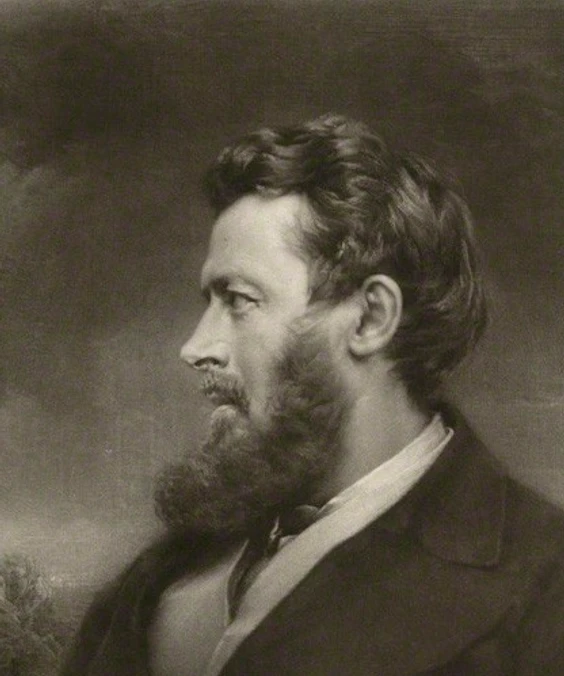
Edmund Burke
The Public Record
Edmund Burke was an Anglo-Irish writer, philosopher, and politician who is widely credited as the founder of the cultural and political philosophy of conservatism. Regarded as one of the most influential conservative thinkers and political writers of the 18th century, Burke spent the majority of his career in Great Britain and was elected as a member of Parliament (MP) from 1766 to 1794 in the House of Commons of Great Britain with the Whig Party. His writings played a significant role in influencing public views and opinions in both Great Britain and France following the French Revolution in 1789, and he remains a major figure in modern conservative circles.
gutenberg.org
This second revolution forms that period in the Bengal history which had the most direct influence upon all the subsequent transactions.
In this situation it was resolved to make a new and entirely mercenary revolution, and to set up to sale the government, secured to its present possessor by every tie of public faith and every sacred obligation which could bind or…
All the great lords of the country, both Gentoos and Mahomedans, were uneasy, discontented, and disobedient, and some absolutely in arms, and refusing to recognize the prince we had set up.
If ever there was a time when Bengal should have had respite from internal revolutions, it was this.
Where Clive forded a deep water upon an unknown bottom, he left a bridge for his successors, over which the lame could hobble and the blind might grope their way.
By the vast sums of money acquired by individuals upon this occasion, by the immense sudden prodigies of fortune, it was discovered that a revolution in Bengal was a mine much more easily worked and infinitely more productive than the…
The first step to empire is revolution, by which power is conferred; the next is good laws, good order, good institutions, to give that power stability.
But whatever necessity might hide or excuse or palliate, in the acquisition of power, a wise nation, when it has once made a revolution upon its own principles and for its own ends, rests there.
Time, in the origin of most governments, has thrown this mysterious veil over them; prudence and discretion make it necessary to throw something of the same drapery over more recent foundations, in which otherwise the fortune, the genius…
It is now left for us to repair our former errors.
Indeed, something might have been expected of the kind, when a new dominion emanated from a learned and enlightened part of the world in the most enlightened period of its existence.
But we begin to emerge; and I hope that a severe inspection of ourselves, a purification of our own offences, a lustration of the exorbitances of our own power, is a glory reserved to this time, to this nation, and to this august tribunal.
To chastise the guilt of those who have been instruments of imperial sway over other nations by the high superintending justice of the sovereign state has not many striking examples among any people.
My Lords, to obtain empire is common; to govern it well has been rare indeed.
Hastings is his having avowedly looked to such a tyrant and such a usurper as his model, and followed that pernicious example with a servile fidelity.
It is a certain mark that it was not a conquered country in the sense in which we commonly call a country conquered, that the natives, great men and landholders, continued in every part in the possession of their estates, and of the…
You see that it was the monarchy that was precarious, not the rights of the subordinate chiefs.
We are often led into mistakes concerning the government of Hindostan, by comparing it with those governments where the prince is armed with a full, speculative, entire authority, and where the great people have, with great titles, no…
The native princes, in all their transactions with the Mogul government, carried the evident marks of this free condition in a noble independency of spirit.
But the Hindoos, by express charter, were exempted from that mark of servitude, and thereby declared not to be a conquered people.
What is full as remarkable, he freed the Hindoos forever from that tax which the Mahomedans have laid upon every country over which the sword of Mahomet prevailed,--namely, a capitation tax upon all who do not profess the religion of the…
Historians, indeed, are generally very liberal of their information concerning everything but what we ought to be very anxious to know.
These, my Lords, are the effects universally produced by the Hindoo polity throughout that vast region, before it was distorted and put out of frame by the barbarism of foreign conquests.
Here the property as well as the liberty of the people are inviolate.
Politicians like Edmund Burke