The Revolution, which is resorted to for a title, on their system, wants a title itself.
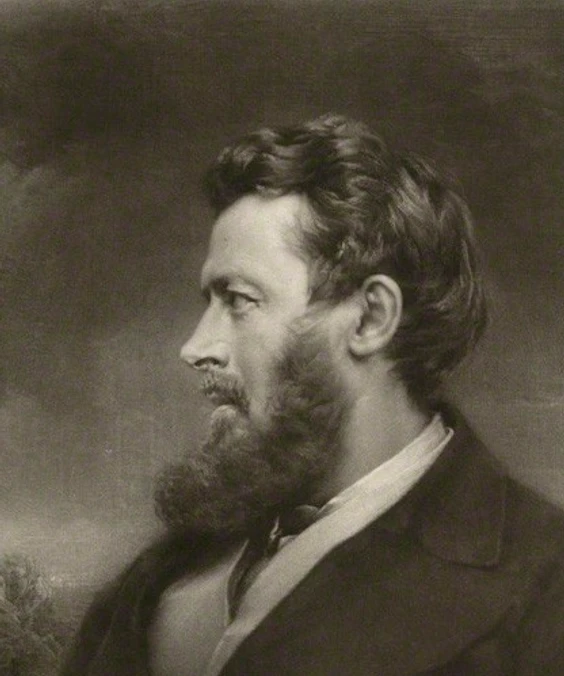
Edmund Burke
The Public Record
Edmund Burke was an Anglo-Irish writer, philosopher, and politician who is widely credited as the founder of the cultural and political philosophy of conservatism. Regarded as one of the most influential conservative thinkers and political writers of the 18th century, Burke spent the majority of his career in Great Britain and was elected as a member of Parliament (MP) from 1766 to 1794 in the House of Commons of Great Britain with the Whig Party. His writings played a significant role in influencing public views and opinions in both Great Britain and France following the French Revolution in 1789, and he remains a major figure in modern conservative circles.
gutenberg.org
The greater its freedom, the greater must be your advantage.
Terror is not always the effect of force, and an armament is not a victory.
What were the crimes of those crowds of matrons and virgins of condition, whom they mas sacred, with their juries of blood, in prisons and on scaffolds?
For which of her vices did they put to death the mildest of all human creatures, the Duchess of Biron?
Does not something like this now appear in France?
But is it permitted to ask what security it affords to the liberty of the subject, that the prince is pacific or frugal?
But to descend from the author's generalities a little nearer to meaning, the security given to liberty is this,--"that governments will have learned not to precipitate themselves into embarrassments by speculative wars.
That this cause of theirs was not an enemy to servitude, but to society.
But, believe me, if Ireland is beneficial to you, it is so not from the parts in which it is restrained, but from those in which it is left free, though not left unrivalled.
To a free people this would be a matter of alarm; but this physician of October has in his shop all sorts of salves for all sorts of sores.
What an escape we have had, that we and our allies were not the conquerors!
The French had shown themselves the ablest architects of ruin that had hitherto existed in the world.
These conquests eventually will be the cause of her destruction." So that they who hate the cause of usurpation, and dread the power of France under any form, are to wish her to be a conqueror, in order to accelerate her ruin.
No fewer than ten sovereign princes had, some the whole, all a very considerable part of their dominions under the yoke of that dreadful faction.
If we concurred with you in this opinion, we should certainly feel our hopes of advantage to all the parties from this arrangement considerably diminished.
It is very unfortunate that we should consider those as rivals, whom we ought to regard as fellow-laborers in a common cause.
Fortunate indeed, if he lives to see nothing that shall vary the prospect, and cloud the setting of his day!
Here a repeal is promised,--promised without condition,--and while your authority was actually resisted.
The law of this country recognizes that well-known crime called misconduct in office; it is a head of the law of England, and, so far as inferior courts are competent to try it, may be tried in them.
Tyranny is therefore armed against them with a greater variety of weapons than are found in its ordinary stores.
His active Will-o'-the-wisp may be gone nobody can guess where, whilst he leaves us bemired and benighted in the bog.
Let us descend into our own bosoms; let us ask ourselves what are our duties, and what are our means of discharging them.
For one, the worst event of this day, though it may deject, shall not break or subdue me.
I cannot help asking, Why all this pains to clear the British nation of ambition, perfidy, and the insatiate thirst of war?
Politicians like Edmund Burke