For a law against property is a law against industry,--the latter having always the former, and nothing else, for its object.
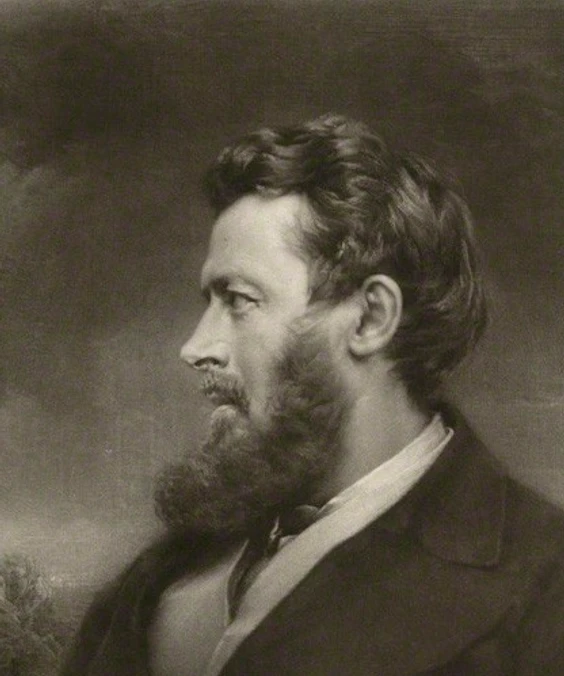
Edmund Burke
The Public Record
Edmund Burke was an Anglo-Irish writer, philosopher, and politician who is widely credited as the founder of the cultural and political philosophy of conservatism. Regarded as one of the most influential conservative thinkers and political writers of the 18th century, Burke spent the majority of his career in Great Britain and was elected as a member of Parliament (MP) from 1766 to 1794 in the House of Commons of Great Britain with the Whig Party. His writings played a significant role in influencing public views and opinions in both Great Britain and France following the French Revolution in 1789, and he remains a major figure in modern conservative circles.
gutenberg.org
To this I answer, that the collateral security was meant to bind the crown, and to hold it firm to its engagements.
The king whom he gave us was, indeed, the very reverse of your benignant sovereign, who, in reward for his attempt to bestow liberty on his subjects, languishes himself in prison.
First, That all jurisdictions which furnish more matter of expense, more temptation to oppression, or more means and instruments of corrupt influence, than advantage to justice or political administration, ought to be abolished.
I do not know the method of drawing up an indictment against an whole people.
Interested timidity disgraces as much in the cabinet as personal timidity does in the field.
Nor can any sovereign have it by succession; for no man can succeed to fraud, rapine, and violence.
They have gone beyond even this: for every barrister, six clerk, attorney, or solicitor, is obliged to take a solemn oath not to employ persons of that persuasion,--no, not as hackney clerks, at the miserable salary of seven shillings a…
Assemblies that are met, and with a resolution to be all of a mind, are assemblies that can have no opinion at all of their own.
But it must be admitted that Monk freed this nation from great and just apprehensions both of future anarchy and of probable tyranny in some form or other.
In this miserable state we are still further depressed by the overbearing influence of the crown.
They are the real rebels to the fair constitution and just supremacy of England.
If there is any good in them, it appears then or never.
General principles cannot be debauched or corrupted by interest or caprice; and by those principles I was resolved to work.
Parliament is a security provided for the protection of freedom, and not a subtile fiction, contrived to amuse the people in its place.
For mercy, as we conceive, consists, not in the weakness of the means, but in the benignity of the ends.
There is one case, indeed, in which it would be madness not to give the fullest credit to the most deceitful of men,--that is, when they make declarations of hostility against us.
Experience had but too fully instructed us in the possibility of the reduction of a free people to slavery by foreign mercenary armies.
They decline a general engagement,--prudently enough, if their object had been to make the war attend upon a treaty of good terms of subjection; but when they look further, this will not do.
But when men whom we know to be wicked impose upon us, we are something worse than dupes.
In effect, such a scheme is not calculated to produce, but to prevent reformation.
What monsters have not been generated from this unnatural contention!
The greatest number have a sort of an heavy, lumpish acquiescence in government, without much respect or esteem for those that compose it.
We live at a time when men are not repaid in fame for what they sacrifice in interest or repose.
There is a confidence necessary to human intercourse, and without which men are often more injured by their own suspicions than they would be by the perfidy of others.
Politicians like Edmund Burke