With regard to their export, they were put also under difficulties upon very mistaken notions; for they were obliged to export annually a certain proportion of British manufactures, even though they should find for them in India none or…
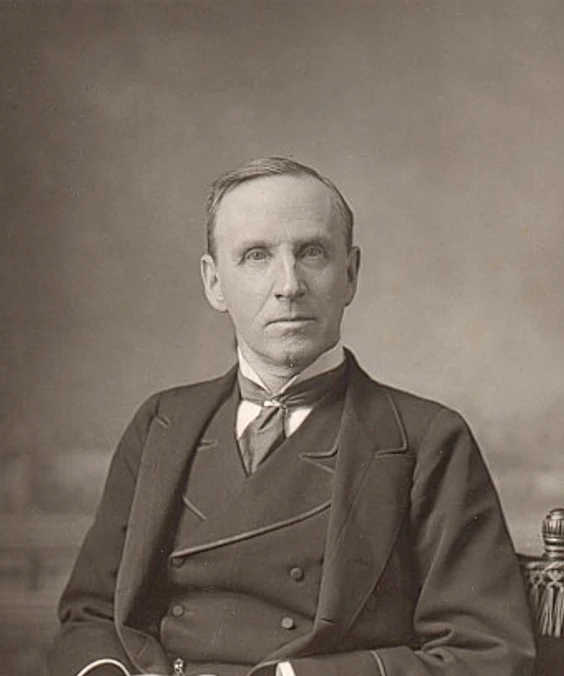
Edmund Burke
The Public Record
Edmund Burke was an Anglo-Irish writer, philosopher, and politician who is widely credited as the founder of the cultural and political philosophy of conservatism. Regarded as one of the most influential conservative thinkers and political writers of the 18th century, Burke spent the majority of his career in Great Britain and was elected as a member of Parliament (MP) from 1766 to 1794 in the House of Commons of Great Britain with the Whig Party. His writings played a significant role in influencing public views and opinions in both Great Britain and France following the French Revolution in 1789, and he remains a major figure in modern conservative circles.
gutenberg.org
The idea of remitting tribute in goods naturally produced an indifference to their price and quality,--the goods themselves appearing little else than a sort of package to the tribute.
Merchandise taken as tribute, or bought in lieu of it, can never long be of a kind or of a price fitted to a market which stands solely on its commercial reputation.
The indifference of the mercantile sovereign to his trading advantages naturally relaxed the diligence of his subordinate factor-magistrates through all their gradations and in all their functions; it gave rise, at least so far as the…
If the trade were confined to Bengal, and the Company were to trade on those terms upon a capital borrowed at eight per cent Indian interest, their revenues in that province would be soon so overpowered with debt, that those revenues…
If, on the other hand, the Company traded upon bills with every advantage, far from being in a condition to divide the smallest percentage, their bankruptcy here would be inevitable.
He bore the yoke of this imperious commerce with the utmost impatience: he saw his subjects excluded as aliens from their own trade, and the revenues of the prince overwhelmed in the ruin of the commerce of his dominions.
Finding his reiterated remonstrances on the extent and abuse of the passport ineffectual, he had recourse to an unexpected expedient, which was, to declare his resolution at once to annul all the duties on trade, setting it equally free to…
Never was a method of defeating the oppressions of monopoly more forcible, more simple, or more equitable: no sort of plausible objection could be made; and it was in vain to think of evading it.
The Presidency of Calcutta openly denied to the prince the power of protecting the trade of his subjects by the remission of his own duties.
By this plan he intended that the profits should be distributed in an orderly and proportioned manner for the reward of services, and not seized by each individual according to the measure of his boldness, dexterity, or influence.
Their object is to point out the deficiencies in the system, by which restrictions were laid that could have little or no effect whilst want and power were suffered to be united.
But it soon appeared that in deep-rooted and inveterate abuses the wisest principles of reform may be made to operate so destructively as wholly to discredit the design, and to dishearten all persons from the prosecution of it.
They had the sufficiency of their maintenance measured out by the judgment of those who were to profit by their labor; and this measure was not a great deal more, by their own account, than about two thirds of the value of that labor.
The perplexed system of the Company's concerns, composed of so many opposite movements and contradictory principles, appears nowhere in a more clear light.
If trade continued under restraint, their territorial revenues must suffer by checking the general prosperity of the country: if they set it free, means were taken to raise the price and debase the quality of the goods; and this again fell…
The observations of the Company on that occasion are just and sagacious; and they will not permit the least doubt concerning the policy of these unnatural trades.
The servants might as essentially injure their interest by a direct exercise of their power as by pretexts drawn from the freedom of the natives,--but with this fatal difference, that the frauds upon the Company must be of shorter duration…
That state admitted, and indeed led to, means of discovery and correction; whereas the system of coercion was likely to be permanent.
It carried force further than served the purposes of those who authorized it: it tended to cover all frauds with obscurity, and to bury all complaint in despair.
The public in England perceived, and felt with a proper sympathy, the sufferings of the Eastern provinces in all cases in which they might be attributed to the abuses of power exercised under the Company's authority.
But they were not equally sensible to the evils which arose from a system of sacrificing the being of that country to the advantage of this.
Thus they were led to increase the grievance in order to allay the clamor.
A policy of that sort could not fail of being highly popular, when the Company submitted itself as an instrument for the improvement of British manufactures, instead of being their most dangerous rival, as heretofore they had been always…
To prevent silk-winders from working in their private houses, where they might work for private traders, and to confine them to the Company's factories, where they could only be employed for the Company's benefit, they desire that the…
Politicians like Edmund Burke