But in this most arduous and momentous conflict, which from its nature should have roused us to new and unexampled efforts, I know not how it has been that we have never put forth half the strength which we have exerted in ordinary wars.
Edmund Burke
The Public Record
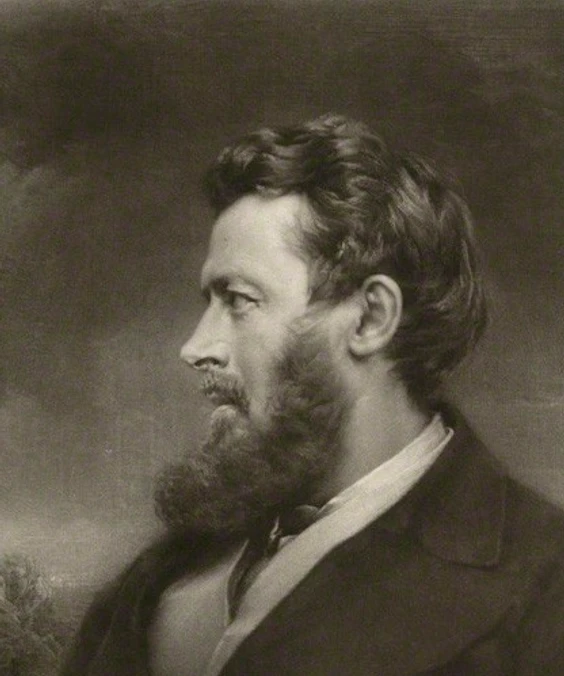
Edmund Burke was an Anglo-Irish writer, philosopher, and politician who is widely credited as the founder of the cultural and political philosophy of conservatism. Regarded as one of the most influential conservative thinkers and political writers of the 18th century, Burke spent the majority of his career in Great Britain and was elected as a member of Parliament (MP) from 1766 to 1794 in the House of Commons of Great Britain with the Whig Party. His writings played a significant role in influencing public views and opinions in both Great Britain and France following the French Revolution in 1789, and he remains a major figure in modern conservative circles.
gutenberg.org
Alas! the few of us who have protracted life in any measure near to the extreme limits of our short period have been condemned to see strange things,--new systems of policy, new principles, and not only new men, but what might appear a new…
They have much more to dread in that way from the confiscations, the rapines, the burnings, and the massacres that may follow in the train of a peace which shall establish the devastating and depopulating principles and example of the…
In the ordinary course of human affairs, any check to population among men in ease and opulence is less to be apprehended from what they may suffer than from what they enjoy.
The excesses of delicacy, repose, and satiety are as unfavorable as the extremes of hardship, toil, and want to the increase and multiplication of our kind.
Our physical well-being, our moral worth, our social happiness, our political tranquillity, all depend on that control of all our appetites and passions which the ancients designed by the cardinal virtue of temperance.
Every new advance of the price to the consumer is a new incentive to him to retrench the quantity of his consumption; and if, upon the whole, he pays the same, his property, computed by the standard of what he voluntarily pays, must remain…
You will always bear in mind, my dear Sir, that I am not considering whether, if the common enemy of the quiet of Europe had not forced us to take up arms in our own defence, the spring-tide of our prosperity might not have flowed higher…
I am now endeavoring to ascertain whether there exists, in fact, any such necessity as we hear every day asserted, to furnish a miserable pretext for counselling us to surrender at discretion our conquests, our honor, our dignity, our very…
If it were wholly to vanish, I should not think we were ruined.
We have no tax among us on the most necessary articles of food.
I admit it: we export them in great and growing quantities: and they who croak themselves hoarse about the decay of our trade may put as much of this account as they choose to the creditor side of money received from other countries in…
They gradually diminish, as our own manufactures of the same description spread into their places; while the account of ornamental articles which our country does not produce, and we cannot wish it to produce, continues, upon the whole, to…
I am willing to suppose that many, who, in the idleness of peace, made war upon partridges, hares, and pheasants, may now carry more noble arms against the enemies of their country.
There is much gayety and dissipation and profusion which must escape and disappoint all the arithmetic of political economy.
The dresses, the scenes, the decorations of every kind, I am told, are in a new style of splendor and magnificence: whether to the advantage of our dramatic taste, upon the whole, I very much doubt.
It is a show and a spectacle, not a play, that is exhibited.
But good taste, manners, morals, religion, all fly, wherever the principles of Jacobinism enter; and we have no safety against them but in arms.
But we are upon a subject which, like some of a higher nature, refuses ornament, and is contented with conveying instruction.
I know, too, the obstinacy of unbelief in those perverted minds which have no delight but in contemplating the supposed distress and predicting the immediate ruin of their country.
These birds of evil presage at all times have grated our ears with their melancholy song; and, by some strange fatality or other, it has generally happened that they have poured forth their loudest and deepest lamentations at the periods…
That was no more than the common spleen of disappointed ambition: in the present day I fear that too many are actuated by a more malignant and dangerous spirit.
They hope, by depressing our minds with a despair of our means and resources, to drive us, trembling and unresisting, into the toils of our enemies, with whom, from the beginning of the Revolution in France, they have ever moved in strict…
If, with the report of your Finance Committee in their hands, they can still affect to despond, and can still succeed, as they do, in spreading the contagion of their pretended fears among well-disposed, though weak men, there is no way of…
Proof must be accumulated upon proof, to silence them.
Politicians like Edmund Burke