It would be to introduce compulsion into that in which freedom and existence are the same: I mean credit.
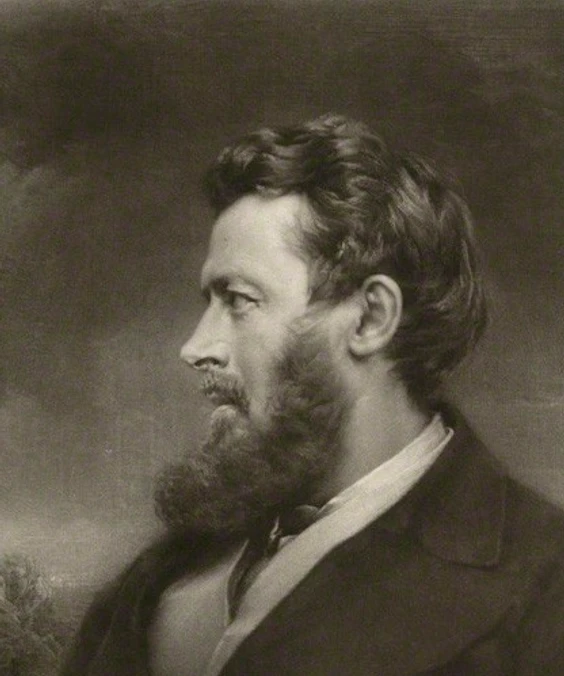
Edmund Burke
The Public Record
Edmund Burke was an Anglo-Irish writer, philosopher, and politician who is widely credited as the founder of the cultural and political philosophy of conservatism. Regarded as one of the most influential conservative thinkers and political writers of the 18th century, Burke spent the majority of his career in Great Britain and was elected as a member of Parliament (MP) from 1766 to 1794 in the House of Commons of Great Britain with the Whig Party. His writings played a significant role in influencing public views and opinions in both Great Britain and France following the French Revolution in 1789, and he remains a major figure in modern conservative circles.
gutenberg.org
The moment that shame or fear or force are directly or indirectly applied to a loan, credit perishes.
There must be some impulse, besides public spirit, to put private interest into motion along with it.
Moneyed men ought to be allowed to set a value on their money: if they did not, there could be no moneyed men.
This desire of accumulation is a principle without which the means of their service to the state could not exist.
The love of lucre, though sometimes carried to a ridiculous, sometimes to a vicious excess, is the grand cause of prosperity to all states.
After all, it is a great mistake to imagine, as too commonly, almost indeed generally, it is imagined, that the public borrower and the private lender are two adverse parties, with different and contending interests, and that what is given…
Constituted as our system of finance and taxation is, the interests of the contracting parties cannot well be separated, whatever they may reciprocally intend.
If the whole or any part of that income be saved, so much new capital is generated,--the infallible operation of which is to lower the value of money, and consequently to conduce towards the improvement of public credit.
I take the expenditure of the capitalist, not the value of the capital, as my standard; because it is the standard upon which, amongst us, property, as an object of taxation, is rated.
Our taxes, for the far greater portion, fly over the heads of the lowest classes.
With us, labor and frugality, the parents of riches, are spared, and wisely too.
The moment men cease to augment the common stock, the moment they no longer enrich it by their industry or their self-denial, their luxury and even their ease are obliged to pay contribution to the public; not because they are vicious…
Whatever, therefore, is taken from that capital by too close a bargain is but a delusive advantage: it is so much lost to the public in another way.
It is never, therefore, wise to quarrel with the interested views of men, whilst they are combined with the public interest and promote it: it is our business to tie the knot, if possible, closer.
Wherever a regular revenue is established, there voluntary contribution can answer no purpose but to disorder and disturb it in its course.
And even if such a supply should be productive in a degree commensurate to its object, it must also be productive of much vexation and much oppression.
If, on the contrary, the law be not made upon proper calculation, it is a disgrace to the public; wisdom, which fails in skill to assess the citizen in just measure and according to his means.
It is obvious that men may be oppressed by many ways besides those which take their course from the supreme power of the state.
Whatever has its origin in caprice is sure not to improve in its progress, nor to end in reason.
It is impossible for each private individual to have any measure conformable to the particular condition of each of his fellow-citizens, or to the general exigencies of his country. 'Tis a random shot at best.
He is but too well disposed to measure their means by his own envy, and not by the real state of their fortunes, which he can rarely know, and which it may in them be an act of the grossest imprudence to reveal.
Hence the odium and lassitude with which people will look upon a provision for the public which is bought by discord at the expense of social quiet.
Hence the bitter heart-burnings, and the war of tongues, which is so often the prelude to other wars.
Nor is it every contribution, called voluntary, which is according to the free will of the giver.
Politicians like Edmund Burke