When the States met, it seemed to be the great object to improve the system of revenue, to enlarge its collection, to cleanse it of oppression and vexation, and to establish it on the most solid footing.
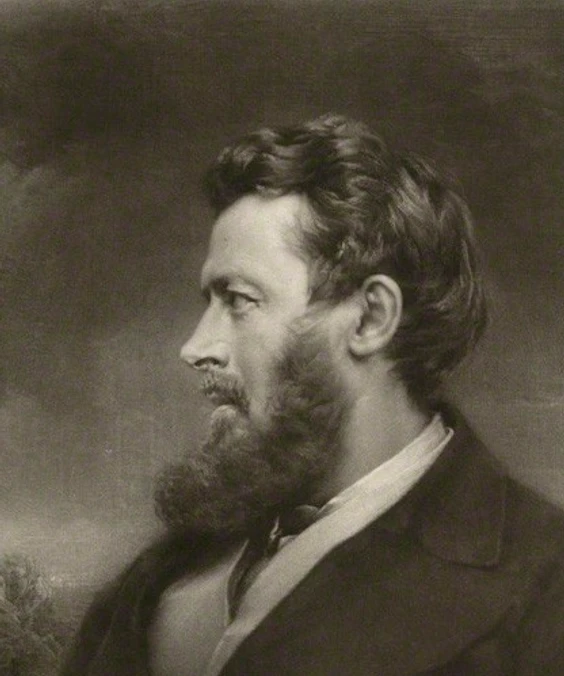
Edmund Burke
The Public Record
Edmund Burke was an Anglo-Irish writer, philosopher, and politician who is widely credited as the founder of the cultural and political philosophy of conservatism. Regarded as one of the most influential conservative thinkers and political writers of the 18th century, Burke spent the majority of his career in Great Britain and was elected as a member of Parliament (MP) from 1766 to 1794 in the House of Commons of Great Britain with the Whig Party. His writings played a significant role in influencing public views and opinions in both Great Britain and France following the French Revolution in 1789, and he remains a major figure in modern conservative circles.
gutenberg.org
They may say to the Assembly,--"Who are you, that are not our kings, nor the States we have elected, nor sit on the principles on which we have elected you?
Before this measure of yours we might have thought we were not perfectly equal; we might have entertained some old, habitual, unmeaning prepossession in favor of those landlords; but we cannot conceive with what other view than that of…
Why should not you attend as much to the desires of the laborious husbandman with regard to our rent, by which we are affected in the most serious manner, as you do to the demands of these insolent burghers relative to distinctions and…
We do not see why we have not as good a right to refuse them their rents as you have to abrogate all their honors, titles, and distinctions.
As there are now no hereditary honors and no distinguished families, why are we taxed to maintain what you tell us ought not to exist?
They answer,--"You have taught us that there are no gentlemen; and which of your principles teach us to bow to kings whom we have not elected?
They will tell you that they see no difference between an idler with a hat and a national cockade and an idler in a cowl or in a rochet.
There they find that men are equal; and the earth, the kind and equal mother of all, ought not to be monopolized to foster the pride and luxury of any men, who by nature are no better than themselves, and who, if they do not labor for…
But if they fail, in any degree, in the titles which they make on the principles of antiquaries and lawyers, they retreat into the citadel of the rights of men.
The king is to call out troops to act against his people, when the world has been told, and the assertion is still ringing in our ears, that troops ought not to fire on citizens.
Nothing else is left to you,--or rather, you have left nothing else to yourselves.
Therefore the moment any difference arises between your National Assembly and any part of the nation, you must have recourse to force.
Are the brave troops of France the only men in that nation who are not the fit judges of military merit, and of the qualifications necessary for a commander-in-chief?
If this election of a commander-in-chief be a part of the rights of men, why not of theirs?
Here is a second negative on the choice of the king: a negative as effectual, at least, as the other of the Assembly.
He will therefore, in all probability, systematically do what he does at present occasionally: that is, he will exercise at least a negative in the choice of his officers.
It is very natural he should think that he ought most of all to have his choice where he is to yield the greatest degree of obedience.
The right of a man, he is told, is, to be his own governor, and to be ruled only by those to whom he delegates that self-government.
The soldier is told he is a citizen, and has the rights of man and citizen.
There is no other way of securing military obedience in this state of things.
Armies will obey him on his personal account.
The authority of the Assembly itself suffers by passing through such a debilitating channel as they have chosen.
What is the effect of a power placed nominally at the head of the army, who to that army is no object of gratitude or of fear?
If, to avoid these evils, you will have no other rule for command or promotion than seniority, you will have an army of formality; at the same time it will become more independent and more of a military republic.
Politicians like Edmund Burke