It is in the nature of things, that they who are in the centre of a circle should appear directly opposed to those who view them from any part of the circumference.
Edmund Burke
The Public Record
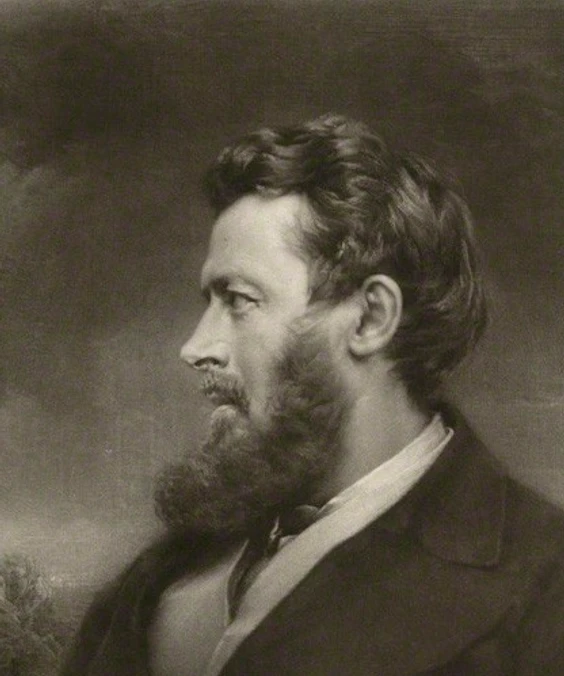
Edmund Burke was an Anglo-Irish writer, philosopher, and politician who is widely credited as the founder of the cultural and political philosophy of conservatism. Regarded as one of the most influential conservative thinkers and political writers of the 18th century, Burke spent the majority of his career in Great Britain and was elected as a member of Parliament (MP) from 1766 to 1794 in the House of Commons of Great Britain with the Whig Party. His writings played a significant role in influencing public views and opinions in both Great Britain and France following the French Revolution in 1789, and he remains a major figure in modern conservative circles.
gutenberg.org
Neither did that people despise or hate or fear their nobility: on the contrary, they valued themselves on the generous qualities which distinguished the chiefs of their nation.
Their old vanity was led by art to take another turn: it was dazzled and seduced by military liveries, cockades, and epaulets, until the French populace was led to become the willing, but still the proud and thoughtless, instrument and…
It was by art and impulse, it was by the sinister use made of a season of scarcity, it was under an infinitely diversified succession of wicked pretences wholly foreign to the question of monarchy or aristocracy, that this light people…
Such gentlemen have since had more reason to repent of their want of foresight than I hope any of the same class will ever have in this country.
No correctives which he proposed to the power of the crown could lead him to approve of a plan of a republic (if so it may be reputed) which has no correctives, and which he believes to be incapable of admitting any.
The example of our country might have led France, as it has led him, to perceive that monarchy is not only reconcilable to liberty, but that it may be rendered a great and stable security to its perpetual enjoyment.
Burke's proceeding ought to lead him to a very different conclusion,--to this conclusion,--that a monarchy is a thing perfectly susceptible of reform, perfectly susceptible of a balance of power, and that, when reformed and balanced, for a…
If the horror of the excesses of an absolute monarchy furnishes a reason for abolishing it, no monarchy once absolute (all have been so at one period or other) could ever be limited.
If, say his accusers, the dread of too great influence in the crown of Great Britain could justify the degree of reform which he adopted, the dread of a return under the despotism of a monarchy might justify the people of France in going…
This mode of arguing from your having done any thing in a certain line to the necessity of doing every thing has political consequences of other moment than those of a logical fallacy.
But is it a fair inference from a jest on this unseasonable lamentation, that he was then an enemy to monarchy, either in this or in any other country?
Burke, it seems, considered it ridiculous to lament the loss of some monarch or other to a rebel people, at the moment they had forever quitted their allegiance to theirs and our sovereign, at the time when they had broken off all…
So circumstanced, he certainly never could and never did wish the colonists to be subdued by arms.
He believed that they had taken up arms from one motive only: that is, our attempting to tax them without their consent,--to tax them for the purposes of maintaining civil and military establishments.
The question with them was not, whether they were to remain as they had been before the troubles,--for better, he allowed, they could not hope to be,--but whether they were to give up so happy a situation without a struggle.
He observed, that ours was the only instance of a great empire in which the most distant parts and members had been as well governed as the metropolis and its vicinage, but that the Americans were going to lose the means which secured to…
America, he said, would never again see such happy days as she had passed under the protection of England.
He thought these great and essential members ought to be preserved, and preserved each in its place,--and that the monarchy ought not only to be secured in its peculiar existence, but in its preeminence too, as the presiding and connecting…
That liberty is nothing but the rein given to vice and confusion.
Burke put a more strict rule upon himself than most moralists would put upon others.
People could then distinguish between a difference in conduct under a variation of circumstances and an inconsistency in principle.
The danger of anything very dear to us removes, for the moment, every other affection from the mind.
This is the voice of Nature and truth, and not of inconsistency and false pretence.
All these he must support on grounds that are totally different, though practically they may be, and happily with us they are, brought into one harmonious body.
Politicians like Edmund Burke