They are, indeed, the most ancient of all commonplaces: commonplaces sometimes of good and necessary causes; more frequently of the worst, but which decide upon neither.
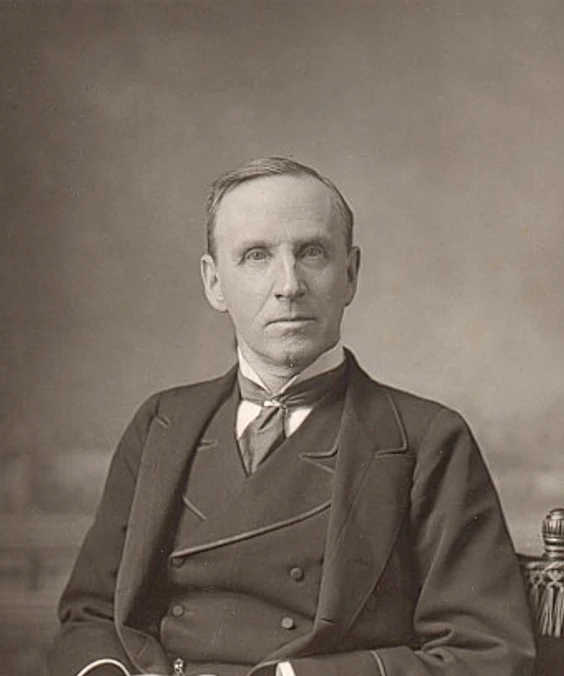
Edmund Burke
The Public Record
Edmund Burke was an Anglo-Irish writer, philosopher, and politician who is widely credited as the founder of the cultural and political philosophy of conservatism. Regarded as one of the most influential conservative thinkers and political writers of the 18th century, Burke spent the majority of his career in Great Britain and was elected as a member of Parliament (MP) from 1766 to 1794 in the House of Commons of Great Britain with the Whig Party. His writings played a significant role in influencing public views and opinions in both Great Britain and France following the French Revolution in 1789, and he remains a major figure in modern conservative circles.
gutenberg.org
But men must learn somewhere; and the new teachers mean no more than what they effect, as far as they succeed,--that is, to deprive men of the benefit of the collected wisdom of mankind, and to make them blind disciples of their own…
If we do not take to our aid the foregone studies of men reputed intelligent and learned, we shall be always beginners.
They will thank God they have a standard, which, in the most essential point of this great concern, will put them on a par with the most wise and knowing.
It takes in too many views, it makes too many combinations, to be so much as comprehended by shallow and superficial understandings.
The British Constitution may have its advantages pointed out to wise and reflecting minds, but it is of too high an order of excellence to be adapted to those which are common.
They who truly mean well must be fearful of acting ill.
Their delusive good intention is no sort of excuse for their presumption.
Men little think how immorally they act in rashly meddling with what they do not understand.
It is no simple, no superficial thing, nor to be estimated by superficial understandings.
Our fabric is so constituted, one part of it bears so much on the other, the parts are so made for one another, and for nothing else, that to introduce any foreign matter into it is to destroy it.
The example of a wise, moral, well-natured, and well-tempered spirit of freedom is that alone which can be useful to us, or in the least degree reputable or safe.
The example of our own ancestors is abundantly sufficient to maintain the spirit of freedom in its full vigor, and to qualify it in all its exertions.
We want no foreign examples to rekindle in us the flame of liberty.
He that sets his house on fire because his fingers are frost-bitten can never be a fit instructor in the method of providing our habitations with a cheerful and salutary warmth.
The untempered spirit of madness, blindness, immorality, and impiety deserves no commendation.
But those who by violence go beyond the barrier are without question the most mischievous; because, to go beyond it, they overturn and destroy it.
The one sort scorns the right; the other fears it; both miss it.
They who in their headlong career have overpassed the goal can furnish no example to those who aim to go no further.
They who have acted, as in France they have done, upon a scheme wholly different, and who aim at the abstract and unlimited perfection of power in the popular part, can be of no service to us in any of our political arrangements.
To him who contemplates the British Constitution, as to him who contemplates the subordinate material world, it will always be a matter of his most curious investigation to discover the secret of this mutual limitation.
From thence it results that in the British Constitution there is a perpetual treaty and compromise going on, sometimes openly, sometimes with less observation.
The whole movement stands still rather than that any part should proceed beyond its boundary.
To avoid the perfections of extreme, all its several parts are so constituted as not alone to answer their own several ends, but also each to limit and control the others; insomuch that, take which of the principles you please, you will…
Allow that to be the true policy of the British system, then most of the faults with which that system stands charged will appear to be, not imperfections into which it has inadvertently fallen, but excellencies which it has studiously…
Politicians like Edmund Burke