One of these bodies was to possess all the franchises, all the property, all the education: the other was to be composed of drawers of water and cutters of turf for them.
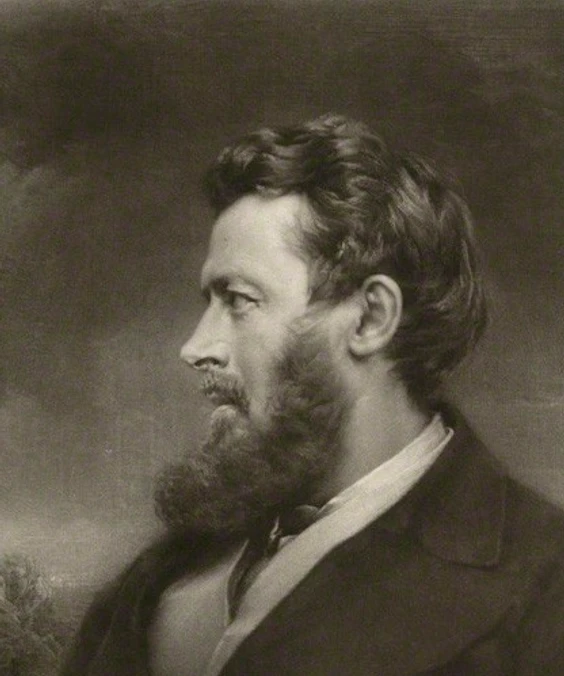
Edmund Burke
The Public Record
Edmund Burke was an Anglo-Irish writer, philosopher, and politician who is widely credited as the founder of the cultural and political philosophy of conservatism. Regarded as one of the most influential conservative thinkers and political writers of the 18th century, Burke spent the majority of his career in Great Britain and was elected as a member of Parliament (MP) from 1766 to 1794 in the House of Commons of Great Britain with the Whig Party. His writings played a significant role in influencing public views and opinions in both Great Britain and France following the French Revolution in 1789, and he remains a major figure in modern conservative circles.
gutenberg.org
They divided the nation into two distinct bodies, without common interest, sympathy, or connection.
The professed object was, to deprive the few men, who, in spite of those laws, might hold or obtain any property amongst them, of all sort of influence or authority over the rest.
Their declared object was, to reduce the Catholics of Ireland to a miserable populace, without property, without estimation, without education.
You, who have looked deeply into the spirit of the Popery laws, must be perfectly sensible that a great part of the present mischief which we abhor in common (if it at all exists) has arisen from them.
I really think that such associations should be crushed in their very commencement.
I am so convinced of the weakness of interfering in any business, without the opinion of the people in whose business I interfere, that I do not know how to acquit myself of what I have now done.
It is injustice, and not a mistaken conscience, that has been the principle of persecution,--at least, as far as it has fallen under my observation.--However, as I began, so I end.
I am sure I have known those who have oppressed Papists in their civil rights exceedingly indulgent to them in their religious ceremonies, and who really wished them to continue Catholics, in order to furnish pretences for oppression.
From what I have observed, it is pride, arrogance, and a spirit of domination, and not a bigoted spirit of religion, that has caused and kept up those oppressive statutes.
What I could have wished would be, to see the civil advantages take the lead; the other, of a religious toleration, I conceive, would follow, (in a manner,) of course.
It amounts, I think, very nearly to a toleration, with respect to religious ceremonies; but it puts a new bolt on civil rights, and rivets it to the old one in such a manner, that neither, I fear, will be easily loosened.
As to government, if I might recommend a prudent caution to them, it would be, to innovate as little as possible, upon speculation, in establishments from which, as they stand, they experience no material inconvenience to the repose of the…
No man, no set of men living are fit to administer the affairs or regulate the interior economy of a church to which they are enemies.
And then I run no risk in foretelling that whatever order, quiet, and morality you have in the country will be lost.
Informers, tale-bearers, perverse and obstinate men, flatterers, who turn their back upon their flock and court the Protestant gentlemen of the country, will be the objects of preferment.
Whoever is complained against by his brother will be considered as persecuted; whoever is censured by his superior will be looked upon as oppressed; whoever is careless in his opinions and loose in his morals will be called a liberal man…
He will hand them over to lords-lieutenant of counties, justices of the peace, and other persons, who, for the purpose of vexing and turning to derision this miserable people, will pick out the worst and most obnoxious they can find…
How can the Lord-Lieutenant form the least judgment of their merits, so as to discern which of the Popish priests is fit to be made a bishop?
But suppose them to be as well inclined as I know that I am to do the Catholics all kind of justice, I declare I would not, if it were in my power, take that patronage on myself.
It is a great deal to suppose that even the present Castle would nominate bishops for the Roman Church of Ireland with a religious regard for its welfare.
Never were the members of one religious sect fit to appoint the pastors to another.
But to deprive a poor people, who maintain a second set of clergy, out of the miserable remains of what is left after taxing and tithing, to deprive them of the disposition of their own charities among their own communion, would, in my…
If the state provides a suitable maintenance and temporality for the governing members of the Irish Roman Catholic Church, and for the clergy under them, I should think the project, however improper in other respects, to be by no means…
Hitherto the plan for the government of Ireland has been to sacrifice the civil prosperity of the nation to its religious improvement.
Politicians like Edmund Burke