Franchises were supposed to belong to the subject, as a subject, and not as a member of the governing part of the state.
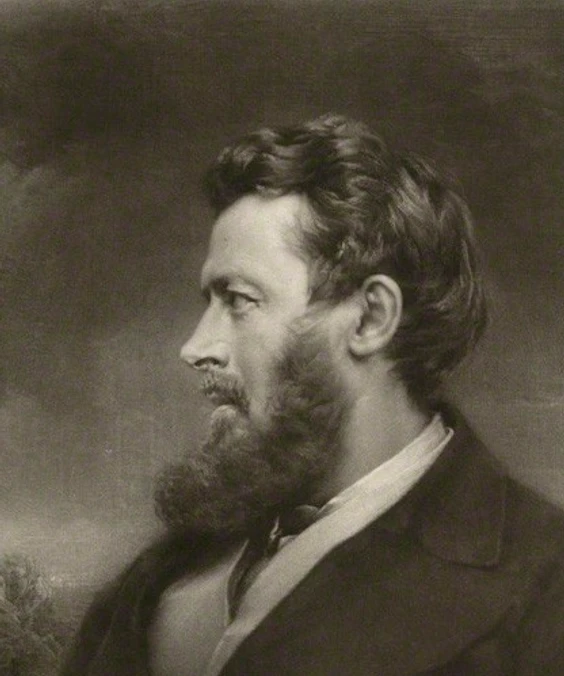
Edmund Burke
The Public Record
Edmund Burke was an Anglo-Irish writer, philosopher, and politician who is widely credited as the founder of the cultural and political philosophy of conservatism. Regarded as one of the most influential conservative thinkers and political writers of the 18th century, Burke spent the majority of his career in Great Britain and was elected as a member of Parliament (MP) from 1766 to 1794 in the House of Commons of Great Britain with the Whig Party. His writings played a significant role in influencing public views and opinions in both Great Britain and France following the French Revolution in 1789, and he remains a major figure in modern conservative circles.
gutenberg.org
Our Constitution is not made for great, general, and proscriptive exclusions; sooner or later it will destroy them, or they will destroy the Constitution.
They are rivalled, to say the least of the matter, in every laborious and lucrative course of life; while every franchise, every honor, every trust, every place, down to the very lowest and least confidential, (besides whole professions,)…
Neither are the majority of the Irish indemnified (as in some aristocracies) for this state of humiliating vassalage (often inverting the nature of things and relations) by having the lower walks of industry wholly abandoned to them.
Admiration, that first source of obedience, can be only the claim or the imposture of the few.
The Protestants of Ireland are not alone sufficiently the people to form a democracy; and they are too numerous to answer the ends and purposes of an aristocracy.
A plebeian oligarchy is a monster; and no people, not absolutely domestic or predial slaves, will long endure it.
But our Constitution has a plebeian member, which forms an essential integrant part of it.
The lot of one plebeian would be the lot of all; and an habitual reverence and admiration of certain families might make the people content to see government wholly in hands to whom it seemed naturally to belong.
We know that the government of Ireland (the same as the British) is not in its constitution wholly aristocratical; and as it is not such in its form, so neither is it in its spirit.
For you know that the decisions of prudence (contrary to the system of the insane reasoners) differ from those of judicature; and that almost all the former are determined on the more or the less, the earlier or the later, and on a balance…
Thus some sort of a balance is formed among conditions; a sort of compensation is furnished to those who, in a limited sense, are excluded from the government of the state.
The nobles have the monopoly of honor; the plebeians a monopoly of all the means of acquiring wealth.
It only implies a lower and degraded state of citizenship: such is (with more or less strictness) the condition of all countries in which an hereditary nobility possess the exclusive rule.
The mildness by which absolute masters exercise their dominion leaves them masters still.
This servitude, which makes men subject to a state without being citizens, may be more or less tolerable from many circumstances; but these circumstances, more or less favorable, do not alter the nature of the thing.
Servorum non est respublica is a very old and a very true maxim.
It is a state of civil servitude, by the very force of the definition.
In the first sense, to be under the state, but not the state itself, nor any part of it, that is, to be nothing at all in the commonwealth, is a situation perfectly intelligible,--but to those who fill that situation, not very pleasant…
Sometimes it signifies only the higher and ruling part of the commonwealth, which we commonly call the Government.
The state is sometimes used to signify the whole commonwealth, comprehending all its orders, with the several privileges belonging to each.
I know, indeed, that it is common with those who talk very differently from you, that is, with heat and animosity, to confound those things, and to argue the admission of the Catholics into any, however minute and subordinate, parts of the…
If the absurd persons you mention find no way of providing for liberty, but by overturning this happy Constitution, and introducing a frantic democracy, let us take care how we prevent better people from any rational expectations of…
If the disorder you speak of be real and considerable, you ought to raise an aristocratic interest, that is, an interest of property and education, amongst them,--and to strengthen, by every prudent means, the authority and influence of…
Surely it might be just now a matter of temperate discussion, whether you ought not to apply a remedy to the real cause of the evil.
Politicians like Edmund Burke