But if, instead of falling into a passion, the leading gentlemen of the country themselves should undertake the business cheerfully, and with hearty affection towards it, great advantages would follow.
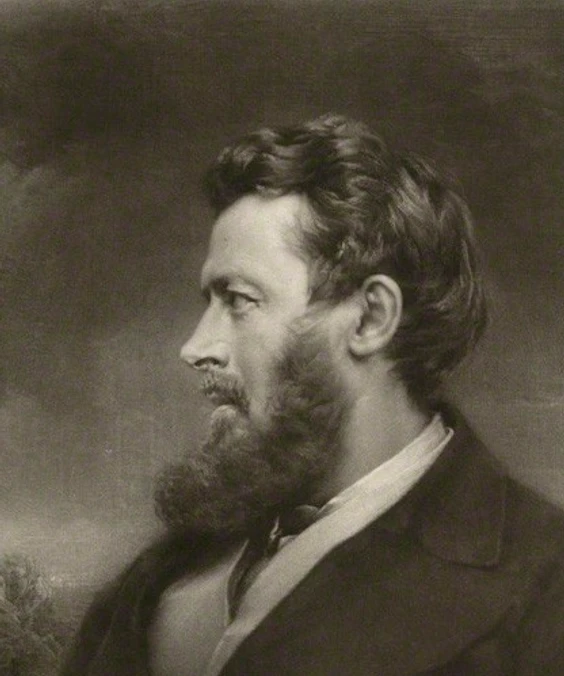
Edmund Burke
The Public Record
Edmund Burke was an Anglo-Irish writer, philosopher, and politician who is widely credited as the founder of the cultural and political philosophy of conservatism. Regarded as one of the most influential conservative thinkers and political writers of the 18th century, Burke spent the majority of his career in Great Britain and was elected as a member of Parliament (MP) from 1766 to 1794 in the House of Commons of Great Britain with the Whig Party. His writings played a significant role in influencing public views and opinions in both Great Britain and France following the French Revolution in 1789, and he remains a major figure in modern conservative circles.
gutenberg.org
Take what course you please,--union or no union; whether the people remain Catholics or become Protestant Dissenters, sure it is that the present state of monopoly cannot continue.
They will go to that uniformly democratic system to whose first movements they owed their emancipation.
Shaken in their minds, they will go to that where the dogmas are fewest,--where they are the most uncertain,--where they lead them the least to a consideration of what they have abandoned.
Depend upon it, it is as true as Nature is true, that, if you force them out of the religion of habit, education, or opinion, it is not to yours they will ever go.
The principles of such a war would but too much resemble the former one.
She will not be fond of making another American war in Ireland.
What was done in 1782 is a decisive proof of her sentiments of justice and moderation.
From my best observation, I should greatly doubt, whether, in the end, these gentlemen would obtain their object, so as to make the exclusion of two millions of their countrymen a fundamental article in the union.
The humors of the people, and of politicians too, are so variable in themselves, and are so much under the occasional influence of some leading men, that it is impossible to know what turn the public mind here would take on such an event.
But whatever the merits of this union may be, to make it a menace, it must be shown to be an evil, and an evil more particularly to those who are threatened with it than to those who hold it out as a terror.
On the other hand, they who wish for a democratic republic will find a set of men who have no choice between civil servitude and the entire ruin of a mixed Constitution.
Love of liberty itself may, in such men, become the means of establishing an arbitrary domination.
Reflect seriously on the possible consequences of keeping in the heart of your country a bank of discontent, every hour accumulating, upon which every description of seditious men may draw at pleasure.
Think whether this be the way to prevent or dissolve factious combinations against the Church or the State.
I am sure that it is hardly prudent to furnish them with such causes of complaint as every man who thinks the British Constitution a benefit may think at least colorable and plausible.
But neither is it true that disturbances have never just complaints for their origin.
The body of disfranchised men will not be perfectly satisfied to remain always in that state.
Reduced to a question of discretion, and that discretion exercised solely upon what will appear best for the conservation of the state on its present basis, I should recommend it to your serious thoughts, whether the narrowing of the…
It is impossible that such a state of things, though natural goodness in many persons will undoubtedly make exceptions, must not produce alienation on the one side and pride and insolence on the other.
The stigma and reproach, the hideous mask will be taken off, and men will see each other as they are.
The several descriptions of people will not be kept so much apart as they now are, as if they were not only separate nations, but separate species.
Gratitude may not always have a very lasting power; but the frequent recurrence of an application for favors will revive and refresh it, and will necessarily produce some degree of mutual attention.
As things stand, the Catholic, as a Catholic, and belonging to a description, has no virtual relation to the representative,--but the contrary.
But this sort of virtual representation cannot have a long or sure existence, if it has not a substratum in the actual.
Politicians like Edmund Burke