The new government (so far as the people dare to disclose their sentiments) is disdained, I am persuaded, by the greater number,--who, as M. de La Fayette complains, and as the truth is, have declined to take any share in the new elections…
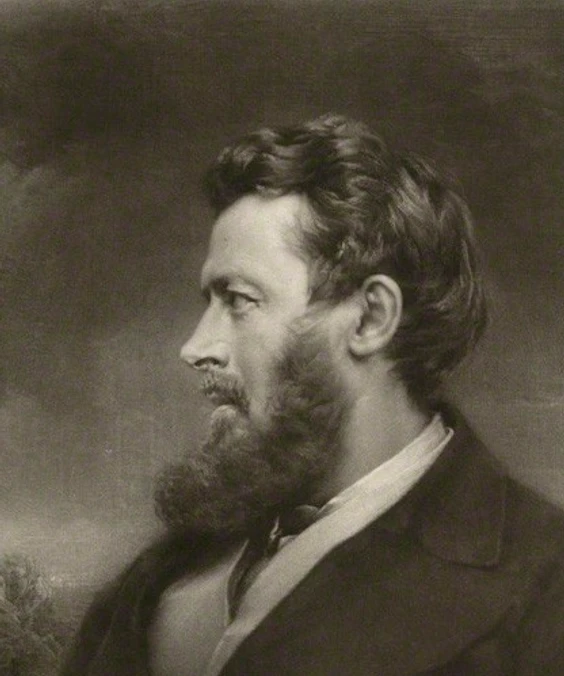
Edmund Burke
The Public Record
Edmund Burke was an Anglo-Irish writer, philosopher, and politician who is widely credited as the founder of the cultural and political philosophy of conservatism. Regarded as one of the most influential conservative thinkers and political writers of the 18th century, Burke spent the majority of his career in Great Britain and was elected as a member of Parliament (MP) from 1766 to 1794 in the House of Commons of Great Britain with the Whig Party. His writings played a significant role in influencing public views and opinions in both Great Britain and France following the French Revolution in 1789, and he remains a major figure in modern conservative circles.
gutenberg.org
In the present case, the circumstance of these two notifications, with the observations with which they are attended, does not leave it in the choice of the sovereigns of Christendom to appear ignorant either of this French Revolution or…
I doubt not they will perform it, for the stability of the Church and State, and for the union and the separation of the people: for the union of the honest and peaceable of all sects; for their separation from all that is ill-intentioned…
Others may finish; the beginners have the glory; and, take what part you please at this hour, (I think you will take the best,) your first services will never be forgotten by a grateful country.
For that reason I honor and shall forever honor and love you, and those who first caused it to stagger, crack, and gape.
My opinion ever was, (in which I heartily agree with those that admired the old code,) that it was so constructed, that, if there was once a breach in any essential part of it, the ruin of the whole, or nearly of the whole, was, at some…
It is a thing humiliating enough, that we are doubtful of the effect of the medicines we compound,--we are sure of our poisons.
It was a machine of wise and elaborate contrivance, and as well fitted for the oppression, impoverishment, and degradation of a people, and the debasement, in them, of human nature itself, as ever proceeded from the perverted ingenuity of…
I have struggled through much discouragement and much opposition, much obloquy, much calumny, for a people with whom I have no tie but the common bond of mankind.
They are good subjects, I have no doubt; but I will not allow that any French Canadian Catholics are better men or better citizens than the Irish of the same communion.
Vain are all the prognostics taken from ideas and passions, which survive the state of things which gave rise to them.
Though my hand but signs it, my heart goes with what I have written.
The numbers ought never to be neglected, because (besides what is due to them as men) collectively, though not individually, they have great property: they ought to have, therefore, protection; they ought to have security; they ought to…
By admitting settled, permanent substance in lieu of the numbers, you would avoid the great danger of our time, that of setting up number against property.
But it would be healing; it would be satisfactory and protecting.
But if you were to-morrow to put the Catholic freeholder on the footing of the most favored forty-shilling Protestant Dissenter, you know, that, such is the actual state of Ireland, this would not make a sensible alteration in almost any…
The standard of qualification in both cases may be so low, or not so judiciously chosen, as in some degree to frustrate the end.
But, wishing, as I do, the change to be gradual and cautious, I would, in my first steps, lean rather to the side of enlargement than restriction.
This gradual course, on the other side, will prevent men long under depression from being intoxicated with a large draught of new power, which they always abuse with a licentious insolence.
This mode will, on the one hand, prevent the unfixing old interests at once: a thing which is apt to breed a black and sullen discontent in those who are at once dispossessed of all their influence and consideration.
This has all the benefits which may be in change, without any of the inconveniences of mutation.
All we can do, and that human wisdom can do, is to provide that the change shall proceed by insensible degrees.
Whereas, if they are mixed and confounded, as some people attempt to mix and confound them, no one can answer for the effects on the Constitution itself.
It is a consideration of great moment, that you make the desired admission without altering the system of your representation in the smallest degree or in any part.
What is forced cannot be modified: but here you may measure your concessions.
Politicians like Edmund Burke