His doctrine is equally contrary to the enemy's uniform practice, who, whether in peace or in war, makes it his great aim not only to change the government, but to make an entire revolution in the whole of the social order in every country.
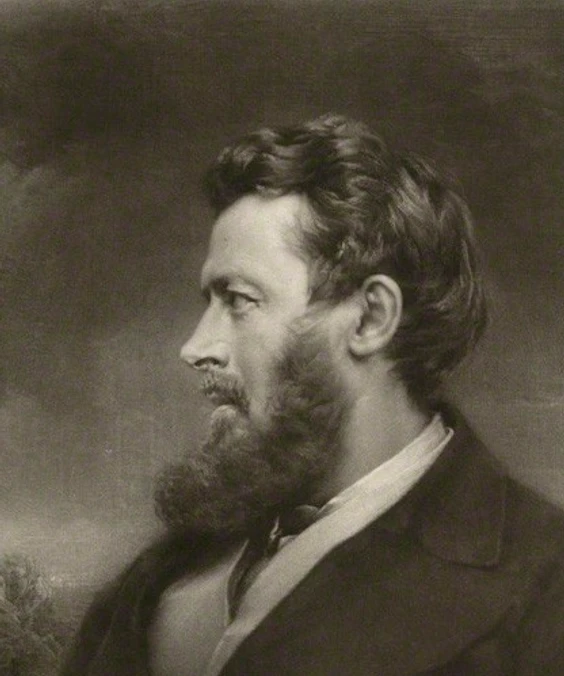
Edmund Burke
The Public Record
Edmund Burke was an Anglo-Irish writer, philosopher, and politician who is widely credited as the founder of the cultural and political philosophy of conservatism. Regarded as one of the most influential conservative thinkers and political writers of the 18th century, Burke spent the majority of his career in Great Britain and was elected as a member of Parliament (MP) from 1766 to 1794 in the House of Commons of Great Britain with the Whig Party. His writings played a significant role in influencing public views and opinions in both Great Britain and France following the French Revolution in 1789, and he remains a major figure in modern conservative circles.
gutenberg.org
The best writers on the law of nations give no sort of countenance to his doctrine of non-interference, in the extent and manner in which he used it, even when there is no war.
He frequently asserted, both at the time and ever since, that the war, though declared by France, was provoked by us, and that it was wholly unnecessary and fundamentally unjust.
In the same manner, and with the same heat, he opposed a bill which (though awkward and inartificial in its construction) was right and wise in its principle, and was precedented in the best times, and absolutely necessary at that…
He pursued a vehement and detailed opposition to it through all its stages, describing it as a measure contrary to the existing treaties between Great Britain and France, as a violation of the law of nations, and as an outrage on the Great…
The magistrates, utterly incapable of distinguishing the friends from the enemies of order, would in vain look for support, when they stood in the greatest need of it.
By this stratagem, the confederacy intended for preserving the British Constitution and the public peace would be wholly defeated.
This insidious advice tended to confound those who wished well to the object of the association with the seditious against whom the association was directed.
At a time in which the press has been the grand instrument of the subversion of order, of morals, of religion, and, I may say, of human society itself, to carry the doctrines of its liberty higher than ever it has been known by its most…
The means used in England to coöperate with the Jacobin army in politics agreed with their modes of proceeding: I allude to the mischievous writings circulated with much industry and success, as well as the seditious clubs, which at that…
I had then no concern in the party, having been, for some time, with all outrage, excluded from it; but, on general principles, I must say that a person who assumes to be leader of a party composed of freemen and of gentlemen ought to pay…
The closest, the most natural, the nearest, and at the same time, from many internal as well as external circumstances, the weakest of our allies, Holland, would have been given up, bound hand and foot, to France, just on the point of…
Those societies would have been infinitely strengthened and multiplied in every quarter; their dangerous foreign communications would have been left broad and open; the crown would not have been authorized to take any measure whatever for…
If it had pleased God to suffer him to succeed in this his project for the amendment to the address, he would forever have ruined this nation, along with the rest of Europe.
To counteract the alarm given by the progress of Jacobin arms and principles, he endeavored to excite an opposite alarm concerning the growth of the power of the crown.
He contented himself with defending the ruling factions in France, and with accusing the public councils of this kingdom of every sort of evil design on the liberties of the people,--declaring distinctly, strongly, and precisely, that the…
Nothing can preserve us from that evil--which connects cabinet factions abroad with popular factions here--but the keeping sacred the crown as the only channel of communication with every other nation.
This is a sore evil,--an evil from which, before this time, England was more free than any other nation.
On the other hand, the advantage taken of the discontent which at that time prevailed in Parliament and in the nation, to give to an individual an influence directly against the government of his country, in a foreign court, has made a…
But such a proceeding is in law not very remote from that offence, and is undoubtedly a most unconstitutional act, and an high treasonable misdemeanor.
This is an undisputed part of the legal prerogative of the crown.
The laws and Constitution of the kingdom intrust the sole and exclusive right of treating with foreign potentates to the king.
Viewing things in that light, my confidence in him is not increased, but totally destroyed, by those proceedings.
I think that the spirit of his late proceedings is wholly alien to our national policy, and to the peace, to the prosperity, and to the legal liberties of this nation, according to our ancient domestic and appropriated mode of holding them.
Fox's conduct, are not calumnies, but founded on truth,--that they are not few, but many,--and that they are not light and trivial, but, in a very high degree, serious and important.
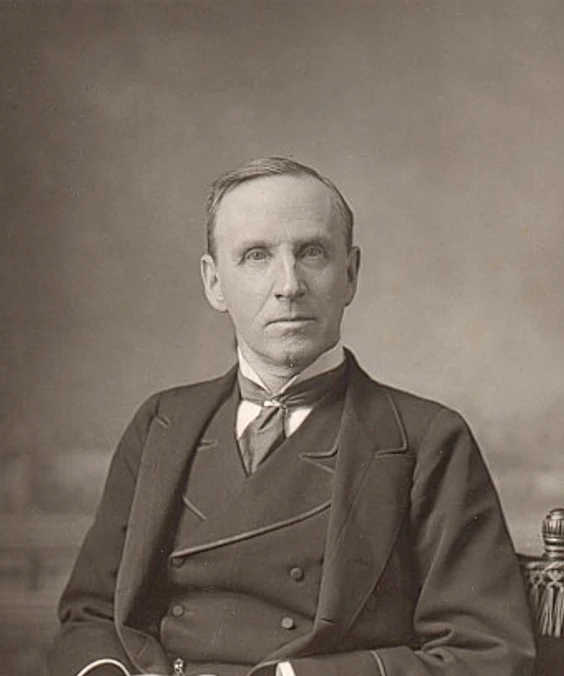
Politicians like Edmund Burke