We cannot arrange with our enemy, in the present conjuncture, without abandoning the interest of mankind.
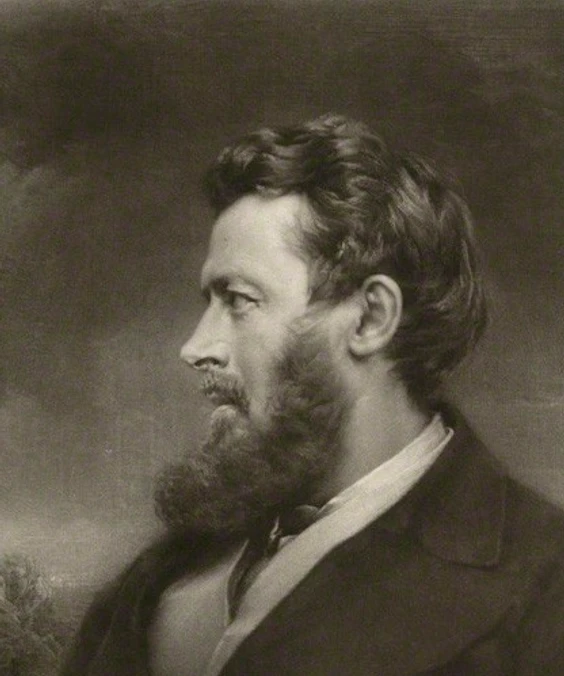
Edmund Burke
The Public Record
Edmund Burke was an Anglo-Irish writer, philosopher, and politician who is widely credited as the founder of the cultural and political philosophy of conservatism. Regarded as one of the most influential conservative thinkers and political writers of the 18th century, Burke spent the majority of his career in Great Britain and was elected as a member of Parliament (MP) from 1766 to 1794 in the House of Commons of Great Britain with the Whig Party. His writings played a significant role in influencing public views and opinions in both Great Britain and France following the French Revolution in 1789, and he remains a major figure in modern conservative circles.
gutenberg.org
If we look to nothing but our domestic condition, the state of the nation is full even to plethora; but if we imagine that this country can long maintain its blood and its food as disjoined from the community of mankind, such an opinion…
He is more tempted with our wealth as booty than terrified with it as power.
We have an enemy to deal with who never regarded our contest as a measuring and weighing of purses.
A display of our wealth before robbers is not the way to restrain their boldness or to lessen their rapacity.
Often has a man lost his all because he would not submit to hazard all in defending it.
Too great a sense of the value of a subordinate interest may be the very source of its danger, as well as the certain ruin of interests of a superior order.
We are bought by the enemy with the treasure from our own coffers.
If we command our wealth, we shall be rich and free: if our wealth commands us, we are poor indeed.
What justice they are to obtain, as the alms of an enemy, depends upon his character; and that they ought well to know before they implicitly confide.
Power and eminence and consideration are things not to be begged; they must be commanded: and they who supplicate for mercy from others can never hope for justice through themselves.
I do not deny, that, in small, truckling states, a timely compromise with power has often been the means, and the only means; of drawling out their puny existence; but a great state is too much envied, too much dreaded, to find safety in…
They therefore seek for a refuge from their fears in the fears themselves, and consider a temporizing meanness as the only source of safety.
The nature of courage is, without a question, to be conversant with danger: but in the palpable night of their terrors, men under consternation suppose, not that it is the danger which by a sure instinct calls out the courage to resist it…
We plunge into a dark gulf with all the rash precipitation of fear.
An abject distrust of ourselves, an extravagant admiration of the enemy, present us with no hope but in a compromise with his pride by a submission to his will.
Under misfortunes, it often happens that the nerves of the understanding are so relaxed, the pressing peril of the hour so completely confounds all the faculties, that no future danger can be properly provided for, can be justly estimated…
There is a courageous wisdom: there is also a false, reptile prudence, the result, not of caution, but of fear.
In all situations of difficulty, men will be influenced in the part they take, not only by the reason of the case, but by the peculiar turn of their own character.
Let us not deceive ourselves: we are at the beginning of great troubles.
We are not at an end of our struggle, nor near it.
We must walk in new ways, or we can never encounter our enemy in his devious march.
For one, (if they be properly treated,) I despair neither of the public fortune nor of the public mind.
Never did the masculine spirit of England display itself with more energy, nor ever did its genius soar with a prouder preëminence over France, than at the time when frivolity and effeminacy had been at least tacitly acknowledged as their…
We emerged from the gulf of that speculative despondency, and wore buoyed up to the highest point of practical vigor.
Politicians like Edmund Burke