The report, combined with their conduct, forms an infallible criterion of the views of this republic.
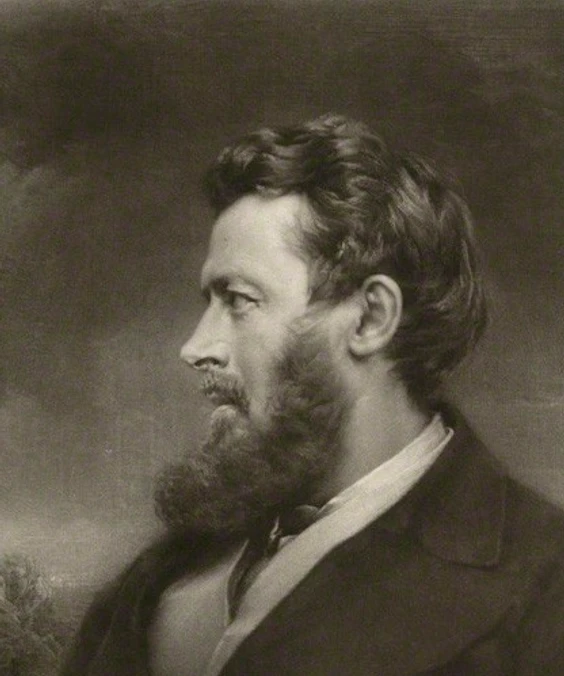
Edmund Burke
The Public Record
Edmund Burke was an Anglo-Irish writer, philosopher, and politician who is widely credited as the founder of the cultural and political philosophy of conservatism. Regarded as one of the most influential conservative thinkers and political writers of the 18th century, Burke spent the majority of his career in Great Britain and was elected as a member of Parliament (MP) from 1766 to 1794 in the House of Commons of Great Britain with the Whig Party. His writings played a significant role in influencing public views and opinions in both Great Britain and France following the French Revolution in 1789, and he remains a major figure in modern conservative circles.
gutenberg.org
But this principle, suggested in their first struggles, fully avowed in their prosperity, has, in the most adverse state of their affairs, been tenaciously adhered to.
It is generally in the season of prosperity that men discover their real temper, principles, and designs.
In truth, with these limits, and their principle, they would not have left even the shadow of liberty or safety to any nation.
They made, not laws, not conventions, not late possession, but physical Nature and political convenience the sole foundation of their claims.
It happens frequently that pride may reject a public advance, while interest listens to a secret suggestion of advantage.
A negotiator must often seem willing to hazard the whole issue of his treaty, if he wishes to secure any one material point.
A sort of courage belongs to negotiation, as well as to operations of the field.
The discovery of vehement wishes generally frustrates their attainment, and your adversary has gained a great advantage over you when he finds you impatient to conclude a treaty.
A peace too eagerly sought is not always the sooner obtained.
I suppose, for a moment, that this body of Regicide, calling itself a Republic, is a politic person, with whom something deserving the name of peace may be made.
If he rejects solicitation, and will not give even a nod to the suppliants for peace, until a change in the fortune of the war threatens him with ruin, then I think it evident that he wishes nothing more than to disarm his adversary to…
If he offers nothing under misfortune, it is probable that it is more painful to him to abandon the prospect of advantage than to endure calamity.
It shows that there are limits to his ambition or his resentment.
If your enemy offers peace in the moment of success, it indicates that he is satisfied with something.
We may gather something from the time in which the first overtures are made, from the quarter whence they come, from the manner in which they are received.
There is always an augury to be taken of what a peace is likely to be from the preliminary steps that are made to bring it about.
He has given time for our reason to operate, and for British dignity to recover from its surprise.
In the present case, the pride of the Regicide may be our safety.
The haughtiness by which the proud repel us has this of good in it,--that, in making us keep our distance, they must keep their distance too.
We owe more to his insolence than to our own precaution.
We have an enemy to whose virtues we can owe nothing, but on this occasion we are infinitely obliged to one of his vices.
They who make their arrangements in the first run of misadventure, and in a temper of mind the common fruit of disappointment and dismay, put a seal on their calamities.
It is laid in the unalterable constitution of things,--None can aspire to act greatly but those who are of force greatly to suffer.
This acknowledgment we make, if, in a bad or doubtful situation of our affairs, we solicit peace, or if we yield to the modes of new humiliation in which alone she is content to give us an hearing.
Politicians like Edmund Burke