The same discipline which hardens their hearts relaxes their morals.
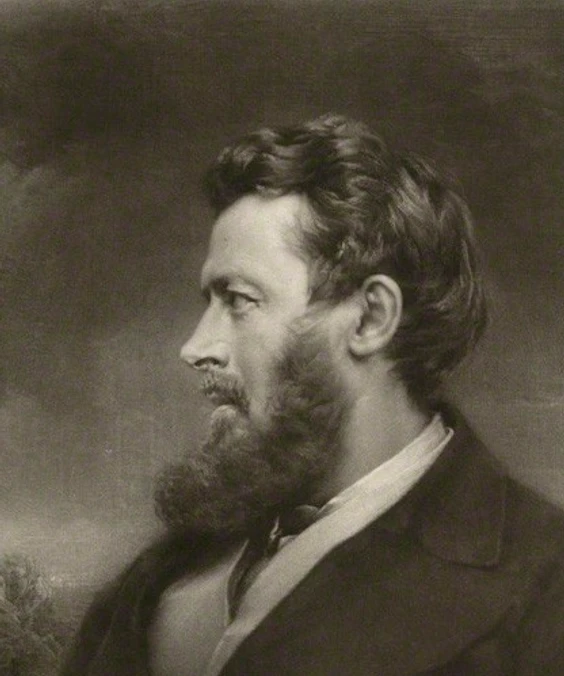
Edmund Burke
The Public Record
Edmund Burke was an Anglo-Irish writer, philosopher, and politician who is widely credited as the founder of the cultural and political philosophy of conservatism. Regarded as one of the most influential conservative thinkers and political writers of the 18th century, Burke spent the majority of his career in Great Britain and was elected as a member of Parliament (MP) from 1766 to 1794 in the House of Commons of Great Britain with the Whig Party. His writings played a significant role in influencing public views and opinions in both Great Britain and France following the French Revolution in 1789, and he remains a major figure in modern conservative circles.
gutenberg.org
But nothing is left to Nature in their systems.
Endeavoring to persuade the people that they are no better than beasts, the whole body of their institution tends to make them beasts of prey, furious and savage.
They disgrace men in the entry into life, they vitiate and enslave them through the whole course of it, and they deprive them of all comfort at the conclusion of their dishonored and depraved existence.
As to those whom they suffer to die a natural death, they do not permit them to enjoy the last consolations of mankind, or those rights of sepulture which indicate hope, and which mere Nature has taught to mankind, in all countries, to…
Their law of divorce, like all their laws, had not for its object the relief of domestic uneasiness, but the total corruption of all morals, the total disconnection of social life.
They knew the contrary to be true; and they had taken good care that the laws should be well seconded by the manners.
When manners were corrupted, the laws were relaxed; as the latter always follow the former, when they are not able to regulate them or to vanquish them.
It is not necessary to observe upon the horrible consequences of taking one half of the species wholly out of the guardianship and protection of the other.
The reason they assigned was as infamous as the act: declaring that women had been too long under the tyranny of parents and of husbands.
With them the matrimonial connection is brought into so degraded a state of concubinage, that I believe none of the wretches in London who keep warehouses of infamy would give out one of their victims to private custody on so short and…
By a strange, uncalled-for declaration, they pronounced that marriage was no better than a common civil contract.
Those monsters employed the same or greater industry to desecrate and degrade that state, which other legislators have used to render it holy and honorable.
The Christian religion, by confining it to the pairs, and by rendering that relation indissoluble, has by these two things done more towards the peace, happiness, settlement, and civilization of the world than by any other part in this…
Other legislators, knowing that marriage is the origin of all relations, and consequently the first element of all duties, have endeavored by every art to make it sacred.
All their new institutions (and with them everything is new) strike at the root of our social nature.
They, on the contrary, have omitted no pains to eradicate every benevolent and noble propensity in the mind of men.
The whole drift of their institution is contrary to that of the wise legislators of all countries, who aimed at improving instincts into morals, and at grafting the virtues on the stock of the natural affections.
The foundation of their republic is laid in moral paradoxes.
The noblest passions, the love of glory, the love of country, have been debauched into means of its preservation and its propagation.
No mechanical means could be devised in favor of this incredible system of wickedness and vice, that has not been employed.
Nothing in the Revolution, no, not to a phrase or a gesture, not to the fashion of a hat or a shoe, was left to accident.
They give their whole form and color to our lives.
Manners are what vex or soothe, corrupt or purify, exalt or debase, barbarize or refine us, by a constant, steady, uniform, insensible operation, like that of the air we breathe in.
When to these establishments of Regicide, of Jacobinism, and of Atheism, you add the correspondent system of manners, no doubt can be left on the mind of a thinking man concerning their determined hostility to the human race.
Politicians like Edmund Burke