What in civil society is a ground of action in politic society is a ground of war.
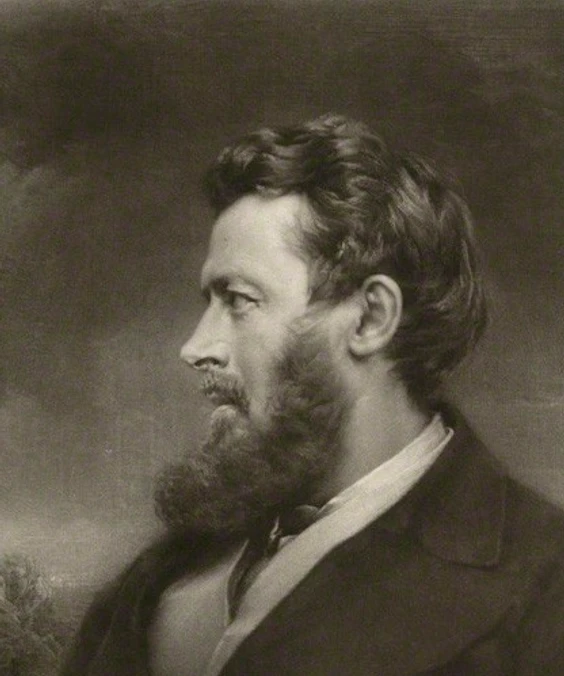
Edmund Burke
The Public Record
Edmund Burke was an Anglo-Irish writer, philosopher, and politician who is widely credited as the founder of the cultural and political philosophy of conservatism. Regarded as one of the most influential conservative thinkers and political writers of the 18th century, Burke spent the majority of his career in Great Britain and was elected as a member of Parliament (MP) from 1766 to 1794 in the House of Commons of Great Britain with the Whig Party. His writings played a significant role in influencing public views and opinions in both Great Britain and France following the French Revolution in 1789, and he remains a major figure in modern conservative circles.
gutenberg.org
For there is a sort of presumption against novelty, drawn out of a deep consideration of human nature and human affairs; and the maxim of jurisprudence is well laid down, "Vetustas pro lege semper habetur.
On this head the parent law is express and clear, and has made many wise provisions, which, without destroying, regulate and restrain the right of ownership by the right of vicinage.
When a neighbor sees a new erection, in the nature of a nuisance, set up at his door, he has a right to represent it to the judge, who, on his part, has a right to order the work to be stayed, or, if established, to be removed.
There is a law of neighborhood which does not leave a man perfect master on his own ground.
Those which are rather conclusions of legal reason than matters of statutable provision belong to universal equity, and are universally applicable.
It has ever been the method of public jurists to draw a great part of the analogies on which they form the law of nations from the principles of law which prevail in civil community.
Distance of place does not extinguish the duties or the rights of men; but it often renders their exercise impracticable.
It is not the condition of our nature: nor is it conceivable how any man can pursue a considerable course of action without its having some effect upon others, or, of course, without producing some degree of responsibility for his conduct.
Men are never in a state of total independence of each other.
As to the right of men to act anywhere according to their pleasure, without any moral tie, no such right exists.
Can any person imagine, that, in offering to mankind this desperate alternative, there is no indication of a hostile mind, because men in possession of the ruling authority are supposed to have a right to act without coercion in their own…
The whole body of this new scheme of manners, in support of the new scheme of polities, I consider as a strong and decisive proof of determined ambition and systematic hostility.
But it is one of the greatest objects of human wisdom to mitigate those evils which we are unable to remove.
As to war, if it be the means of wrong and violence, it is the sole means of justice amongst nations.
Nothing is so strong a tie of amity between nation and nation as correspondence in laws, customs, manners, and habits of life.
They are led to associate by resemblances, by conformities, by sympathies.
Men are not tied to one another by papers and seals.
Entirely to trust to either is to disregard our own safety, or not to know mankind.
The interests frequently tear to pieces the engagements, and the passions trample upon both.
We do not act much more wisely, when we trust to the interests of men as guaranties of their engagements.
We lay too much weight upon the formality of treaties and compacts.
The operation of dangerous and delusive first principles obliges us to have recourse to the true ones.
What are we to do, if the government and the whole community is of the same description?
This system of manners in itself is at war with all orderly and moral society, and is in its neighborhood unsafe.
Politicians like Edmund Burke