They have made no sacrifices to their projects of greater consequence than their shoe-buckles, whilst they were imprisoning their king, murdering their fellow-citizens, and bathing in tears and plunging in poverty and distress thousands of…
Edmund Burke
The Public Record
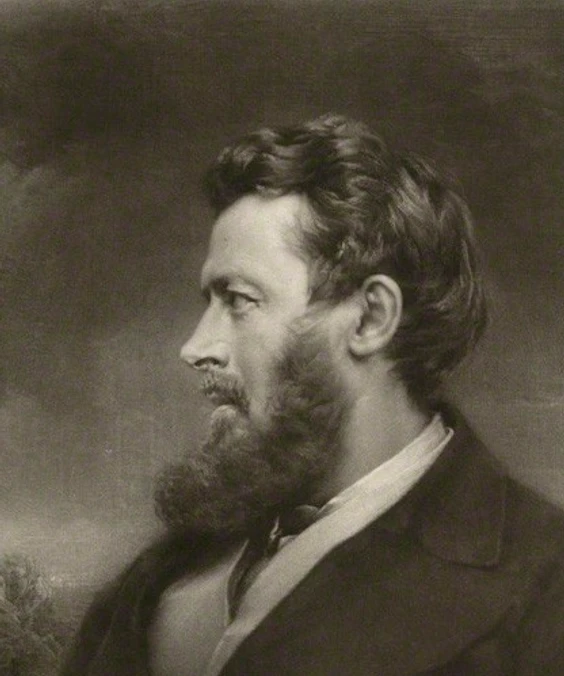
Edmund Burke was an Anglo-Irish writer, philosopher, and politician who is widely credited as the founder of the cultural and political philosophy of conservatism. Regarded as one of the most influential conservative thinkers and political writers of the 18th century, Burke spent the majority of his career in Great Britain and was elected as a member of Parliament (MP) from 1766 to 1794 in the House of Commons of Great Britain with the Whig Party. His writings played a significant role in influencing public views and opinions in both Great Britain and France following the French Revolution in 1789, and he remains a major figure in modern conservative circles.
It has been the effect of their sense of perfect safety, in authorizing treasons, robberies, rapes, assassinations, slaughters, and burnings, throughout their harassed land.
But no name, no power, no function, no artificial institution whatsoever, can make the men, of whom any system of authority is composed, any other than God, and Nature, and education, and their habits of life have made them.
Virtue and wisdom may be the objects of their choice; but their choice confers neither the one nor the other on those upon whom they lay their ordaining hands.
But whatever the distinguished few may have been, it is the substance and mass of the body which constitutes its character, and must finally determine its direction.
In this political traffic, the leaders will be obliged to bow to the ignorance of their followers, and the followers to become subservient to the worst designs of their leaders.
But whilst I revere men in the functions which belong to them, and would do as much as one man can do to prevent their exclusion from any, I cannot, to flatter them, give the lie to Nature.
The power of the House of Commons, direct or indirect, is, indeed, great: and long may it be able to preserve its greatness, and the spirit belonging to true greatness, at the full!--and it will do so, as long as it can keep the breakers…
What ought to be the heads, the hearts, the dispositions, that are qualified, or that dare, not only to make laws under a fixed constitution, but at one heat to strike out a totally new constitution for a great kingdom, and in every part…
In such a state of unbounded power, for undefined and undefinable purposes, the evil of a moral and almost physical inaptitude of the man to the function must be the greatest we can conceive to happen in the management of human affairs.
Turbulent, discontented men of quality, in proportion as they are puffed up with personal pride and arrogance, generally despise their own order.
One of the first symptoms they discover of a selfish and mischievous ambition is a profligate disregard of a dignity which they partake with others.
To be attached to the subdivision, to love the little platoon we belong to in society, is the first principle (the germ, as it were) of public affections.
The levellers, therefore, only change and pervert the natural order of things: they load the edifice of society by setting up in the air what the solidity of the structure requires to be on the ground.
Such descriptions of men ought not to suffer oppression from the state; but the state suffers oppression, if such as they, either individually or collectively, are permitted to rule.
Woe to the country which would madly and impiously reject the service of the talents and virtues, civil, military, or religious, that are given to grace and to serve it; and would condemn to obscurity everything formed to diffuse lustre…
Woe to that country, too, that, passing into the opposite extreme, considers a low education, a mean, contracted view of things, a sordid, mercenary occupation, as a preferable title to command!
If any bounds are set to the rapacious demands of that sort of people, or that others are permitted to partake in the objects they would engross, revenge and envy soon fill up the craving void that is left in their avarice.
When men of rank sacrifice all ideas of dignity to an ambition without a distinct object, and work with low instruments and for low ends, the whole composition becomes low and base.
Other revolutions have been conducted by persons who, whilst they attempted or affected changes in the commonwealth, sanctified their ambition by advancing the dignity of the people whose peace they troubled.
I do not say, (God forbid!) I do not say that the virtues of such men were to be taken as a balance to their crimes; but they were some corrective to their effects.
Because, among all their massacres, they had not slain the mind in their country.
A conscious dignity, a noble pride, a generous sense of glory and emulation, was not extinguished.
In all mutations (if mutations must be) the circumstance which will serve most to blunt the edge of their mischief, and to promote what good may be in them, is, that they should find us with our minds tenacious of justice and tender of…



