But their peaceful occupations did not contribute so much to that end as their wars, which were not the less frequent and violent because the people were few, and the interests for which they contended of but small importance.
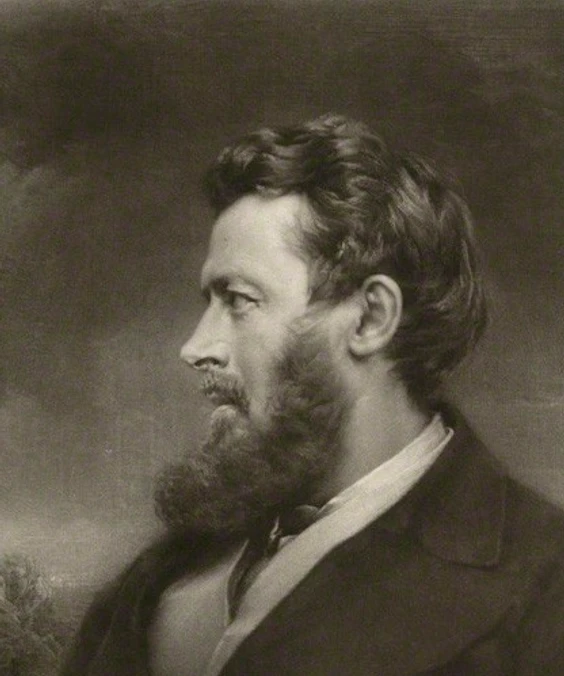
Edmund Burke
The Public Record
Edmund Burke was an Anglo-Irish writer, philosopher, and politician who is widely credited as the founder of the cultural and political philosophy of conservatism. Regarded as one of the most influential conservative thinkers and political writers of the 18th century, Burke spent the majority of his career in Great Britain and was elected as a member of Parliament (MP) from 1766 to 1794 in the House of Commons of Great Britain with the Whig Party. His writings played a significant role in influencing public views and opinions in both Great Britain and France following the French Revolution in 1789, and he remains a major figure in modern conservative circles.
gutenberg.org
It was in a great degree from this manner of life that mankind became scattered in the earliest times over the whole globe.
I apprehend that these first settled countries, so far from being overstocked with inhabitants, were rather thinly peopled, and that the same causes which occasioned that thinness occasioned also those frequent migrations which make so…
That Britain was first peopled from Gaul we are assured by the best proofs,--proximity of situation, and resemblance in language and manners.
The whole of Cæsar's conduct in these two campaigns sufficiently demonstrates that he had no intention of making an absolute conquest of any part of Britain.
This is exactly the excuse which the savages of America, who have no regular government, make at this day upon the like occasions; but it would be a strange apology from one of the modern states of Europe that had employed armies against…
It is odd to observe the progress of bad taste: for this mixed passion being universally proscribed in the regions of tragedy, it has taken refuge and shelter in comedy, where it seems firmly established, though no reason can be assigned…
It is not the incompatibility or agreeableness of incidents, characters, or sentiments with the probable in fact, but with propriety in design, that admits or excludes them from a place in any composition.
Who does not see the possibility of such an incident, and, at the same time, the absurdity of introducing it on such an occasion!
Suppose, instead of Æneas, he had represented the impious Mezentius as entertaining himself in that manner; such a thing would not have been without probability, but it would have clashed with the very first principles of taste, and, I…
Else the whole idea of propriety, that is, the only distinction between the just and chimerical in the arts, would be utterly lost.
It is the business of Art first to choose some determinate end and purpose, and then to select those parts of Nature, and those only, which conduce to that end, avoiding with most religious exactness the intermixture of anything which…
There is not a more absurd mistake than that whatever may not unnaturally happen in an action is of course to be admitted into every painting of it.
Now with regard to the display of the character, which is the essential part of the plot, nothing can be more finely imagined than to draw a miser in law.
But in the Lawsuit this is admirably avoided: for the character chosen is a rich, avaricious usurer: the pecuniary distresses of such a person can never be looked upon with horror; and if he should be even handled unjustly, we always wait…
In common affairs and common life, virtuous sentiments are not even the character of virtuous men; we cannot bear these sentiments, but when they are pressed out, as it were, by great exigencies, and a certain contention which is above the…
It is not every story, every character, every incident, but those only which answer their end.--Painting of artificial things not good; a thing being useful does not therefore make it most pleasing in picture.--Natural manners, good and…
The parties are to be put in situations in which their passions are roused, and their real characters called forth; and if their situations are judiciously adapted to the characters, there is no doubt but they will appear in all their…
It appears that no part of human life which may be subject to ridicule is exempted from comedy; for wherever men run into the absurd, whether high or low, they may be the subject of satire, and consequently of comedy.
Comedy, therefore, is a satirical poem, representing an action carried on by dialogue, to excite laughter by describing ludicrous characters.
It was soon found that the best way to depress an hated character was to turn it into ridicule; and therefore the greater vices, which in the beginning were lashed, gave place to the contemptible.
Tragedy turned, therefore, on melancholy and affecting subjects,--a sort of threnodia,--its passions, therefore, admiration, terror, and pity.
Great men are never sufficiently shown but in struggles.
And these have accordingly divided poetry into two very different kinds,--the panegyrical, and the satirical; under one of which heads all genuine poetry falls (for I do not reckon the didactic as poetry, in the strictness of speech).
There are but four general principles which can move men to interest themselves in the characters of others, and they may be classed under the heads of good and ill opinion: on the side of the first may be classed admiration and love…
Politicians like Edmund Burke