They held that the life of a man was the only atonement for the life of a man.
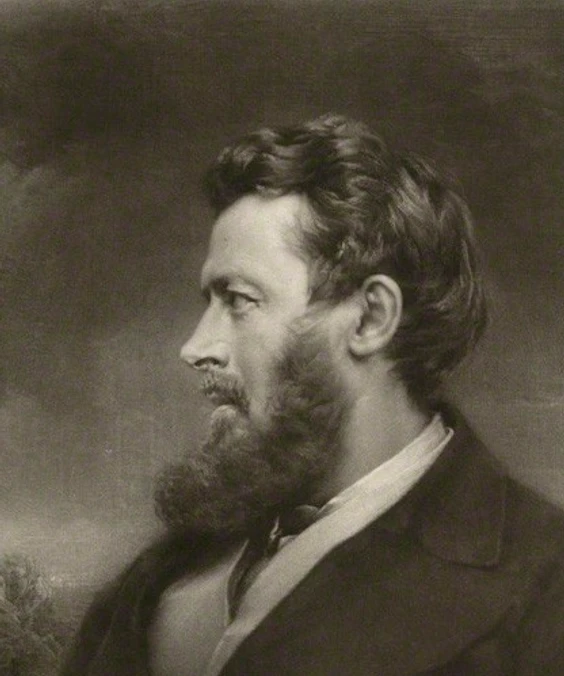
Edmund Burke
The Public Record
Edmund Burke was an Anglo-Irish writer, philosopher, and politician who is widely credited as the founder of the cultural and political philosophy of conservatism. Regarded as one of the most influential conservative thinkers and political writers of the 18th century, Burke spent the majority of his career in Great Britain and was elected as a member of Parliament (MP) from 1766 to 1794 in the House of Commons of Great Britain with the Whig Party. His writings played a significant role in influencing public views and opinions in both Great Britain and France following the French Revolution in 1789, and he remains a major figure in modern conservative circles.
gutenberg.org
This religious observance towards rude stones is one of the most ancient and universal of all customs.
The landmark was in those times held sacred on account of its great uses, and easily passed into an object of worship.
The monuments themselves then came to be venerated,--and not the less because the reason for venerating them was no longer known.
In time the memory of the persons or facts which these stones were erected to perpetuate wore away; but the reverence which custom, and probably certain periodical ceremonies, had preserved for those places was not so soon obliterated.
The great stones, it has been supposed, were originally monuments of illustrious men, or the memorials of considerable actions,--or they were landmarks for deciding the bounds of fixed property.
The mistletoe, pointed out by its very peculiar appearance and manner of growth, must have struck powerfully on the imaginations of a superstitious people.
Oaks were regarded by this sect with a particular veneration, as, by their greatness, their shade, their stability, and duration, not ill representing the perfections of the Deity.
When Homer represents the ghosts of his heroes appearing at the sacrifices of Ulysses, he supposes them endued with life, sensation, and a capacity of moving; but he has joined to these powers of living existence uncomeliness, want of…
But it is by no means necessary to resort to any particular teacher for an opinion which owes its birth to the weak struggles of unenlightened reason, and to mistakes natural to the human mind.
The Druids were eminent above all the philosophic lawgivers of antiquity for their care in impressing the doctrine of the soul's immortality on the minds of their people, as an operative and leading principle.
These vast structures have nothing which can be admired, but the greatness of the work; and they are not the only instances of the great things which the mere labor of many hands united, and persevering in their purpose, may accomplish…
Those piles of rude magnificence, Stonehenge and Abury, are in vain produced in proof of their mathematical abilities.
They were at once the priests, lawgivers, and physicians of their nation, and consequently concentred in themselves all that respect that men have diffusively for those who heal their diseases, protect their property, or reconcile them to…
The first openings of civility have been everywhere made by religion.
Justice was in all countries originally administered by the priesthood: nor, indeed, could laws in their first feeble state have either authority or sanction, so as to compel men to relinquish their natural independence, had they not…
The natural equality of mankind appears and is asserted, and therefore there are but obscure lines of any form of government.
In all very uncultivated countries, as society is not close nor intricate, nor property very valuable, liberty subsists with few restraints.
A natural ferocity and an impetuous onset stood them in the place of discipline.
Their foot was without heavy armor; it was no firm body, nor instructed to preserve their ranks, to make their evolutions, or to obey their commanders; but in tolerating hardships, in dexterity of forming ambuscades, (the art military of…
Britain was in the time of Julius Cæsar what it is at this day, in climate and natural advantages, temperate and reasonably fertile.
They were far from being compelled to this extraordinary migration by any want of subsistence at home; for it appears that they raised, without difficulty, as much corn in one year as supported them for two; they could not complain of the…
Such migrations, sometimes by choice, more frequently from necessity, were common in the ancient world.
From what is very commonly known of the state of North America, it need not be said how often and to what distance several of the nations on that continent are used to migrate, who, though thinly scattered, occupy an immense extent of…
Ancient history has furnished us with many instances of whole nations, expelled by invasion, falling in upon others, which they have entirely overwhelmed,--more irresistible in their defeat and ruin than in their fullest prosperity.
Politicians like Edmund Burke