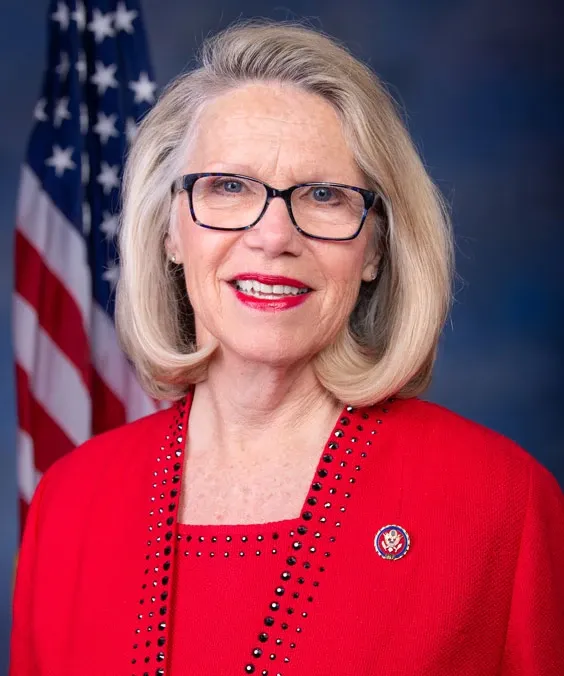
Mike Enzi
The Public Record
Mike Enzi is a former U.S. Senator from Wyoming, serving from 1997 to 2021. A member of the Republican Party, Enzi was known for his work on various committees, including the Senate Budget Committee and the Senate Health, Education, Labor, and Pensions Committee. Throughout his tenure, he focused on fiscal responsibility, education reform, and healthcare issues. Enzi was recognized for his collaborative approach, often working across party lines to achieve legislative goals.
Mar 7, 2012
I recently got a report that Australia did on their early childhood schools, and it was a very devastating report.
Mar 7, 2012
A high school diploma and some additional education or training is necessary to be successful in today's economy.
Feb 16, 2012
I thank the Chair. (The remarks of Mr. Enzi pertaining to the introduction of S.J. Res. 36 are located in today's Record under ``Statements on Introduced Bills and Joint Resolutions.'')
Feb 13, 2012
Anyone who has ever had a serious injury or condition knows how difficult managing pain can be.
Feb 13, 2012
Research has played a crucial role in our understanding of pain--both in how it can be useful to warn of damage to our bodies, but also how it can be harmful and how we can attempt to mitigate it.
Feb 13, 2012
For over 100 million Americans affected by chronic pain, the challenge of dealing with pain is ever-present in their lives.
Feb 13, 2012
It is a common-sense approach that takes some modest steps to reform the Foreign Investment in Real Property Tax Act.
Feb 6, 2012
There is not a single aspect of daily life that hasn't been transformed or made easier through the use of technology.
Feb 6, 2012
As the author of that bill in 1993, it was--let's face it--our focus was simply on making it easier for people who had hearing problems, deaf, hard of hearing.
Feb 6, 2012
But thank you for holding the hearing, and I will get a complete report on all of the suggestions that we get.
Dec 14, 2011
Thank you. I've also heard about the amount of time that it takes for different stakeholders, ranging from 6 months to 3 to 4 years for approval.
Dec 14, 2011
As a result of recent drug shortages, patients all over the United States are forced to delay their treatment or use second-best alternatives.
Dec 14, 2011
OK, thank you. And can you tell us how the Office of Generic Drugs coordinates with your office when evaluating applications for the manufacturing upgrades, active pharmaceutical ingredient approval, or drug applications?
Dec 7, 2011
That would have been a sign of the Administration's support for jobs and a recognition that workers can't wait until after the next election for a job.
Dec 7, 2011
People have to--if they have children, and they're the responsible one for the children, they have to have some kind of daycare to even be able to apply for a job.
Dec 7, 2011
I think it's high time that we reauthorize it. I'm a big supporter of the workforce system.
Dec 7, 2011
We had hoped the decision would have been made on the basis of economics, facts and the best interests of the Nation, not on the basis of a political calculation.
Dec 7, 2011
I appreciate that. I mentioned that this WIA bill has made it through the committee in the Senate twice and through the Senate twice.
Dec 7, 2011
Do government regulations make it any more difficult for you to operate and to hire people?
Dec 7, 2011
As Mr. Meyer said, those people can go to work right away, and if they have the skills, they're a valuable resource.
Dec 7, 2011
Even if the case doesn't persist, doesn't the small businessman have to hire an attorney to represent him?
Politicians like Mike Enzi