Jan 15, 2014
I think that is what we need to do: to look at this from a comprehensive perspective and try to move forward.
The Public Record
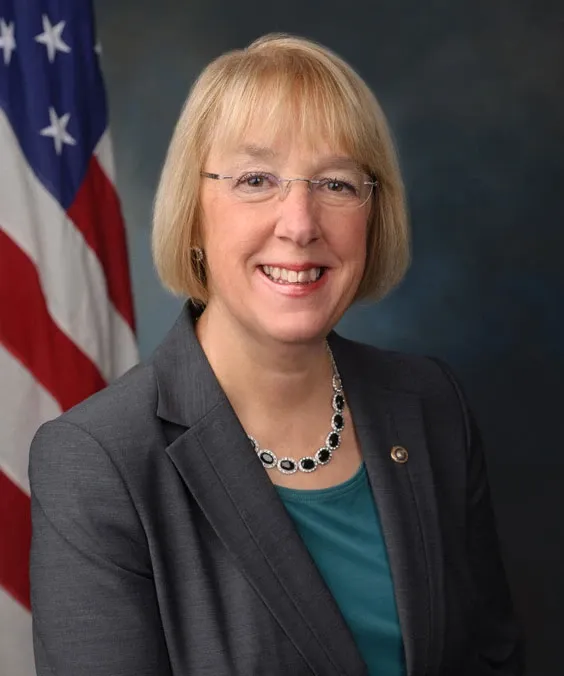
Maria Ellen Cantwell is a United States Senator from Washington, serving since January 3, 2001. A member of the Democratic Party, she has been actively involved in various legislative efforts, particularly focusing on technology, environmental issues, and healthcare. Throughout her tenure, Cantwell has worked on policies aimed at promoting clean energy and protecting the environment, as well as advocating for affordable healthcare access for all Americans.
I think that is what we need to do: to look at this from a comprehensive perspective and try to move forward.
While you can complain about that, and you can say, well, this agreement or that agreement will catch us up, to me, the real issue becomes market share.
I think making sure that, as we say, you know, with American Express, it has its privileges, that U.S. citizenship has its privileges and it's the right to privacy.
I personally would make it like the Miranda rights, everybody would know what they are.
Making sure that U.S. citizens are protected needs to be a pretty basic right.
The issue is, this larger issue that we're having resonates in the same way, which is the unauthorized collection, storage, and sharing of private data and information without someone's knowledge.
I hope that you will work, as the head of this organization, to pay attention to these privacy issues.
I am hoping that in this position you will be able to further both of those issues and find the right balance.
This hearing is to dovetail with our last hearing, which was about the fulfilling of the promise of the Indian Reorganization Act in restoring 90 million acres of land.
The implementation of the Land Buy-Back Program is critical for restoring tribal sovereignty.
I would like to announce that the Committee on Indian Affairs will meet during the session of the Senate on Wednesday, December 11, 2013, in room SD-628 of the Dirksen Senate Office Building, at 2:30 p.m., to conduct a nomination hearing…
The Supreme Court's 2009 decision in Carcieri v. Salazar has created two unequal classes of federally recognized tribes.
The law should not be changed to give non-Indian communities or interested third parties veto power over where (or even whether) newly recognized or restored tribes may acquire land in trust for gaming.
Our answer is always no or the Administration is coming and try to take the money to offset the budget deficit and the Pacific Northwest answer is no.
The Northwest, the Pacific Northwest, is not going to tolerate any attack on BPA's regional authority.
Our country's financial troubles are not really stemming from our obligations to Indian Country, and frankly, we're not doing a good job in fulfilling those obligations.
The failure to fully pay for contract support costs is creating a fiscal and human crisis in Indian Country.
We cannot allow them to bear a disproportionate burden because of cuts that were never supposed to go into effect in the first place.
We are not really doing a good job in fulfilling the obligations that we have to Indian Country.
The trust relationship that exists between the United States and tribe is a relationship built through the United States Constitution, treaties, Federal statutes and a Supreme Court decision.
I would like to announce that the Committee on Indian Affairs will meet during the session of the Senate on Wednesday, November 20, 2013, in room SD-628 of the Dirksen Senate Office Building, at 2:30 p.m., to conduct an oversight hearing…
I would like to announce that the Committee on Indian Affairs will meet during the session of the Senate on Thursday, November 14, 2013, in room SD-628 of the Dirksen Senate Office Building, at 2:30 p.m., to conduct an oversight hearing…
So we're constantly falling behind, and thereby the immigration issue becomes an active debate.
Politicians like Maria Cantwell