I would say to the Senator or ask the Senator, in this debate, I think you raised an important question, if I understand it correctly, which is, How much will the U.S. Government spy on U.S. citizens? And that, combined with the question…
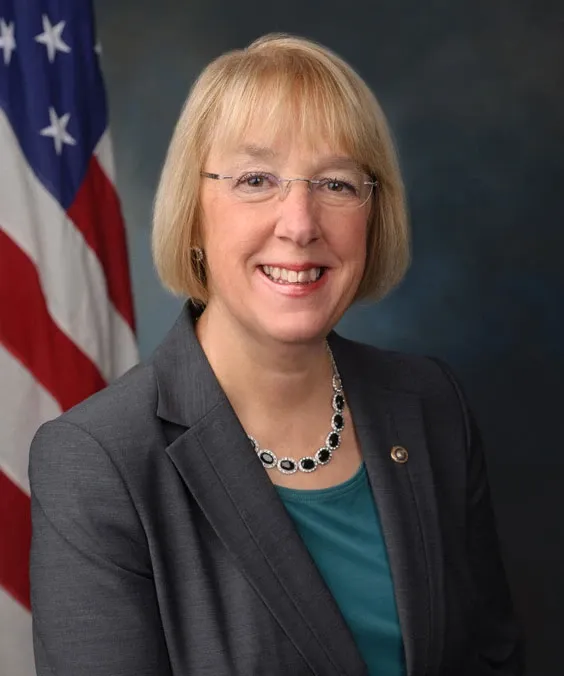
Maria Cantwell
The Public Record
Maria Ellen Cantwell is a United States Senator from Washington, serving since January 3, 2001. A member of the Democratic Party, she has been actively involved in various legislative efforts, particularly focusing on technology, environmental issues, and healthcare. Throughout her tenure, Cantwell has worked on policies aimed at promoting clean energy and protecting the environment, as well as advocating for affordable healthcare access for all Americans.
I applaud the Chairman and Ranking Member for holding today's important hearing on the use of group homes in states' child welfare systems.
We should be exploring ways to responsibly limit the use of congregate care so that it supplements, rather than supplants, family-based care.
I look forward to working with the Committee to improve federal incentives under the title IV-E program.
We strongly support Senator Cantwell's proposal because it reinforces the strong partnership between the public and private sectors in delivering a more modern grid.
I so appreciate that we are having a hearing today on energy infrastructure. It is probably one of the most important and also complicated areas that we are going to try to deal with in energy legislation.
We need to consider resilience in our infrastructure investment, making sure that we also are making it part of a key energy security equation.
We are not getting screwed over again by another ENRON style scheme, like: 'look over here, but don't pay attention to what is really going on over here.'
In conclusion, Congress has an important role to play in advancing the modernization of our nation's electric grid.
We are at an energy crossroad. The dynamic and changing nature of our domestic resource mix... is creating both new challenges and great opportunities.
We want the United States of America to have an aggressive policy towards these very successful lower-cost, better-outcome models and incent people.
The point is, you want to deal with this chronic population, and they are part of dealing with that chronic population.
We just want to be--listen, we are not happy that we are so efficient and produce better outcomes...
I know you have been dedicated for many years to this subject in seeking to reform Federal policy on critical minerals.
We have to do a better job of both improving our infrastructure to moving goods and services.
We will be sending a letter to Secretary Foxx later today urging him to immediately correct that on emergency orders.
I want to say, Mr. Chairman, I don't know if you have heard but we've had another rail explosion this morning and certainly want to encourage our Committee to look at legislation in this matter.
The change would prevent Russian pollack from being labeled as United States Alaskan pollack.
Well, I think we see things, obviously, about it. They are known for labor issues.
Communities need to be able to get a mobile, broadband unit more easily deployed as opposed to waiting for two or three weeks for the state to apply for a FEMA declaration.
We need better memorandums of understanding that require communications be set up right away so that our communities can continue to deal with these disasters.
The fire season is upon us, and we are looking to you as experts to tell us how we can better prepare for this year's fire season.
Energy efficiency as a resource is larger, cheaper, a better job creator and carries lower environmental impacts than the alternatives.
Energy efficiency costs less than half of what it costs for new energy production.