Apr 23, 2018
And now the CBO estimates that we will return to trillion-dollar deficits starting 2020.
The Public Record
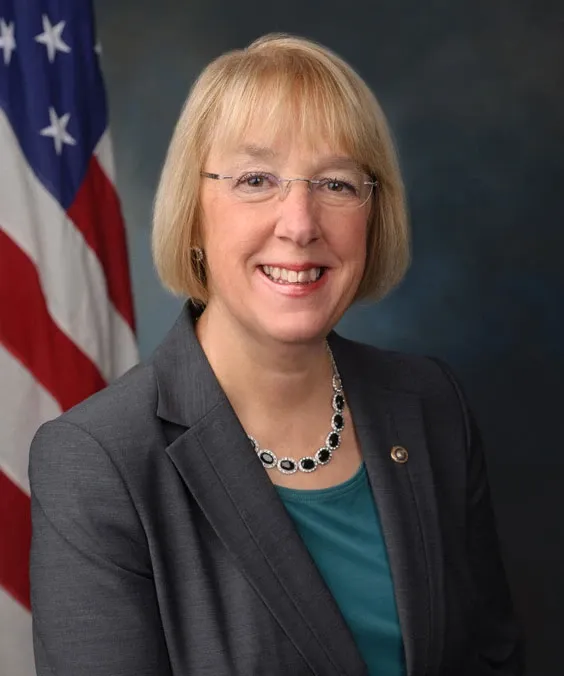
Maria Ellen Cantwell is a United States Senator from Washington, serving since January 3, 2001. A member of the Democratic Party, she has been actively involved in various legislative efforts, particularly focusing on technology, environmental issues, and healthcare. Throughout her tenure, Cantwell has worked on policies aimed at promoting clean energy and protecting the environment, as well as advocating for affordable healthcare access for all Americans.
And now the CBO estimates that we will return to trillion-dollar deficits starting 2020.
But when Obama left, he made significant progress cleaning up after the Bush years. We cut the deficit by over half to $665.4 billion.
When Bush took office in 2001, he was handed a surplus of $128.2 billion. But after two tax cut bills and two unpaid-for wars, we ended up with a deficit of $1.4 trillion.
These tax cuts are expected to result in a 70-percent larger rise in Federal debt as a share of the economy than we would have otherwise had through 2025.
The United States is on an unsustainable fiscal course over the long term, and the tax cuts--if they are continued--would add considerably to that gap.
We are talking about $7 million of the Forest Service's $3 billion budget to operate this innovation program.
This will ensure communities are not left without the funding they need while we create permanent solutions.
The Omnibus provided an additional $160 million through 2029 to back pay the programs that had been cut.
Getting the Wildfire Funding Fix enacted into law is something that I, Senator Wyden and several members on this side of the aisle, have fought diligently for, for many, many years.
I thank my colleague, who I know considers the efforts of the Commerce Committee as great, hard work, and I appreciate his hard work. As I mentioned, I did not support the bill as it came out of committee. I know there are things we are…
I hope that we can come together on this because, you know, we have toured our State, we have heard unbelievable stories of what is happening.
I think we are beyond watching these patterns. I think that is why we are in this problem, because that is all we did and we did not penalize the manufacturer for failing to notify.
Currently, the fines for manufacturing are a mere $10,000 for neglect in reporting on that distribution. So to me, that is hardly a deterrent.
So my point is, where is the accountability? Where is the accountability for drug manufacturers not tracking and using that information with the Drug Enforcement Administration to work cost-effectively to try to stop this kind of…
I do not know if either one of you knows--I am assuming you do--that the Drug Enforcement Administration classified opioids as a dangerous substance with a potential for high abuse and leading to severe psychological and physical…
Because obviously it is a win-win situation. We make the investment and they help in the modernization and weatherization of these homes.
I love the technical assistance. I love bridging that gap, but to me, we also should be learning from that what works and what ways we can implement that.
I think what I've learned in the time that I've been there is that everything is up to the tribes and the resources that they have, and that all the tribes are different.
We have to do better, and the technology resources are there, I believe, to do better.
It literally hurts my heart to see the high cost of energy in an area of the United States of America.
I think this is such an important issue. I think it is such an important challenge for our nation.
I can see it in my State and I guarantee you they are delivering better care at lower cost.
I have a really basic question. Do you think we deliver better and more efficient care through self governance than through the rest of Indian Health Services?
Politicians like Maria Cantwell