Sep 14, 2009
I mean what could we be buying for $1.4 trillion? Doesn't that offset just, I mean that's money that could instead go to helping us stimulate the investment that we need to see in green technology here in the United States instead of…
The Public Record
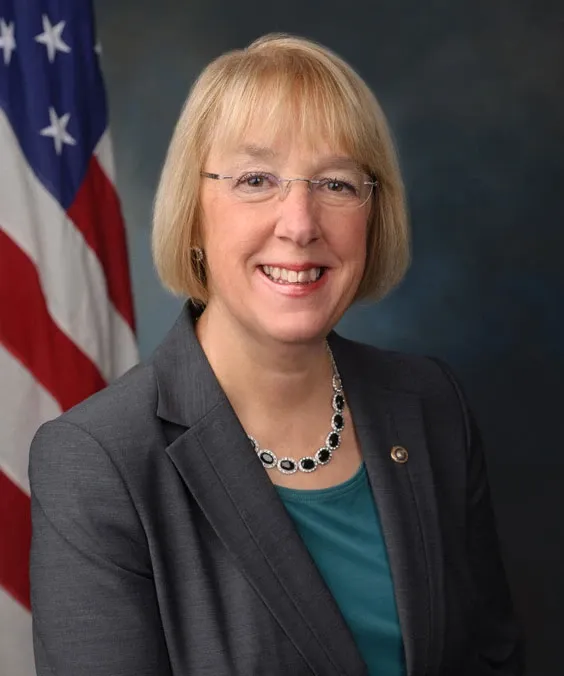
Maria Ellen Cantwell is a United States Senator from Washington, serving since January 3, 2001. A member of the Democratic Party, she has been actively involved in various legislative efforts, particularly focusing on technology, environmental issues, and healthcare. Throughout her tenure, Cantwell has worked on policies aimed at promoting clean energy and protecting the environment, as well as advocating for affordable healthcare access for all Americans.
I mean what could we be buying for $1.4 trillion? Doesn't that offset just, I mean that's money that could instead go to helping us stimulate the investment that we need to see in green technology here in the United States instead of…
I think this committee has had many, many hearings about manipulation of energy markets and to have someone who can actually provide research about the activities of what's going on in the European trading I think is the specificity we…
I hear our colleague from Tennessee, Senator Alexander, continue to ask why not more nuclear, and I think the question is a fair one.
We must reduce greenhouse gas emissions by 20 percent by 2020 to get on the track that we need to ultimately have by 2050.
A cap-and-trade program might allow Wall Street to distort a carbon market for its own profits.
Cap-and-trade programs might allow Wall Street to distort a carbon market for its own profits.
The fact is, over decades, many decades, the Federal Government has not met those promises and not kept its trust responsibility.
We are trying very hard on this Committee to find ways to improve law enforcement, to begin to push this Congress, push the Presidents to meet our trust responsibility and meet our obligations.
To continue to emphasize the United States Attorneys' trust responsibility to investigate and prosecute violent crimes in Indian Country, particularly major crimes.
We are pleased that the Tribal Law and Order Act of 2009 we believe contains thoughtful provisions that address some of these issues.
We passed an adaptation bill out of this Committee last year, and I hope that we can do so again this year.
Mr. Jarvis has been a tremendous Ambassador for our parks gateway programs, building relationships that are so essential to the park system.
Our national park systems depict what we are about as a Nation. They embody our values and our heritage.
I believe there are few souls as talented, enterprising, and experienced as John Jarvis to take the reins and move our park system into the next century.
The United States Government has a fiduciary responsibility to the Tule River Indian Tribe.
Thank you, Commissioner Connor. We appreciate you being here today and we will look forward to hearing more about the work of the Bureau of Reclamation on important water issues.
S. 1080, introduced by Senators McCain and Kyl, will clarify the jurisdiction of the Secretary of the Interior with respect to C.C.
S. 789, introduced by Senator Feinstein, requires the Bureau of Reclamation to conduct a study of feasibility and sustainability of a reservoir that would be a key component of an Indian water rights settlement in California.
S. 637, introduced by Senators Baucus and Tester, authorizing the construction of regional water systems in eastern Montana and a portion of North Dakota.
The bills we are going to cover today are in the area of water resource management.
Good afternoon. We are going to convene this Subcommittee on Water and Power of the Energy Committee.
The feasibility study listed some of the benefits to habitat and other species that exist there by doing this. Is that correct?
Politicians like Maria Cantwell