Feb 1, 2022
I think that is a great idea, and it opens us up to more of the small family farms that we are looking to support and bring into these programs.
The Public Record
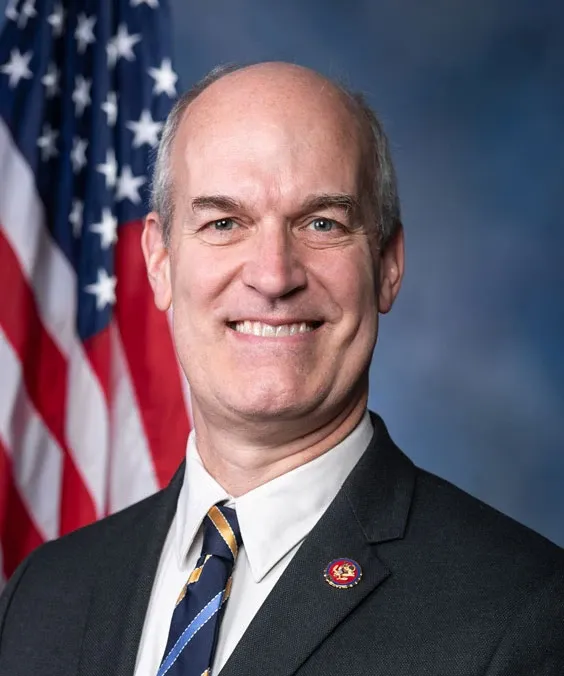
Kim Merle Schrier is an American physician and politician currently serving as the U.S. Representative for Washington's 8th congressional district, a position she has held since January 3, 2019. A member of the Democratic Party, Schrier is known for her advocacy on healthcare issues, particularly those affecting children and families. She has a background in medicine, which informs her legislative priorities and public statements. Schrier has been vocal on various issues, including vaccine policy and public health.
I think that is a great idea, and it opens us up to more of the small family farms that we are looking to support and bring into these programs.
I am also a cosponsor of Representative Pingree's Agriculture Resilience Act (H.R. 2803), which creates opportunities to directly enable agriculture to reduce greenhouse gas emissions.
I co-chair the SEEC (Sustainable Energy & Environment Coalition) Climate and Agriculture Task Force, along with my friend and colleague Representative Chellie Pingree.
I would love to follow up about that just because if our goals are to support family farms and to support renewable energy sources, reducing geographic limitations would be fantastic.
I have heard concerns about REAP providing only reimbursements and covering only 25 percent of project costs.
I would like to flag a few key issues and ask how we can make this program more effective.
REAP is an incredibly important program for farmers and businesses in Washington State and my district.
I would just like to call attention to that to make sure that we keep that waiver in this next farm bill.
I wanted to mention two more things. First is really short. I just wanted to thank you for finalizing the rule for the Origin of Livestock.
It was a pleasure to be out there in Washington State to meet with producers and to see the impact of the Specialty Crop Block Grant Program.
I want to thank you again for coming out to Washington State a few months back so that you could see the great work happening and how important specialty crops are to Washington State.
Thank you very much. I really appreciate your attention to it, and calling that to my attention so I can address it on our end.
I strongly support the application and hope you to give it strong consideration.
The local offices that help farmers on the ground are simply not staffed, and so, this puts undue burden on local conservation districts to fill in the gaps
Federal investment through TEFAP and other feeding programs... has the potential to act as a catalyst.
Trade wars and the resulting retaliatory tariffs in India and China continue to harm Washington apple growers.
I have heard loud and clear from both that we need to take a look at our immigration policy.
Let me tell you the story of Howard Hanson Dam and our Federal obligation to provide downstream fish passage.
The notion of investing in an electric tractor or electric semi was just not a realistic one.
I am really happy that we are discussing electric vehicles and that role in rural America.
This is very exciting research. Thank you very much for leading the way, and I think that the last thing I would say is now we have to get doctors and teach them onboard because sometimes it is carrying through on those preventive…
I think about Type 1 diabetes. We now know how to identify those genes. Screening for them at birth would be incredibly important.
I think it is imperative that we invest specifically in pediatric research if we are going to address the greatest public health threats facing children in the 21st century like obesity and malnutrition and cancer, diabetes, asthma and…
I think about 100,000 people lost just in the last year from opioid overdoses, mostly from fentanyl.
Politicians like Kim Schrier