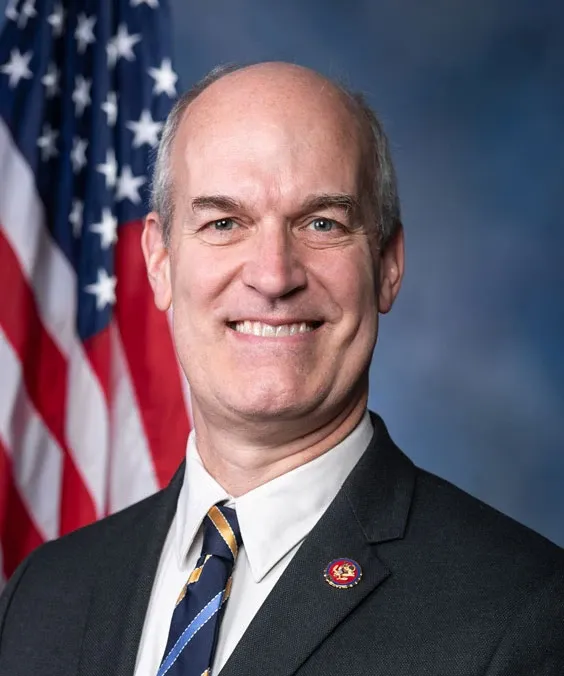
Jim McDermott
The Public Record
Jim McDermott is a former U.S. Representative from Washington, serving from 1989 to 2017. A member of the Democratic Party, he represented Washington's 7th congressional district. During his tenure, McDermott was known for his advocacy on healthcare issues, social justice, and economic equality. He played a significant role in the passage of the Affordable Care Act and was a vocal critic of the Iraq War. McDermott also served on various committees, including the Ways and Means Committee, where he focused on tax policy and healthcare reform.
Feb 23, 2016
This tax structure is not going to be solved by a hearing where people have three minutes to talk about it.
Feb 23, 2016
The effective rate is about 16 percent for most corporations in this country.
Feb 23, 2016
They brought it back, and they sent it to the stockholders in the next afternoon.
Feb 10, 2016
I have been listening for as long as I have been in Congress about the fact that debt was going to bury America, and that was going to be the end of us.
Feb 9, 2016
If you could negotiate a 40 percent reduction, it would be 40 billion, right?
Feb 9, 2016
The Republicans put it in by caving to the pharmaceutical industry and tied the hands of the Secretary.
Feb 9, 2016
The Republicans gutted the risk corridor money, and so these co-ops are going down.
Feb 1, 2016
If we drop the rate on taxation from 35 percent, maybe we could drop the rate on student loans to prime rate.
Feb 1, 2016
Today, you have 41 million people who are carrying $1.2 trillion worth of debt, and it is putting a damper on our economy.
Feb 1, 2016
The average debt of a student coming--62 percent of the students in this country come out of college $35,000 in debt.
Feb 1, 2016
Now, I would like to talk a little bit about my own experience. In 1970, I was a physician.
Nov 16, 2015
It was almost 6 years ago to the day that I introduced the Conflict Minerals Trade Act, which was designed to help stop trade in conflict minerals that were sustaining the brutal civil war in the Democratic Republic of the Congo.
Nov 2, 2015
When did the CO-OPs discover that they were only going to get one-eighth, 12 percent of the money they expected?
Nov 2, 2015
And so it would be similar to that program in Part D that we put in with the CO-OPs.
Nov 2, 2015
If it cost more than they anticipated, we would support them at least to a certain extent to get through that.
Nov 2, 2015
I suggested that the Republican Congress in 2013 slashed the funding for loans and grants by nearly two-thirds; is that correct?
Nov 2, 2015
Instead we will hear more of the same: complaints about problems they have created through their own sabotage and nothing constructive about how to make the system work better.
Nov 2, 2015
We need to fix this and let the CO-OPs operate on a level playing field with the for-profit insurance industry.
Nov 2, 2015
For the past five years Republican colleagues have systematically and deliberately sabotaged the implementation of the Affordable Care Act.
Politicians like Jim McDermott