Apr 7, 2014
I have said it has never been my intent to introduce a sweeping overhaul of the Endangered Species Act.
The Public Record
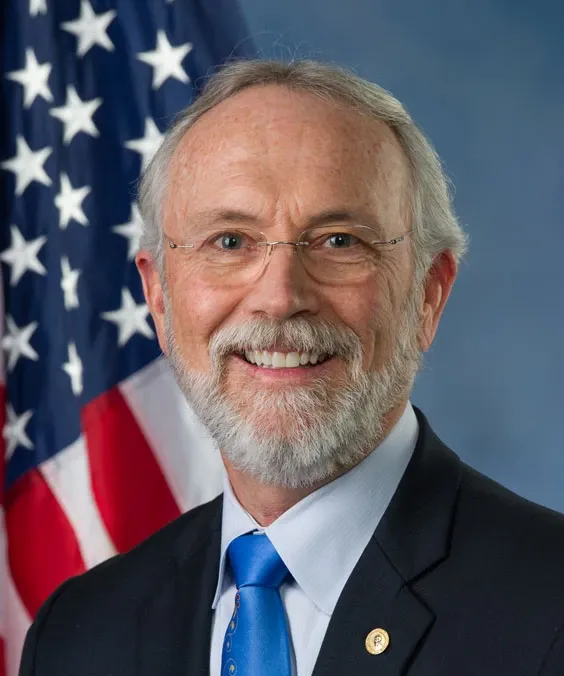
Doc Hastings is a former Republican member of the United States House of Representatives, representing Washington's 4th congressional district from 1995 to 2015. During his tenure, he served on several key committees, including the House Committee on Natural Resources, where he focused on issues related to energy and natural resource management. Hastings was known for his advocacy of agricultural interests and water resource management, reflecting the priorities of his largely rural district. He played a significant role in various legislative efforts, including those aimed at promoting economic development in Eastern Washington.
I have said it has never been my intent to introduce a sweeping overhaul of the Endangered Species Act.
Today marks the legislative phase of updating, improving, and modernizing the Endangered Species Act for the 21st century.
Unfortunately, with a budget proposal that is higher than last year's enacted levels, I'm afraid the Interior Department's budget misses the mark and doesn't do enough to prioritize and reduce spending.
However, if the President continues to take a go-at-it-alone approach like he has been doing, our ability to collaborate and work with the Department, I think, will be sorely tested.
Unfortunately, with a budget proposal as--higher than last year's enacted levels, I am afraid the Interior Department's budget misses the mark, and doesn't do enough to prioritize and reduce spending.
The United States debt is currently $17 trillion. This places our economy and our livelihood for future generations at risk.
In fact, the Cobell Settlement is merely the final version of legislation originally proposed in 2005.
Mr. Roberts says the Cobell Settlement legislation opened a new chapter . . .
It must be pure coincidence that these good things began to occur only after the Department learned about this hearing.
Unfortunately, the Settlement's flaws identified by tribal leaders and the major tribal associations in 2010 are causing real problems that we will hear about today.
I thank the gentleman for yielding. I think his amendment adds to this legislation, and I support his amendment.
In closing, I want to, again, make the point there of my colleague from California (Mr. Huffman). He had a bill that passed the House and is pending in the Senate. There is no need for the President to go through this. All you have to do…
I am very pleased to yield 5 minutes to the gentleman from Utah (Mr. Bishop), the sponsor of this legislation.
Before I yield to my colleague from Wyoming, I want to address what the previous speaker mentioned. She was talking about the Tubman bill. Had this bill that we are debating here today been in effect, we wouldn't have had the problem with…
I am very pleased to yield 1 minute to the gentleman from South Carolina (Mr. Sanford), one of my classmates.
I am very pleased to yield 2 minutes now to the gentleman from Utah (Mr. Stewart), a former member of the Natural Resources Committee.
I am very pleased to yield 2 minutes to the gentleman from Nevada (Mr. Amodei).
I am very pleased to yield 2 minutes to the gentleman from New Mexico (Mr. Pearce).
I would advise my friend from New Jersey I am prepared to close if the gentleman is prepared to close.
I am very pleased to yield 1 minute to the gentleman from Indiana (Mr. Stutzman).
I am pleased to yield 2 minutes, again, to the gentleman from Colorado (Mr. Lamborn), the chairman of the subcommittee dealing with this legislation.
I am very pleased to yield 2 minutes to the gentleman from Louisiana (Mr. Scalise).
Politicians like Doc Hastings