May 22, 2018
I am pleased to yield 3 minutes to the gentlewoman from Guam (Ms. Bordallo), the ranking member of the Subcommittee on Readiness.
The Public Record
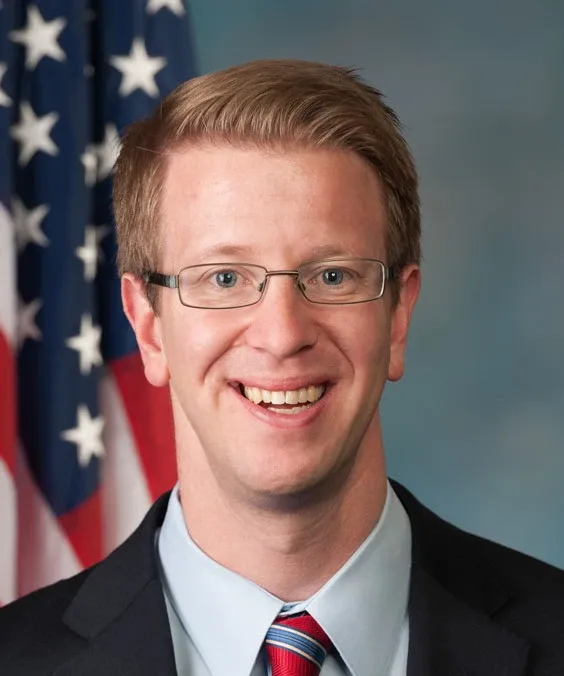
Adam Smith is a U.S. Representative for Washington's 9th congressional district, serving since 1997. A member of the Democratic Party, he has focused on various legislative efforts, particularly in defense and foreign policy. Throughout his tenure, Smith has been involved in key discussions and initiatives related to national security and military funding, reflecting his commitment to these issues. He has also been an advocate for progressive policies within his district and has worked on legislation addressing economic and social challenges faced by his constituents.
I am pleased to yield 3 minutes to the gentlewoman from Guam (Ms. Bordallo), the ranking member of the Subcommittee on Readiness.
If we are going to do this, we are all going to have to figure out some process for saying we are going to bite the bullet, allow the DOD to have greater efficiency despite how it may impact our individual districts.
We have to do in this committee is figure out how can we find savings without doing damage.
There is savings that can be found there, and I think we should look and try and do that.
I think that there are others that have come before us that have taken a swing at this.
We ought to be able to come up with a nuclear deterrence strategy that costs us a lot less money.
For fiscal year 2019, the agreement that we reached... had a--if you count the DOE [Department of Energy] portion... $647 billion.
But with your help, we are now going to be able to come out from underneath this and put our readiness back to where you expect it to be...
There has to be a much more comprehensive approach, if we are going to be successful in creating a peaceful and prosperous world.
We are now back into an era of great power struggles because of what Russia and China are doing.
I agree completely with the chairman's opening remarks and will not repeat them. We all know the importance of cybersecurity; I think the chairman outlined it very well.
The potential for surprise in the cyber realm will increase in the next year and beyond as billions more digital devices are connected--with relatively little built-in security--and both nation states and malign actors become more…
We want to promote economic and political freedom as the ideal form of government and push that forward.
Where can you save money in each of your services? Where are we spending money that we shouldn't be spending money?
But if we are going to get to good on that stuff, it cannot all be up, up, up, up, up, up, up.
If there is anything that we can do or not do in the NDAA to help you with that acquisition reform process, please let us know.
This is the largest the defense budget's going to be for probably about the next decade.
We face an incredibly complex threat environment, so we are going to want to do like 5 million things at once.
I think he perfectly outlines the challenge. There is the tiny little hurdle of actually passing those appropriations bills which seems to always be like we are just around the corner from doing it.
The longer the leader of our country gives Russia a pass and keeps saying, well, maybe they are doing bad stuff, maybe they are not, the tougher your job is going to be, the tougher it is going to be to truly hold them accountable.
I think a huge part of this is holding Russia accountable--Russia is not altogether that powerful.
Politicians like Adam Smith