Feb 3, 2021
The zero tolerance policy, obviously, was about intimidating families, and the zero tolerance policy, where it implemented as a tactic taking a child from the parent, was the most effective way of intimidating.
The Public Record
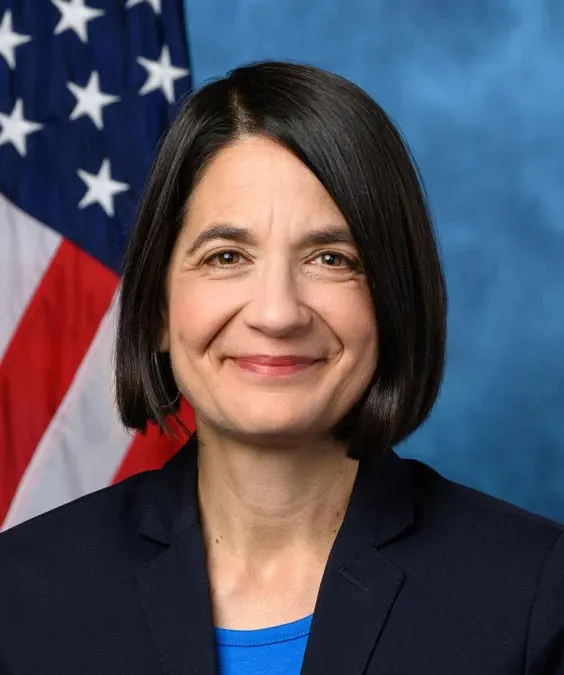
Peter Francis Welch is an American politician serving as the U.S. Representative for Vermont's at-large congressional district since 2007. A member of the Democratic Party, Welch has focused on issues such as healthcare, agriculture, and climate change during his tenure in Congress. He has been an advocate for policies aimed at supporting Vermont's farmers and addressing the challenges posed by rising healthcare costs.
The zero tolerance policy, obviously, was about intimidating families, and the zero tolerance policy, where it implemented as a tactic taking a child from the parent, was the most effective way of intimidating.
What it reveals, aside from the obvious cruelty of the policy, is that we had a government that was not paying attention to the function that an executive has to make things work as opposed to simply make pronouncements that had a…
There has to be predictability on the delivery of the vaccine. And, number two, there has to be better Federal and State coordination.
The last administration, I think, could be credited with doing a good job in public/private partnerships to create the vaccines.
The Sackler family, through Purdue, has three felony convictions, but no one's in jail and it has its billions still.
There was a Wall Street Journal article that reported that Wharton, Notre Dame, and the RAND Corporation did a study...
There was a fundamental decision that the board made to sell, sell, sell OxyContin.
Dr. Sackler, you served on the board from, as I understand it, 1990 to 2018. Is that correct?
I mean, there are payouts of $100 million to executives, and it is really heartbreaking for a lot of folks who can't figure out how in the world they are going to get the medication for a person in their family that they love.
These drugs are a tremendous health benefit, extending lives and alleviating pain, but if we can't afford it, it does no one any good.
So, a Canadian can buy this for $1,800, but you won't give the benefit of that price to the United States of America and our citizens.
You bought a product--your company bought a product. It didn't create a product.
Ultimately, that is paid for by taxpayers, employers, and by individual patients. Do you have any reservations about $100 million being paid to six executives over two years?
I really don't understand why you don't know these numbers because these are the numbers that come down to the individual patient who can't afford the out-of-pocket, even with the help of the Medicare Part D.
It is $15,000 a year, and the average Medicare beneficiary probably gets a Social Security of about $22,000 or $23,000.
But you are familiar with Medicare Part D that is a benefit to seniors and then enables them through the Government to purchase that product. Correct?
It is in the report. So, assuming the report is correct, I am asking your opinion about whether that amount of compensation, $400 million, is on the high side?
I think one of the reasons that a lot of us are focusing on the executive compensation is that the model is higher prices, higher profits, and higher bonuses.
Every single American, every single taxpayer at one point or another is going to need pharmaceutical assistance.
Politicians like Peter Welch