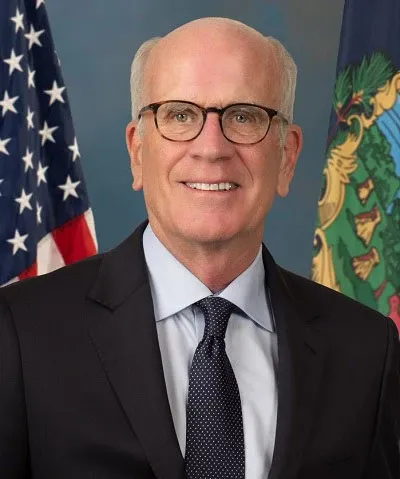
Bernie Sanders
The Public Record
Bernie Sanders is an American politician and activist who has served as the junior United States senator from Vermont since 2007. A member of the Independent party, Sanders is known for his progressive policies and advocacy for social justice, healthcare reform, and income equality. He previously served in the U.S. House of Representatives from 1991 to 2007, where he was the first independent elected to the House in 40 years. Throughout his career, Sanders has been a vocal critic of economic inequality and corporate influence in politics.
Nov 22, 2009
I think that almost everybody in this country, some exceptions, should have the right to choose between the private insurance company and a public plan. That's what I'm going to fight for.
Nov 22, 2009
I think that almost everybody in this country -- some exceptions -- should have the right to choose between the private insurance company and a public plan. That's what I'm going to fight for.
Nov 4, 2009
The time has come to afford all Americans equal protection under the law, to provide all Americans the dignity and respect they deserve.
Nov 4, 2009
The Employment Non-Discrimination Act of 2009 (ENDA), of which I am a cosponsor, is not only an appropriate but a necessary step towards guaranteeing the civil rights of all Americans.
Oct 27, 2009
I think in Vermont, and I am sure in Philadelphia, most people do not think it makes a lot of sense every year to be spending hundreds of billions of dollars making the sheiks in Saudi Arabia a little bit richer.
Oct 27, 2009
I think the State of Vermont is leading the country in terms of energy efficiency.
Oct 27, 2009
If we invested those hundreds of billions of dollars in energy efficiency and sustainable energy in this country...
Oct 26, 2009
The issue that we are dealing with today is very different than many of the other issues that we deal with.
Oct 26, 2009
It seems to me that if we are smart, and we want to save taxpayers money, and we want to protect the environment, and we want to create jobs, maybe we should start looking at wind, biomass, solar and geothermal.
Oct 26, 2009
our estimates are that the solar energy potential just on those lands alone is about 100,000 megawatts, which would power 29 million homes or provide about 29 percent of the energy equivalent needed for the households of America today.
Oct 26, 2009
The question is, do we have the brains and the courage to address that crisis?
Oct 26, 2009
What we are doing is preventing hundreds and hundreds of billions of dollars of damage a year while, as we go forward, we create millions of good paying jobs.
Oct 26, 2009
What they are telling us is that, we told you in the past that the problem was serious, but we underestimated the problem.
Oct 26, 2009
If you are serious about building more capacity in the United States, the most cost effective way to go forward is through the new sustainable energies.
Oct 26, 2009
The bottom line here, it will enable consumers of electricity to use that electricity much more cost effectively.
Oct 20, 2009
I was moved by Senator Burr's opening statement in the October 21 hearing; and honored that you, Mr. Chairman, would seek our counsel.
Sep 18, 2009
One of the concerns that I might have, and it's been brought up to me, is with this program, how would young people get started with a supply management program?
Sep 18, 2009
the problems that we are having in Vermont and New England are not unique. They're taking place all over the country
Sep 18, 2009
I think the people of this country have a right to know, Congress has a right to know, to what degree there is concentration of ownership.
Politicians like Bernie Sanders