Jan 6, 2011
What I found astonishing, is that 82 Fortune 500 companies in America paid 'zero or less in Federal income taxes in at least 1 year from 2001 to 2003.'
The Public Record
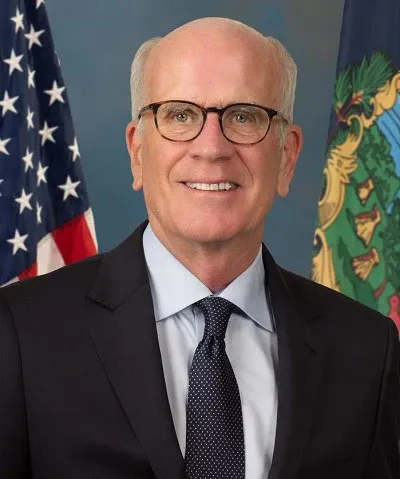
Bernie Sanders is an American politician and activist who has served as the junior United States senator from Vermont since 2007. A member of the Independent party, Sanders is known for his progressive policies and advocacy for social justice, healthcare reform, and income equality. He previously served in the U.S. House of Representatives from 1991 to 2007, where he was the first independent elected to the House in 40 years. Throughout his career, Sanders has been a vocal critic of economic inequality and corporate influence in politics.
What I found astonishing, is that 82 Fortune 500 companies in America paid 'zero or less in Federal income taxes in at least 1 year from 2001 to 2003.'
According to an August 2008 GAO report, two out of every three corporations in the United States paid no Federal income taxes between 1998 and 2005.
I think one of the problems that we have when we just focus on deficit reduction, as significant an issue as it is, we lose the broad context of what is happening in this country.
But Mr. Chairman, at the end of the day, in your movement toward deficit reduction, three-quarters of your plan talks about cutting spending.
Why didn't you ask the wealthiest people in this country to start paying--I know you did some of it--but in a much more significant way their fair share of taxes?
Where you have the top 1 percent earning more income than the bottom 50 percent.
So while the middle class shrinks and poverty increases, the wealthiest people for many years have become much wealthier.
We now have, by far, the most unequal distribution of wealth and income of any major country.
At a time when we have such a grotesquely unequal distribution of income and wealth, where over a recent 25-year period, 80 percent of all income in this country went to the top 1 percent, why, in your proposal, did you suggest that…
If you do not invest in infrastructure, does the infrastructure, our roads and bridges, magically get better?
Investing in infrastructure is a lot more important than giving tax breaks to billionaires.
I happen to believe that the stimulus package did pretty much what it was supposed to do. It created 2 or 3 million jobs.
If we want to take cars off the road, if we want to lessen the heavy traffic at our airports, high-speed rail is one way to go.
As a Nation, we should be deeply concerned that in China they are building high-speed rail all over the place.
Investing in infrastructure, creating decent-paying jobs frankly is a lot more important than giving tax breaks to millionaires and billionaires.
Investing in infrastructure--our roads, our bridges, public transportation--is perhaps the fastest way we can do that.
I think that is the word that you used. What do you think will happen if all over this country, in order to balance budgets while, again, we are providing huge tax breaks to billionaires, while we lose $100 billion every single year…
The United States has by far the highest rate of childhood poverty in the industrialized world.
Do you think it makes more sense to give tax breaks to billionaires or to make sure that our young people can afford to go to college?
So you believe that teachers and public employees have the right to engage in collective bargaining.
You believe unequivocally that teachers have a right to engage in collective bargaining?
Politicians like Bernie Sanders