Feb 11, 2013
Back in 1952, 32 percent of all the revenue generated in this country came from large corporations. Today that number is 9 percent.
The Public Record
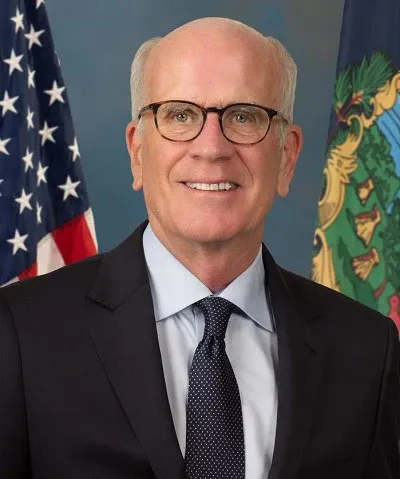
Bernie Sanders is an American politician and activist who has served as the junior United States senator from Vermont since 2007. A member of the Independent party, Sanders is known for his progressive policies and advocacy for social justice, healthcare reform, and income equality. He previously served in the U.S. House of Representatives from 1991 to 2007, where he was the first independent elected to the House in 40 years. Throughout his career, Sanders has been a vocal critic of economic inequality and corporate influence in politics.
Back in 1952, 32 percent of all the revenue generated in this country came from large corporations. Today that number is 9 percent.
Well, that is a big if, and I understand that many of the people who get their dividends from corporate stock are in the top 1 percent.
If the Chamber of Commerce were to get its way and bring hundreds of thousands of low-wage workers into this country, there is no question in my mind it would drive wages up.
The GAO just came out with a report the other day--published by Reuters yesterday, I think--'Corporate tax breaks cost U.S. Government $180 billion per year.'
The entire world will be in a financial collapse. We do not have to worry about Social Security.
Average 65-year-old retirees would lose about $658 a year in Social Security benefits by their 75th birthday, a cumulative loss of more than $4,600.
I am going to give you the opportunity right now to get you to change my mind.
At a time when one out of four major corporations pays zero in taxes, when we have growing wealth and income inequality in this country, by which the wealthiest people are doing phenomenally well, do you really think from a moral…
Social Security has a significant surplus, and its trust fund could pay out benefits for the next 20 years.
I want you to tell the people, the elderly people in Vermont, what substitute they might use for heating oil when the weather gets 20 below zero.
The chained CPI would impact the benefits of 3.2 million veterans with war-related disabilities.
Why are we not talking about bringing in substantial sums of new revenue rather than cutting Social Security or benefits for disabled vets?
Do you not think that there are ways to move toward deficit reduction in a way that is fairer than on the backs of disabled veterans?
In fact, between 2009 and 2011, as you well know, all of the new income created in America went to the top 1 percent.
Before you cut a woman in Vermont who is living on $15,000 a year Social Security, you may want to end some of the loopholes that enabled the Bank of America to stash their money in the Cayman Islands and not pay any taxes at all.
Do you really think we should move toward deficit reduction on the backs of men and women who have lost arms and legs defending this country.
Do you think it is a legitimate area to pursue, the fact that we have companies like Bank of America and virtually every major corporation stashing their money in the Cayman Islands, paying zero in Federal taxes?
But here we are struggling to deal with deficit reduction. Do you not see, when the corporate tax rate today is at 12 percent, the lowest that it has been since 1972, do you not see the opportunity to bring in substantial sums of revenue…
The vast majority of disabled vets would see significant cuts as opposed to the current chained CPI.
We have to take a look at revenue and the fact that at 15.8 percent of GDP, revenue today is the lowest point that it has been almost in 60 years.
The choice that we face, do you really in the middle of a recession want to cut Social Security benefits and Medicare benefits when corporations today are paying 12 percent of their profits in taxes, the lowest since 1972?
The answer to the deficit problem... is to cut Social Security, is to cut Medicare, is to cut Medicaid, is to cut programs for children.
Politicians like Bernie Sanders