Jan 27, 2015
I have proposed on different--some of my colleagues have approached the problem in a slightly different way, but I asked the Chief Actuary of the Social Security Administration, Mr. Goss, to estimate how long the solvency of Social…
The Public Record
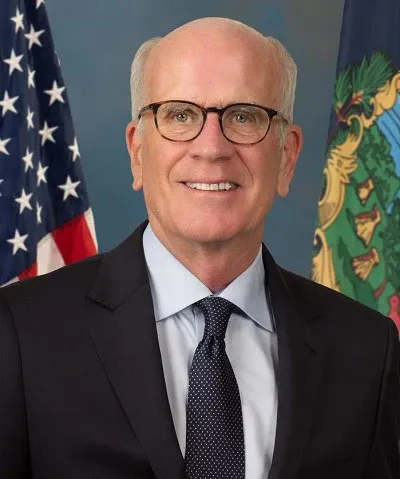
Bernie Sanders is an American politician and activist who has served as the junior United States senator from Vermont since 2007. A member of the Independent party, Sanders is known for his progressive policies and advocacy for social justice, healthcare reform, and income equality. He previously served in the U.S. House of Representatives from 1991 to 2007, where he was the first independent elected to the House in 40 years. Throughout his career, Sanders has been a vocal critic of economic inequality and corporate influence in politics.
I have proposed on different--some of my colleagues have approached the problem in a slightly different way, but I asked the Chief Actuary of the Social Security Administration, Mr. Goss, to estimate how long the solvency of Social…
This issue was resolved quietly, non-controversially, I think a number of times under President Reagan.
The typical male worker, despite huge increases in productivity, made $783 less last year than he did 42 years ago.
I do not think it is accurate to characterize the situation as stealing from retirees to pay benefits to people with disabilities.
Is where we are today in terms of the Disability Insurance Fund, is that a surprise to anybody?
This means, if that cut were to go through, that the average benefit of approximately $13,980 a year for a disabled person would be cut by $2,600 to $11,324.
Does it concern you that when we talk about deficits and national debts, my Republican colleagues are not forthcoming in asking large corporations that pay nothing in Federal income taxes now to start paying their fair share of taxes or…
In my view, the best way to extend the solvency of the Social Security Trust Fund over the long term is to eliminate the cap that currently exists on taxable income that goes into the Social Security Trust Fund.
If income inequality remained at the same level today as it was in 1983, Social Security would have $1.1 trillion more than it does today because workers with higher income would have contributed more into the system.
Today Social Security has a $2.8 trillion surplus and can pay out every benefit owed to every eligible American for the next 18 years.
I feel very strongly that there is a third path, that there is a path to better care and lower costs.
I happen to believe that at the end of the day, despite what the Republicans did in the House, we are going to reach an agreement.
If, in fact, a 19-percent reduction took place, that benefit would be reduced, if my arithmetic is correct, to about $11,324.
Right now, in the midst of massive wealth and income inequality which we see in our country, a Wall Street CEO who makes $20 million a year pays the same amount into Social Security as someone who makes $118,500. That is wrong.
I am delighted that President Obama proposed this reallocation plan in his budget request.
In my view, the debate we are having today is nothing more than a manufactured crisis which is part of the long-term Republican agenda of trying to cut Social Security.
I believe that Members of Congress should take a hard look and ask questions why from 2008 to 2013 companies like General Electric paid not a penny in Federal income taxes.
In my view, these cost overruns are a prime example of wasteful spending that only benefits the bottom lines of some of the largest defense contractors in this country.
But it is my understanding also for many it is free. Is that correct? For lower-income people it might be free?
I have a feeling that the budget that your Committee majority will bring forth... will not be good for working families.
I would hope that nobody here is going to be supportive of the 19-percent cut for some of the most vulnerable people in this country.
At a time when more Americans are unable to go to college, the President proposes the first two years of community college to be free, that is exactly the right thing to do.
Politicians like Bernie Sanders