Feb 16, 2023
It is pretty obvious that those people graduating with huge debts are not going to go to rural America, not going to go to urban America.
The Public Record
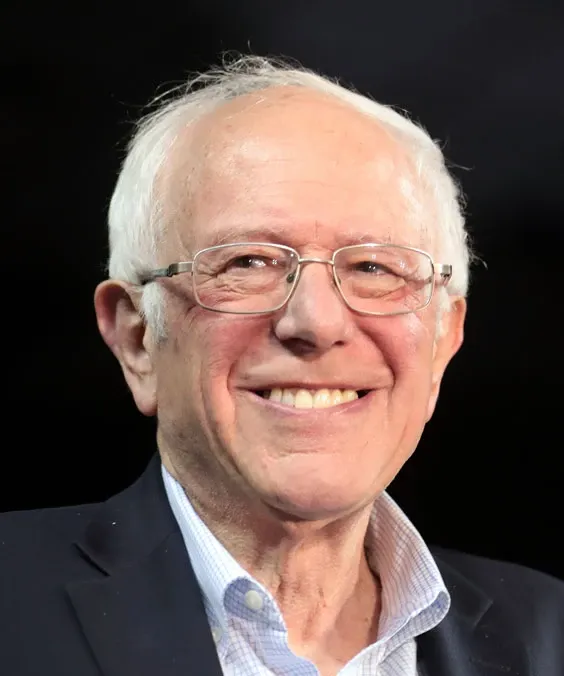
Bernard Sanders is a prominent American politician and a member of the Democratic Party, known for his progressive policies and advocacy for social justice. He has served as a U.S. Senator from Vermont since 2007, having previously represented Vermont in the House of Representatives from 1991 to 2007. Sanders is recognized for his focus on issues such as income inequality, healthcare reform, and education, often emphasizing the need for systemic change to benefit working-class Americans.
It is pretty obvious that those people graduating with huge debts are not going to go to rural America, not going to go to urban America.
I hope that we can do what the pundits tell us that we can't do, and that is actually deal with the issues facing the American people.
The United States will face a shortage of up to 124,000 physicians by 2034, including 48,000 primary care physicians.
99 million primary, 70 million dental, 156 mental health [people live in areas without enough health care providers].
Despite spending almost twice as much per capita on health care as any other major country, we have massive shortages in health care providers.
It is pretty obvious that those people graduating with huge debts are not going to go to rural America, not going to go to urban America.
We desperately need more African American, Latino, and Native American health care personnel who are way, way underrepresented in the health care profession.
We must substantially, in my view, increase student loan debt forgiveness and scholarships through the National Health Service Corps Program.
The biggest challenge is the limited availability of clinical training opportunities.
The National Health Service Corps is one example of such a program, but it is simply inadequate in many ways to meet current needs.
Tuition for many healthcare professional programs is high and can be an impediment to many students.
As Senator Sanders mentioned, we must address their maldistribution in society.
Last year, the American Association of Medical Colleges projected that over the next decade, as Senator Sanders pointed out, Louisiana will be the third worst in physician shortages of all 50 states.
if you are looking at a big debt that you need to pay off and there is a major hospital in Boston that will give you x additional salary, we need to at least--even if we don't even if we don't make up the entire amount, we need to offset…
I think this issue is huge and challenging, but one that is very amenable to some bipartisan work that can be done.
I think being able to fund community-based clinic, primary care to expand our funding for primary care residencies, we would be very excited about that.
I hope that we can do what the pundits tell us that we can't do, and that is actually deal with the issues facing the American people.
Despite spending almost twice as much per capita on health care as any other major country, we have massive shortages in health care providers.
if you are looking at a big debt that you need to pay off and there is a major hospital in Boston that will give you x additional salary, we need to at least--even if we don't even if we don't make up the entire amount, we need to offset…
The United States will face a shortage of up to 124,000 physicians by 2034, including 48,000 primary care physicians.
We desperately need more African American, Latino, and Native American health care personnel who are way, way underrepresented in the health care profession.
Last year, the American Association of Medical Colleges projected that over the next decade, as Senator Sanders pointed out, Louisiana will be the third worst in physician shortages of all 50 states.
The biggest challenge is the limited availability of clinical training opportunities.
Politicians like Bernard Sanders