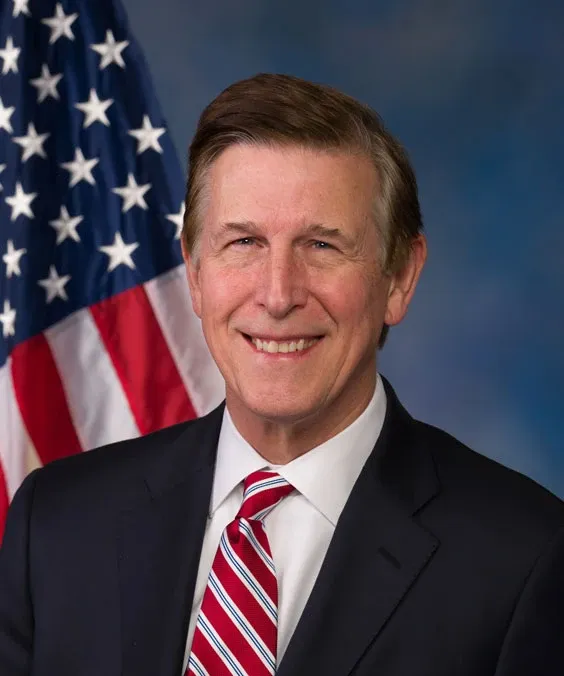
I thank the gentleman for all of his advocacy on ending hunger. Mr. Speaker, I now yield to the gentleman from California (Mr. Takano), an effective member of the Committee on Education and the Workforce.
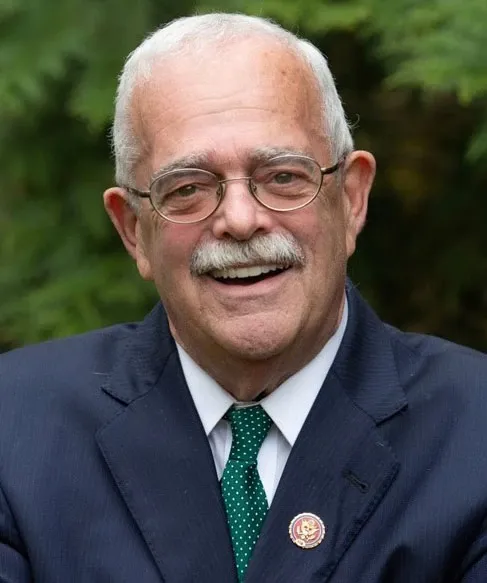
Bobby Scott
The Public Record
Bobby Scott is an American politician serving as the U.S. Representative for Virginia's 3rd congressional district since 1993. A member of the Democratic Party, he has focused on issues such as education, healthcare, and civil rights throughout his tenure in Congress. Scott has been an advocate for expanding access to affordable healthcare and has worked on legislation aimed at improving education and job training programs.
I thank Mr. Cardenas very much for his hard work, too. Mr. Speaker, reauthorization is an opportunity to improve legislation. Unfortunately, the pending Republican bill reduces nutrition standards and kicks kids off the school meal…
More than 60 years ago, Congress responded to the Defense Department's concern that so many children were malnourished, they would be unfit for military service, that they passed the National School Lunch Act as a measure of national…
That is correct. If you look at that, those counties and areas are spread all over the country, and if we are ever going to eradicate poverty, we have to target it to the high poverty areas, and 10-20-30 does exactly that.
I thank the gentleman for getting the title of our State correct. I thank the gentleman from New York and the gentlewoman from Ohio for yielding and organizing tonight's Special Order. Last week, the House of Representatives failed to pass…
I think it is important to remind people where we were when we passed the Affordable Care Act.
Thank you Chairman Kline for holding this hearing, and thank you to the panelists for taking time out of your day to testify before the Committee.
If data is collected, it is obviously always going to be at risk of compromise.
Gone are the days when education was flashcards and workbooks. Today's students use electronic tablets, smartphones, apps, online study tools, and various other technological resources to aid them in their studies.
In your written statement, you make a point about the ability to opt out and the effect that might have on the validity of data.
It is hard to believe that it has been over 40 years since we have updated our privacy laws.
I am confident that we will be able to pass legislation to update the Education Science Reform Act and the Family Educational Rights and Privacy Act in such a way that maximizes the available use of student information, to improve…
Of course, any time that you are gathering data, there is a risk that student and family privacy may be compromised.
Improving education remains a leading priority for our committee, and it's my hope we can take additional steps to improve education by enhancing education research and strengthening student privacy protections.
I would like to thank the gentleman from Massachusetts not only for yielding, but also for his years of work fighting hunger. He is one of the strongest advocates we have in Congress in fighting the scourge of hunger. I want to thank him…
I thank the gentleman from New York and the gentlewoman from Ohio for organizing tonight's Special Order to call on our colleagues in the Senate to do their job and provide their advice and consent on the President's upcoming nomination to…
In response to the chairman's question where we have given much more power to local and State agencies, we tell them what needs to be done, but we do not tell them how to do it.
There is no one more qualified than Dr. King to lead the Department as it endeavors to fulfill that obligation.
The work that was done was cooperative and collaborative and constructive, and I think we ended up with an excellent bill.
Our Nation continues to make strides in closing achievement gaps, improving graduation rates, increasing minority attainment in higher education, but there's much more work that needs to be done.
We do not tell them how to do it, that is local control. If they are not doing it, how do you guarantee they actually get the job done?
The Every Student Succeeds Act improves on No Child Left Behind and builds on the progress we have made since Brown in 1954 and ESEA in 1965.
Let's not forget the intent of the Elementary and Secondary Education Act when it was passed in 1965.
I think it is important to note that No Child Left Behind had a cookie cutter response that sometimes worked and sometimes did not.