Nov 20, 2013
What does the Federal Government have to lose by allowing States a greater place in the management of the lands between their borders?
The Public Record
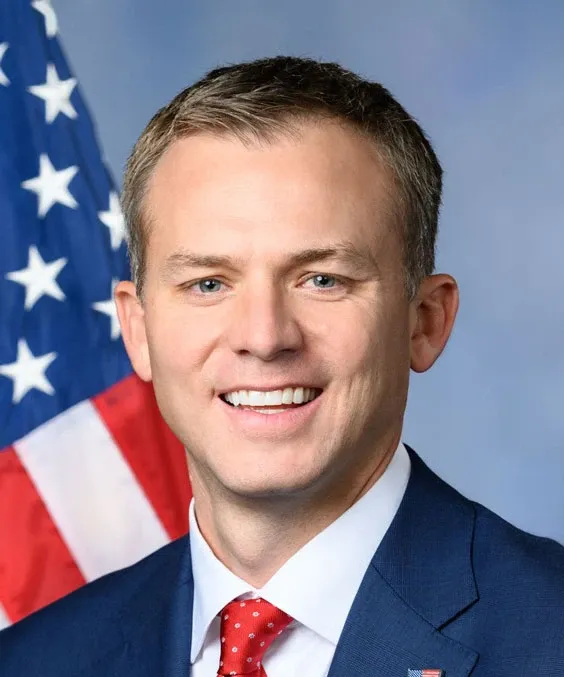
Rob Bishop is a former U.S. Representative from Utah, serving in the House of Representatives from January 3, 2003, to January 3, 2021. A member of the Republican Party, Bishop was known for his focus on issues related to public lands, education, and military matters. During his tenure, he served as the chairman of the House Natural Resources Committee, where he played a significant role in shaping legislation concerning land management and energy policy in the West.
What does the Federal Government have to lose by allowing States a greater place in the management of the lands between their borders?
You are strongly opposed to it because it would take too much work to try and implement a solution ahead of time. That testimony is the indication of some entity that has simply spent too long in bureaucratic excess and not actually trying…
Which simply indicates that if the Federal Government has a backlog that in Alaska itself is $121 million, States certainly could do no worse than what the Federal Government is doing in ownership and management of these particular pieces…
There are Federal lands that are being managed by State and local government by an agreement.
I do appreciate what Mr. Grijalva has just said, and I would like simply to point out that while the shutdown was going on, the House did vote to open up all of these.
So would it not be wise to do it now in legislation? Why is the Department so adamantly opposed to solving the problem ahead of time?
If you are not willing to do it even though you have done it in the past by finding some condition of technicality, then obviously Congress needs to step up and do it for you since the Department is not willing to do it on their own…
It is not an issue of want. We do not have the authority to return money that has been obligated from a donation.
You still have the $2 million there. You have an additional roughly $2 million that is floating around in your budget.
Do you know whose decision it was to close the parks despite the offers from the States?
During those 17 days the Obama administration failed to even try to uphold President Roosevelt's mantra.
However, the implementation of the partial shutdown when the administration forcefully prohibited access to public lands, it seemed that the administration was seeking to avoid a solution and only increase hardship.
I grew up an hour away from Yellowstone National Park. We love our national parks. We love going up to Glacier Park in the State of Montana.
Because we need to support our States who stepped up to the challenge during this most difficult time with this strong bipartisan support, and I urge passage of this solution to make these States whole for the expended costs due to…
The intent of the continuing resolution passed by Congress was to fully reimburse States for State funds used to operate Federal programs.
This partial shutdown demonstrated almost too clearly what many have grown to understand, the fact that our public lands are anything but that. They are controlled by the government.
Nobody wanted to see the shutdown. It is important that when we see DC fail in its most basic responsibilities to govern, it is imperative we have contingency plans when the government cannot do its job.
If you love the national parks as I do and if you want to keep the national parks open as I do, and if you think it is a good idea to prepare for an uncertain future, if you want to protect small businesses and rural communities as I do…
The world has learned those lessons. The free market system has learned those lessons. Government in Washington has simply not learned the lessons.
If I may begin, before we call the first panel, in 1989, the Berlin Wall fell down, and the entire world realized that large, centralized, bureaucratic entities do not work.
It is beyond time for us to explore ways in which State governments can take a more active and invested role in improving the management of the Federal lands within its borders.
Politicians like Rob Bishop