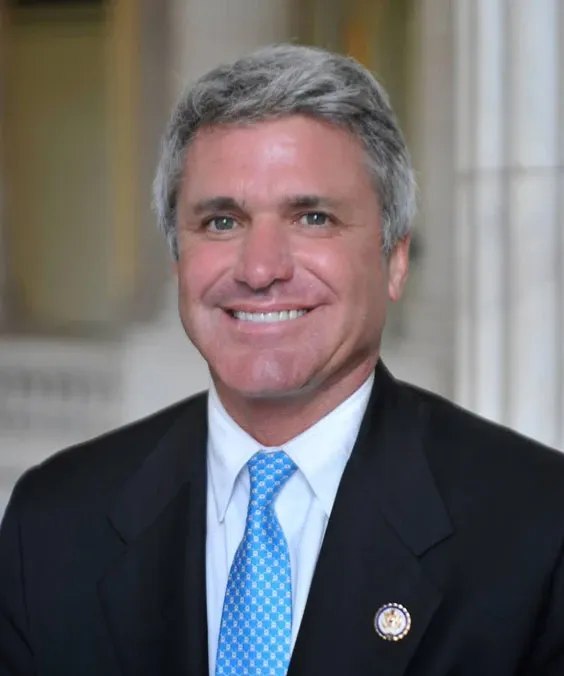
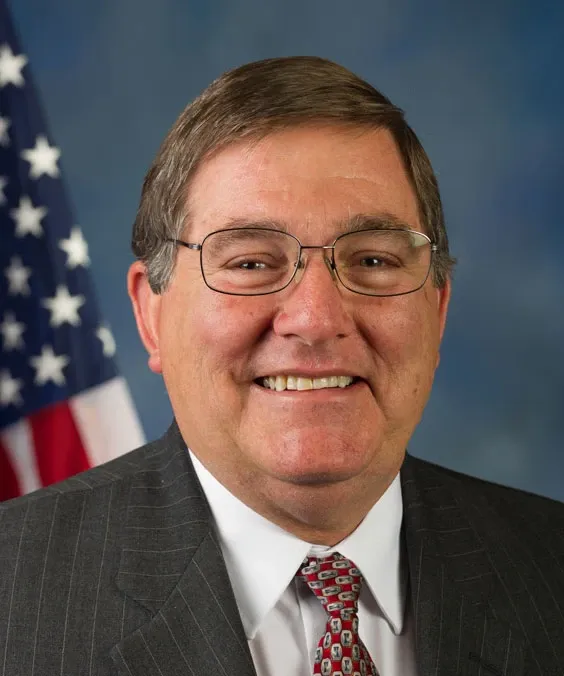
Mike Conaway
The Public Record
former U.S. Representative from Texas
Jun 2, 2015
We need strong U.S. farm policy as a modest response to foreign competitors that cheat.
Jun 2, 2015
The United States Government needs to stand up to the countries that fail to abide by their commitments.
Jun 2, 2015
American farmers and ranchers lose the market opportunities they were promised.
Jun 2, 2015
The U.S. Government needs to stand up to countries that fail to abide by their commitments.
Apr 13, 2015
That symbiotic relationship between urban America and rural America has to be discovered by urban America.
Mar 25, 2015
I have great confidence in you and your leadership, and Tim's help, that we will get the proper oversight done.
Mar 25, 2015
I would hope that you would use that discretion to make this happen. It is the right thing to do.
Mar 24, 2015
I hope that the Members will also recognize the failure of this experiment, and work together to avoid the economic damages that will be felt by American businesses both inside and outside agriculture.
Mar 23, 2015
The derivatives markets grew up in response to the needs of hedgers; regulatory burdens should be both minimized and justified; and regulations should provide clarity and certainty.
Mar 23, 2015
The Agriculture Committee is unique in Congress for its bipartisan focus on outcomes over partisanship.
Mar 23, 2015
Ensuring that our nation's derivatives markets work for those who have risks to hedge is no small task.
Mar 23, 2015
I strongly urge Congress to enact a common-sense law that will provide farmers and consumers with the clarity and certainty needed for meaningful, voluntary food labeling.
Mar 23, 2015
Stigmatizing safe, proven biotechnology through patchwork state labeling mandates or even mandatory Federal labeling jeopardizes innovation.
Mar 23, 2015
Ensuring that farmers have a freedom of choice is not about convenience, it's about necessity.
Mar 23, 2015
I ask Congress to support a farmers' choice of hybrids or quality attributes, GMO presence or absence, or organic or non-organic production methods.
Mar 23, 2015
I believe non-GMO is a legitimate and growing market and that consumers deserve to know what that is in their food.
Mar 23, 2015
I ask Congress to support through adequate funding, research in non-GMO corn and soy varieties so that farmers might rapidly access this new market.
Mar 23, 2015
I am convinced a national non-GMO labeling program would send a clear signal to input suppliers.
Mar 23, 2015
I consider the tactics of anti-biotech activists who harassed you reprehensible, and I want to stress that this shameful behavior is not acceptable and should not be tolerated.
Mar 23, 2015
These proposals are loaded with arbitrary and inconsistent policies which would create an unmanageable situation for food producers, processors, and distributors.
Mar 17, 2015
Trade also helps support almost one million American jobs in production agriculture.
Politicians like Mike Conaway