Dec 12, 2017
Too many Americans face real barriers in accessing the medications they need.
The Public Record
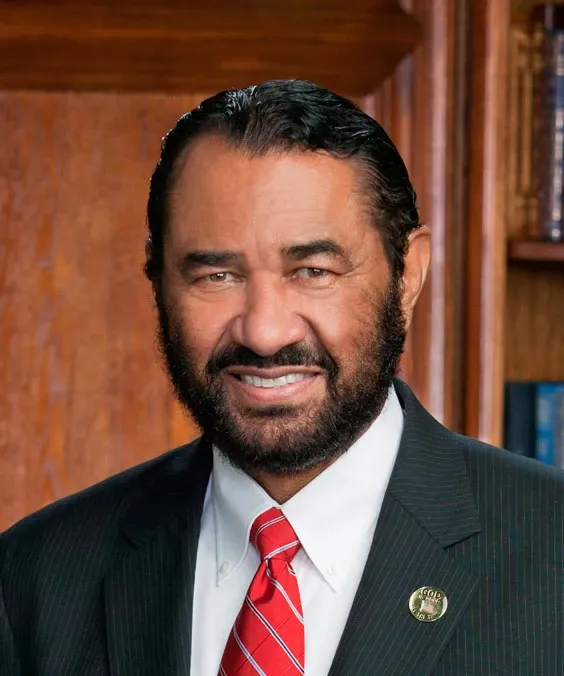
Gene Green is a former Democratic member of the United States House of Representatives, representing Texas's 29th congressional district from 1993 to 2019. During his tenure, he focused on issues such as healthcare, education, and environmental protection. Green was known for his advocacy for the direct popular vote in presidential elections and for consumer privacy rights in the digital age. He played a significant role in various legislative efforts aimed at improving the lives of his constituents and addressing national concerns.
Too many Americans face real barriers in accessing the medications they need.
Annual drug spending in the U.S. is expected to reach more than $500 billion by 2018.
We have a responsibility to explore the full spectrum of the supply chain to protect patients.
In 2015, the rise in prescription drug spending outpaced all other health care services.
Next month will mark the 1-year anniversary of the 21st Century Cures Act being signed into law by President Obama in his last public signing ceremony.
Patients and families deserve to have their elected officials respond to their needs, and this bill was an earnest attempt to do just that.
It was a great achievement, particularly at a time of hyperpartisanship and gridlock.
I hope this committee and Congress can fulfill its responsibilities to the American people and provide real and desperately needed funding to fight this epidemic that has raged in communities head-on.
I would hope you would provide information and EPA has been doing it to the constituents out there for, like I said, mostly Congressman Babin now.
So we need to fully remove the contaminated soil and accelerate it with the recovery--discovery of the damage and the temporary cap during Hurricane Harvey.
And I want to thank the EPA for the decision last month after our new administrator viewed the site to remove the cancer-causing dioxins out of the San Jacinto Waste Pits.
I expect the responsible parties have the option of going to the courthouse and making that decision.
Mr. Chairman, normally as a lawyer I have plenty of lawyers in the room, today we have plenty of physicians.
I want to thank you for the work you are doing and I think we just see we have a long way to go.
And my concern and with this hearing we don't want to recreate the SGR and have Congress go through that so as nimble as Congress can be on our feet we need to make sure we catch it before we have to deal with it for 17 years.
We don't want to have this process fail because we don't have staff or quality staff or that you can't provide assistance.
I first have to say Congresswoman Eddie Bernice Johnson and I started our political careers in 1973 as young State legislators in the Texas Legislature.
the ACA was changed, to do that. And as I recall, for mental health and substance abuse, Medicaid is probably still the biggest provider in the country.
repealing the mental health and substance use disorder coverage provisions of the ACA will remove at least $5.5 billion annually from the treatment of low-income people with mental and substance use disorders.
I think the more we broaden this measure and the more it is opened up to a broader set of conditions, the more we risk undermining the central purpose of the legislation.
Politicians like Gene Green